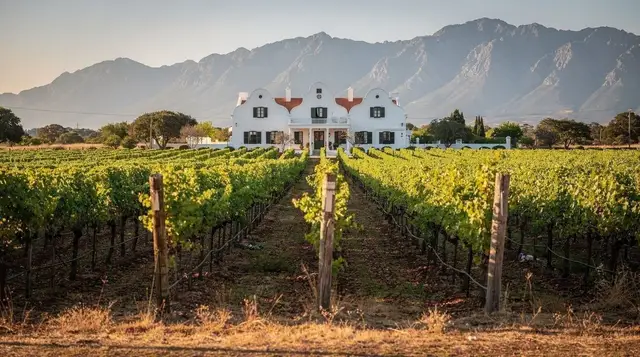
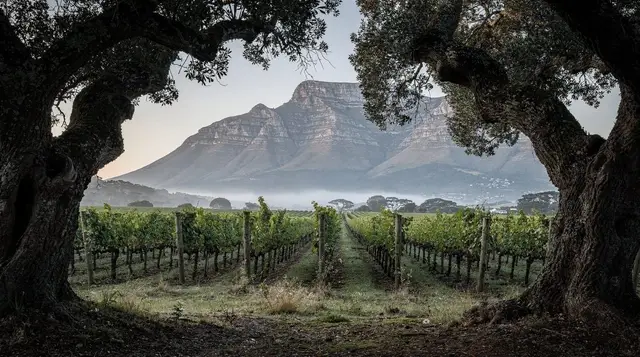
Somerset West sits at the foot of the Helderberg mountain, about 45 minutes from central Cape Town, and functions less as a wine-tourism town in its own right than as a quieter gateway to the Helderberg wine ward and the nature reserve that shares its name. It doesn’t have Stellenbosch’s density of estates or Franschhoek’s restaurant scene, and that’s largely the point — it’s a working town with a handful of genuinely well-regarded producers and one of the better hiking areas in the Winelands, without the crowds that come with the more established wine-tourism circuit.
| Where | About 45 minutes from the city centre, foot of the Helderberg |
| Character | Working town, quieter than Stellenbosch or Franschhoek |
| Getting there | Self-drive or guided tour via the N2 |
| Time needed | Half a day for hiking or wine, a full day for both |
| Best for | Visitors who want fewer crowds and genuine hiking alongside wine |
Helderberg Nature Reserve
The reserve climbs the lower slopes of the Helderberg mountain range and offers a genuine range of hiking, from gentle contour paths through fynbos to more demanding routes with real elevation gain and views back across False Bay and the Winelands. The Leopard’s Loop trail is one of the better-known routes here — despite the name, it’s fynbos and birdlife you’re most likely to encounter rather than the leopards the trail is named after, though the reserve does form part of a wider mountain corridor where the animals are occasionally recorded.
Leopard’s Loop hike, Helderberg Nature ReserveFor a longer, more demanding route with correspondingly bigger views, a guided hike to the Helderberg’s western peak covers more of the mountain’s full profile than the lower trails, with the wider Cape Winelands laid out below on a clear day.
Helderberg West Peak guided hikeThe wine estates
Somerset West and the surrounding Helderberg ward are home to a smaller but genuinely respected cluster of estates compared to Stellenbosch’s much larger count, with a reputation particularly for reds that benefit from the cooler, mountain-influenced growing conditions here. Rather than a single dominant style, the area has attracted a mix of producers, including some with a specific focus on Italian varietals alongside the more typical Cape blends — a reminder that the Winelands’ wine culture has always drawn on outside influence rather than being a single fixed tradition.
Somerset West Italian wine tourVergelegen, just outside town
Vergelegen, one of the Cape’s most historically significant wine estates, sits just outside Somerset West and dates back to the early eighteenth century, with a manor house and gardens that rank among the best-preserved examples of the period anywhere in the region. Its camphor trees, planted not long after the estate’s founding, are among the oldest documented trees in South Africa. It’s a common pairing with a Somerset West day even though it’s technically its own destination, given how close it sits to the town.
Why choose this over Stellenbosch or Franschhoek
The honest case for Somerset West is about pace rather than quantity: fewer estates, fewer restaurants, and considerably fewer other visitors, in exchange for genuine hiking on the same day as your tasting and a slower, less curated feel overall. If your priority is maximum wine variety in a single day, Stellenbosch’s much larger concentration of estates serves that better. If you’d rather combine a real hike with a smaller number of good tastings and skip the crowds, Somerset West does that well.
Waterkloof and the estate architecture
Waterkloof, perched high on the Schapenberg hill above Somerset West, is one of the Helderberg’s most distinctive estates architecturally — a striking, modern tasting room built into the hillside with panoramic views across False Bay, the Winelands, and the Helderberg itself. It’s a useful example of how the area’s newer estates have leaned into contemporary design rather than trying to replicate the Cape Dutch style found in older wine regions further inland, giving Somerset West’s wine scene a genuinely different visual character from Stellenbosch or Constantia even where the wines themselves draw on similar grape varieties.
Strand and the coast nearby
Somerset West sits a short drive from Strand, a long, popular swimming beach on False Bay that gives the area a coastal option most of the more inland Winelands towns don’t have. It’s a reasonable way to close out a day here if hiking and tasting have left time to spare — a swim or a beach walk rather than another activity requiring planning.
When to visit
Spring (September-November) brings wildflowers to the Helderberg’s lower slopes and comfortable hiking temperatures without the peak summer crowds at the estates. Summer (December-February) is warmest and busiest, with the reserve’s higher trails best tackled early to avoid the midday heat. Winter (June-August) brings rain and can close some of the higher hiking routes, but it’s also the quietest time to visit the estates themselves, with tasting rooms far less crowded than in peak season.
Getting there and around
The drive from central Cape Town takes around 45 minutes via the N2, longer during peak traffic hours, and there’s no direct rail option that makes practical sense for a day trip focused on the reserve and the estates, both of which sit outside easy walking distance of any station. Self-driving gives the most flexibility to combine the reserve, a tasting or two, and Vergelegen in a single day; a guided tour is the sensible choice if wine tasting is the priority and you’d rather not manage a designated driver across several stops.
Practical notes
Sturdy footwear matters more here than in most Winelands towns, given how central the Helderberg’s hiking trails are to a Somerset West day — this isn’t a region you can properly experience from a car and a tasting room alone. Booking ahead for both hikes with a guide and estate tastings is sensible in peak season, and it’s worth allowing more driving time than the raw distance suggests if you’re also combining this with Stellenbosch or a Cape Point day, since the roads connecting them see real peak-hour traffic.