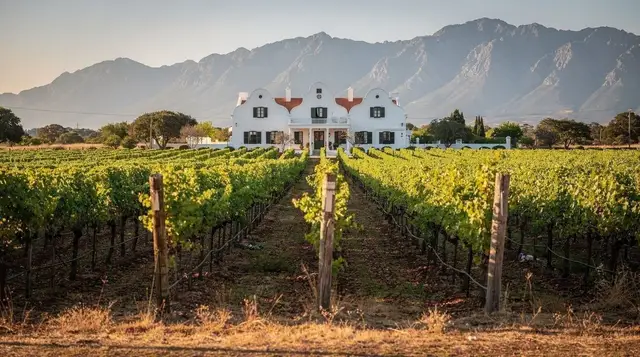
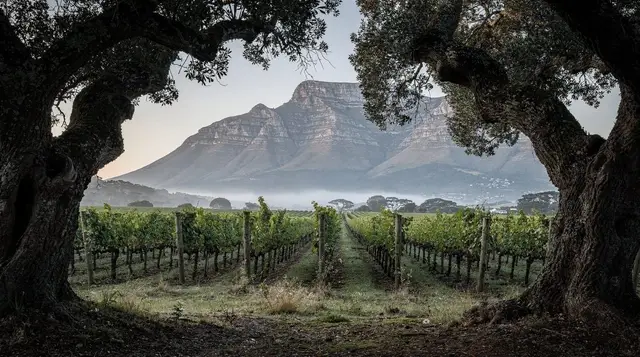
Stellenbosch or Franschhoek
Should I visit Stellenbosch or Franschhoek?
Stellenbosch has the greater density of historic wine estates, a lively university-town energy, and works well as a broader base for exploring the wider Winelands. Franschhoek has a distinctly French-heritage character, a strong reputation for fine dining, and the hop-on hop-off Wine Tram, which turns tasting into a relaxed, car-free day out. Neither is objectively better — Stellenbosch suits visitors wanting range and history, Franschhoek suits those prioritising food and a slower, more concentrated village experience.
Stellenbosch and Franschhoek are the two towns most first-time Winelands visitors weigh against each other, and the honest answer is that they’re different enough in character to make picking easier than it first appears — it comes down to what kind of day, or overnight, you actually want. Here’s how they compare.
| Character | Stellenbosch: historic, university-town energy. Franschhoek: French-heritage, refined |
| Estate density | Stellenbosch generally denser |
| Food reputation | Franschhoek, strongly |
| Signature experience | Franschhoek’s hop-on hop-off Wine Tram |
| Distance from Cape Town | Both roughly 45-75 minutes, traffic dependent |
Stellenbosch: history, density, and student-town energy
Stellenbosch is South Africa’s second-oldest town and the historic heart of the Winelands, with oak-lined streets, well-preserved Cape Dutch architecture, and a genuinely large concentration of wine estates within easy reach of the town centre itself. It’s also home to a major university, which lends the town a livelier, younger energy than its historic core might suggest — cafés and bars alongside the heritage buildings and tasting rooms. For visitors wanting the greatest range of estates and styles within a manageable area, Stellenbosch generally offers the most choice. See the Stellenbosch wine guide for the full picture on the town itself.
Franschhoek: French heritage, and a serious food reputation
Franschhoek — the name means “French corner” — traces its character to Huguenot settlers, and that heritage still shapes the town: French-influenced architecture, street names, and a food culture that’s earned Franschhoek a reputation as something close to South Africa’s culinary capital, with a notably high density of well-regarded restaurants for a town of its size. It’s a smaller, more concentrated village than Stellenbosch, with a slower, more refined pace that suits a leisurely day of tasting and dining rather than covering ground.
The Wine Tram: Franschhoek’s signature experience
Franschhoek’s hop-on hop-off Wine Tram is genuinely one of the more distinctive Winelands experiences in the whole region — a fixed loop connecting a rotating selection of estates, letting you taste at several without worrying about driving between them or coordinating multiple bookings yourself. This Franschhoek Wine Tram hop-on hop-off tour is the standout reason many visitors specifically choose Franschhoek over Stellenbosch for a car-free tasting day. See the Franschhoek Wine Tram guide for the full detail on how it works.
Wine style and estate variety
Stellenbosch’s greater number and variety of estates translates into a wider spread of wine styles and price points within a shorter drive, from long-established historic producers to newer boutique cellars. A Stellenbosch Pinotage wine tour is a good example of the kind of varietal-focused experience the town’s density supports — Pinotage being South Africa’s own signature grape variety. Franschhoek’s estates skew towards a slightly more curated, food-paired tasting experience on average, reflecting the town’s dining-forward identity.
Doing both in a single day
Combining Stellenbosch and Franschhoek into one day trip is genuinely popular and works well if you want a broad overview rather than deep time in either — this Stellenbosch and Franschhoek wine tasting tour covers both towns in a single, well-sequenced day, and a full-day tour pairing both destinations offers a similarly structured combined itinerary. The trade-off is time at each — expect one or two estates per town rather than a leisurely, lingering visit to either.
Shopping, markets and non-wine activities
Both towns offer plenty beyond the tasting room for anyone travelling with a mix of wine lovers and non-drinkers, or simply wanting a change of pace between estates. Stellenbosch’s town centre has independent galleries, craft shops and a lively weekend market scene tied to its student population, while Franschhoek’s main street is dotted with boutique galleries, antique shops and a well-regarded chocolate and charcuterie scene alongside its restaurants. Both are genuinely pleasant to simply wander for an hour between tastings, rather than treating the day as tasting rooms alone.
Overnight versus day trip
Both towns reward an overnight stay more than a rushed day trip, if your schedule allows it — a slower evening and morning in either gives a genuinely different, more relaxed feel than the drive back to Cape Town before dark that a day trip requires. If choosing just one for an overnight, Franschhoek’s smaller, more walkable village centre and dining focus make it a slightly easier place to spend an unhurried evening; Stellenbosch’s larger scale and student-town energy suit visitors wanting a bit more going on in the evenings.
Paarl and Constantia: the other two options
Stellenbosch and Franschhoek aren’t the only Winelands towns worth knowing about, even if they’re the two most commonly compared. Paarl, a little further from Cape Town, offers a quieter, less touristy alternative with its own respected estates and a distinctly agricultural, small-town character rather than either Stellenbosch’s university buzz or Franschhoek’s refined village feel. Constantia, within Cape Town’s own southern suburbs, is the closest wine region to the city and a genuinely convenient option if you don’t want to leave Cape Town proper at all — see where to stay: neighbourhoods compared for more on basing yourself there. Neither displaces Stellenbosch or Franschhoek as the two headline choices, but both are worth knowing about if either one doesn’t quite fit your plans.
Practical logistics either way
Whichever town you choose, the practical logistics are broadly similar: roughly 45 minutes to a little over an hour from central Cape Town by car, easily covered by a self-drive trip, a private driver, or an organised tour. Given South Africa’s strict drink-driving enforcement and the fact that both towns are built around tasting, a tour or driver genuinely is the sensible default for either destination rather than a self-drive day, whatever your general comfort level with driving on the left elsewhere in your trip.
Which to pick for a first Winelands visit
For a genuinely first-time Winelands visitor with only one day to spare, Stellenbosch is often the more efficient single-town choice, given its estate density and historic breadth. For visitors prioritising food and a slower, more refined pace, Franschhoek — particularly via the Wine Tram — is the stronger pick. Neither choice is wrong, and see the Cape Winelands for first-timers for the broader planning picture across the wider region, Constantia and Paarl included.
tours.wine-tasting
Verified deep-linked GetYourGuide tours. Book through these links and we earn a small commission at no cost to you.
Photos show the destination, not the operator's own images.