Staying safe on Table Mountain
Is Table Mountain safe to hike?
Yes, for the great majority of visitors who stick to popular, well-used routes, go with others, and check conditions before setting out. The two genuine risks worth taking seriously are the mountain's fast-changing weather — fog and wind can arrive quicker than a general city forecast suggests — and isolated trail sections, where hiking in a group rather than alone is the standard, sensible precaution.
Table Mountain is safe for the overwhelming majority of people who visit it sensibly, but “sensibly” carries real weight here. The mountain’s two genuine risks — sudden weather changes and isolated trail sections — are well understood and easily managed with a few consistent habits, and neither is a reason to skip the mountain. Here’s the honest picture, without either alarmism or false reassurance.
| Main risk | Fast-changing weather — fog, wind and temperature drops on exposed sections |
| Secondary risk | Isolated stretches on quieter trails — hike with others where possible |
| Standard precaution | Never leave valuables visible in a parked car at any trailhead |
| Before you go | Check the day’s weather and, if relevant, the cableway’s operating status |
| If in doubt | A guided hike removes most of the judgement calls for first-time visitors |
Weather is the real risk, not crime
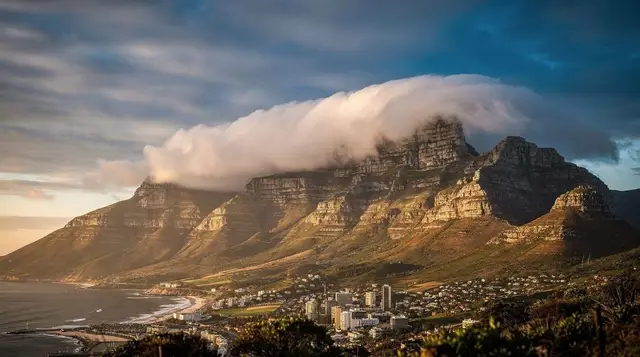
The single most important thing to understand about Table Mountain’s safety picture is that weather, not crime, is the factor that has caused the most serious incidents over the years. The plateau and upper trail sections sit fully exposed, and conditions there can shift faster than a general city weather forecast would suggest — a calm, clear morning at the base doesn’t guarantee the same conditions an hour later at altitude.
Sudden fog reduces visibility with little warning, wind can pick up sharply on exposed ridgelines, and temperatures at the top run noticeably cooler than in the City Bowl below, especially once the sun starts dropping. Treat the mountain’s weather as genuinely its own system, separate from what the rest of the city is experiencing — see the guide to reading Table Mountain’s weather for how to judge conditions before committing to a route.
Table Mountain hike with an experienced guide is the most reliable way to have someone reading conditions on your behalf, particularly valuable if you’re not confident judging mountain weather yourself.
What to do if fog closes in
If cloud or fog does roll in while you’re hiking, the sensible response is straightforward: stay on the marked trail rather than attempting any shortcut, slow your pace, and treat a serious drop in visibility as a real signal to turn back rather than push on toward the summit. Fog on Table Mountain can close in within minutes on a route that felt entirely clear a short while earlier, which is exactly why checking the forecast and current conditions before setting out — rather than relying on how the day looks at the trailhead — is worth the extra few minutes it takes.
Table Mountain guided hike tour takes this judgement call out of your hands entirely, with a guide who knows when conditions warrant altering or cutting a route short.
Isolated trails and the group-hiking rule
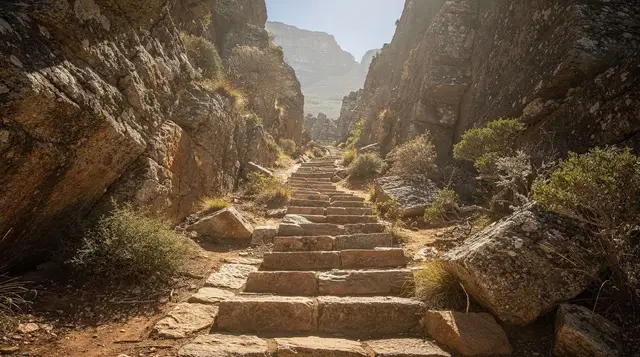
Beyond weather, the other genuine safety consideration on Table Mountain — and on Cape Town’s mountain trails more broadly — is that isolated, quieter sections have seen incidents of trail crime over the years. This is a real, acknowledged issue, not a reason to avoid hiking altogether, and the standard, consistently repeated advice addresses it directly: hike with others rather than alone, particularly on less-trafficked routes, and stick to popular, well-used trails and times of day if you’re hiking solo or in an unfamiliar area. The busiest routes — Platteklip Gorge, the paths near the cableway, Lion’s Head at sunrise or sunset — carry enough foot traffic that this is rarely a practical concern on them specifically.
Table Mountain National Park guided hike is a straightforward way to sidestep the question entirely by hiking in an organised group with a knowledgeable guide.
Cars, trailheads and the one universal rule
Across every popular hiking trailhead in Cape Town, not just Table Mountain, the same advice applies without exception: never leave valuables visible in a parked car, regardless of how busy, official or apparently secure the car park looks. This is a consistent, well-known precaution across the city’s outdoor attractions, and it’s worth treating as a fixed habit rather than a case-by-case judgement call.
Preparing properly, whichever route you choose
Good footwear with real grip, more water than feels necessary, sun protection given the exposed sections common to most routes, and a warm layer for the summit even on an apparently hot day all matter more here than on a typical city walk. Start early where possible, both to beat the crowds and because weather conditions are generally calmer earlier in the day before wind and cloud build. If you’re taking the cableway rather than hiking, the same principle of checking conditions still applies — see the Table Mountain cableway guide for why and how it closes.
Table Mountain hike with a guide bundles all of this preparation and judgement into a single booking, a sensible default if it’s your first Table Mountain hike and you’d rather not manage every variable yourself.
The honest overall picture
None of this should read as a reason to be nervous about Table Mountain — the vast majority of visitors who hike or ride the cableway here have a completely uneventful, genuinely memorable day. The point of taking weather and isolated-trail advice seriously isn’t fear, it’s the same practical mindset any experienced hiker brings to any mountain anywhere: respect changeable conditions, don’t hike alone on quiet routes, and keep valuables out of sight in the car. Followed consistently, these habits address the actual risks far more effectively than any amount of general worry would.
Fitness and honest self-assessment
A less obvious but genuinely important safety factor is honest self-assessment before choosing a route. Table Mountain’s popular hiking trails are physically demanding regardless of technical difficulty, and a hiker who overestimates their fitness on a hot, exposed climb like Platteklip Gorge risks exhaustion or heat-related illness well before any weather or trail-crime concern comes into play. Pace yourself conservatively on the way up, know your own limits, and treat turning back as a sensible decision rather than a failure — the summit will still be there on a return visit, and pushing through genuine exhaustion on an exposed trail is where many otherwise avoidable incidents start. Carrying more water and food than feels necessary, and telling someone your planned route and expected return time, are simple habits that cost nothing and matter considerably if anything does go wrong.
tours.table-mountain
Verified deep-linked GetYourGuide tours. Book through these links and we earn a small commission at no cost to you.
Photos show the destination, not the operator's own images.