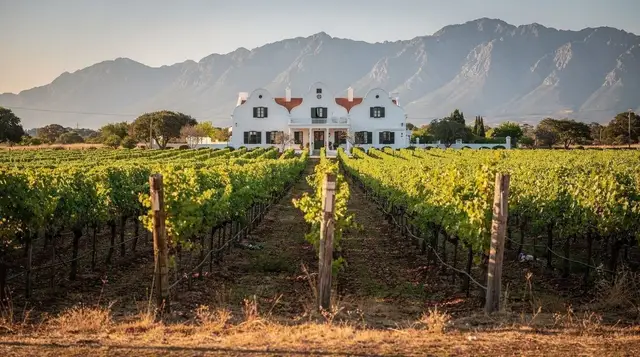
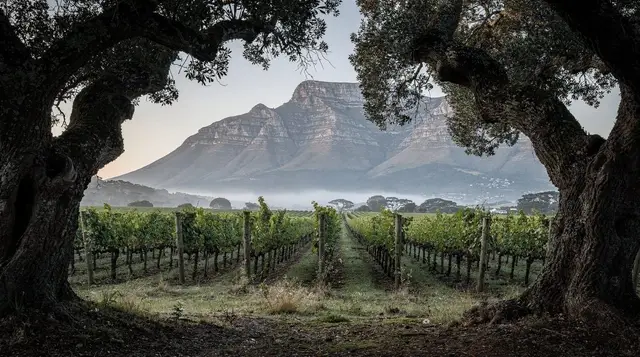
A Winelands weekend from Cape Town
The Winelands are close enough to Cape Town — Stellenbosch and Constantia both around three quarters of an hour away — that a weekend is genuinely enough to cover the region’s best-known areas without feeling rushed. The one thing this itinerary insists on from the start: a rental car gets you to and from the Winelands, but it never does the driving between tastings. South Africa’s drink-driving limit is low and strictly enforced, so every tasting circuit here runs on a tour, a shuttle or a designated driver instead.
| Best for | A focused wine weekend rather than folding tastings into a longer city trip |
| Pace | Three days, one region a day, tastings capped rather than stacked |
| Getting around | Rental car for the drive out; tours/shuttles/a driver for every tasting circuit |
| Drink-driving rule | Strict legal limit — never self-drive estate to estate after tasting |
| Booking lead time | Popular estates and Franschhoek restaurants fill up; book ahead in high season |
Day 1 — Stellenbosch
Base yourself in or near Stellenbosch for the weekend — South Africa’s second-oldest town and the heart of the Winelands, with oak-lined streets that are worth a slow walk before the first tasting. Rather than self-driving between estates, the Stellenbosch and Franschhoek wine tasting tour covers a proper tasting circuit with a driver built in, and it’s a sensible way to get an overview of both towns before deciding where you’d like to spend more time on Day 2.
Keep the tasting count to three or four estates for the day — more than that and both the driving logistics and your own palate start working against you. Finish with dinner in town; Stellenbosch’s restaurant scene doesn’t need the drive that Franschhoek’s does.
If you’d like more background on the town before you go, the Stellenbosch destination page and the Stellenbosch wine guide cover the estates and the old centre in more depth. First-timers weighing this town against its neighbour will find the comparison in Stellenbosch vs Franschhoek useful, and the broader Cape Winelands first-timers guide explains how the whole region fits together.
Spend the first hour of the morning unhurried. A walk through the centre before the first glass is poured sets the tone for the weekend, and it keeps the day from turning into a checklist of estates. If you’ve never tasted South African wine in a structured way, a quick read of the guide to South African wine varieties will make the tasting notes you’re handed at each estate far easier to follow.
Day 2 — Franschhoek
Franschhoek is the more compact of the two towns and built almost entirely around food and wine, with a French Huguenot history that shows up in the estate names. The Franschhoek wine tram hop-on hop-off tour is the local solution to the driving problem — it runs a fixed loop between participating estates, so you can get off at whichever ones you like, taste, and hop the next tram onward without a car in the mix at all. It’s arguably the easiest way in the whole Winelands to taste properly without worrying about transport.
Book lunch at one of Franschhoek’s sit-down restaurants ahead of time if you’re visiting in high season — several of the well-known tables fill up days in advance, and turning up without a reservation on a Saturday can mean a long wait or no table at all.
The Franschhoek destination page gives the lay of the town, and the dedicated Franschhoek wine tram guide walks through how the loop works so you can plan which stops to get off at. If you want the wider picture of getting to the vineyards without a car, winelands without driving lists the other options.
Pace matters more here than in Stellenbosch. The tram makes it tempting to get off at every stop, but choosing two or three estates and staying long enough to sit down, ask questions and eat something works out better than sampling everything on the route. Good etiquette helps too: the wine tasting etiquette and costs guide explains spitting, pouring sizes and how tasting fees usually work, so nothing at the counter catches you off guard.
If the evening is free, Franschhoek rewards a slow dinner. For a sparkling opener, the Cape MCC sparkling wine guide is a good primer on the local bottle-fermented style worth asking about at the table.
Day 3 — Constantia and Paarl, on the way back
Use the last day to work back towards Cape Town via Constantia, the oldest wine-producing area in the Southern Hemisphere and close enough to the city that it functions as a natural last stop before you return the car. The private Constantia wine valley half-day tour keeps this final day light — a half-day is enough after two fuller days, and it means you’re not driving straight from a tasting into city traffic.
If your route or your interest runs more towards Paarl instead of Constantia — it sits further out than Stellenbosch but has some of the region’s larger, more dramatic estates set against the Paarl granite outcrops — swap it in for a similar half-day, ideally with the same rule applied: a tour or driver for the tasting stretch, self-driving only for the transfer in and out.
For a broader overview of the whole region without committing three separate half-days to different towns, the full-day wine tasting tour is worth considering as an alternative shape for this trip — one longer day covering several estates across the Winelands rather than a town per day, useful if your weekend is actually closer to two days than three.
For more on the two areas covered on this last day, see the Constantia destination page, the Constantia wine route guide, the Paarl destination page and the Paarl and Wellington wine guide. Constantia is also the easier choice if your flight or onward plans mean you need to be back in the city in good time; the airport to city guide helps with that last leg.
Where to base yourself
Staying in Stellenbosch or Franschhoek itself rather than commuting out from Cape Town each day removes a meaningful chunk of driving from the weekend and puts you within walking distance of dinner after a day of tastings. Stellenbosch has the wider range of accommodation and a livelier town centre in the evenings; Franschhoek is smaller and quieter, with a slight edge if food is as much the point of the trip as the wine. Either works well as a base for all three days — the drive between the two towns and back to Constantia or Paarl on the final day is short enough that switching base towns isn’t necessary.
If you haven’t booked a hotel yet, the where to stay in Cape Town guide covers the wider accommodation picture, and car hire in Cape Town and driving in South Africa are worth reading before you collect the car for the drive out to the Winelands.
Making the weekend your own
This itinerary is deliberately narrow, but it slots into a longer stay without much effort. If the wine weekend is part of a bigger trip, the Cape Town 5-day itinerary or the Cape Town 7-day itinerary leaves room for the city and the peninsula either side. Couples looking for something more romantic overall may prefer the Cape Town honeymoon itinerary, and anyone without a car at all should look at the Cape Town without a car itinerary.
For readers still deciding between the city and the vineyards, the blog post Cape Town vs the Cape Winelands sets out the trade-offs, and South African wine to bring home is worth keeping for the end of the trip, when the bottles you’ve enjoyed start to look like souvenirs. For the broader planning picture, Cape Town trip planning ties the pieces together.
A few small habits make the weekend smoother. Drink water between tastings, eat a proper lunch rather than relying on the snack plates, and ask each estate to explain what they’re pouring rather than just nodding along. Keep a short note on your phone of the wines you liked, because by the third estate the names blur. None of this costs anything, and it turns a pleasant day into one you actually remember.
A note on non-drinkers and designated drivers
Not everyone in the group needs to taste to enjoy a Winelands weekend. Most tours and tram routes are priced or structured so a non-tasting companion can still join for the scenery, the estate architecture and the food, often at a reduced rate for skipping the tasting flights. If you’re travelling as a small group and would rather use your own car with one person staying sober to drive, that works too — just treat it as a firm role for the day, not something decided estate to estate depending on who’s had the least. The law doesn’t distinguish between “just one more taste” and a full glass; the safest approach is one person opting out of tasting entirely for that day.
What if the weather or a booking falls through
Rain in the Winelands rarely cancels a tasting — most estates have indoor tasting rooms — but it does take the shine off the garden and vineyard walks that are half the appeal of a day out here. If a tasting slot you’d booked falls through, most towns have enough independent estates within walking or short-drive distance of each other that a same-day alternative is usually findable, particularly in Stellenbosch and Franschhoek’s denser clusters. The wine tram in Franschhoek is a useful fallback in this scenario specifically, since it doesn’t require pre-booked estate slots to use.
Day-by-day summary
| Day | Focus | Don’t miss |
|---|---|---|
| 1 | Stellenbosch | Oak-lined town centre, driver-led tasting circuit |
| 2 | Franschhoek | Wine tram hop-on hop-off, book lunch ahead in high season |
| 3 | Constantia or Paarl | Half-day close to Cape Town, tour or driver for tastings |
tours.wine-tasting
Verified deep-linked GetYourGuide tours. Book through these links and we earn a small commission at no cost to you.
Photos show the destination, not the operator's own images.