The Cape Winelands for first-timers
Which Winelands valley should a first-timer visit?
Stellenbosch and Franschhoek are the two classic choices, roughly 45-60 minutes from central Cape Town by car and easily combined in a single day tour. Stellenbosch has the greater density of historic estates and student-town energy; Franschhoek has the French-heritage villages and the hop-on hop-off wine tram. Constantia, inside Cape Town's own southern suburbs, is the pick if you don't want to leave the city at all.
The Cape Winelands aren’t a single place — they’re a scattered collection of valleys, each with its own character, sitting anywhere from twenty minutes to just over an hour from central Cape Town. For a first visit, the volume of choice is the main obstacle: hundreds of producing estates, several distinct towns, and no shortage of tour operators all claiming to show you the “real” Winelands. Here’s how to actually choose, and what a first day of tasting involves.
| Where | Stellenbosch, Franschhoek, Paarl, and Constantia, roughly 20-90 minutes from Cape Town |
| Time needed | A full day for one or two valleys; longer if you want to linger |
| Getting there | Self-drive, guided tour, or the Franschhoek Wine Tram |
| Cost | Tasting fees at most estates, often waived or reduced against a purchase |
| Best time | Year-round; harvest season (roughly February-March) adds cellar activity to the visit |
Which valley to pick
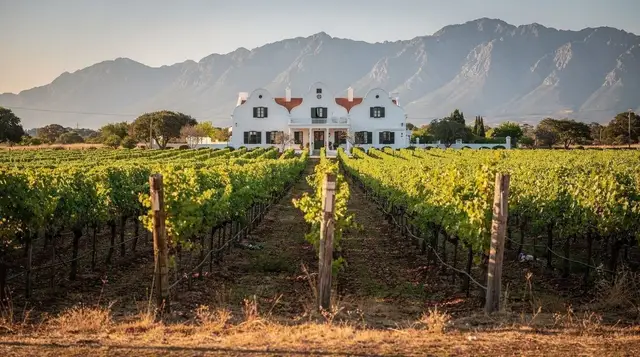
Stellenbosch, South Africa’s second-oldest town, founded in 1679, has the greatest concentration of historic wine estates and the added bonus of a genuine university-town atmosphere in its centre — oak-lined streets, Cape Dutch architecture, and a livelier café and restaurant scene than the other valleys. It’s the natural first stop if you only have time for one.
Franschhoek, its name Dutch for “French corner”, takes its identity from the French Huguenot refugees who settled there in the late 1680s, and the valley still trades on that heritage — French-influenced menus, a smaller, more concentrated main street, and a genuinely dramatic mountain backdrop. It’s also the only valley with its own dedicated tasting transport, the Franschhoek Wine Tram, covered in full in its own guide.
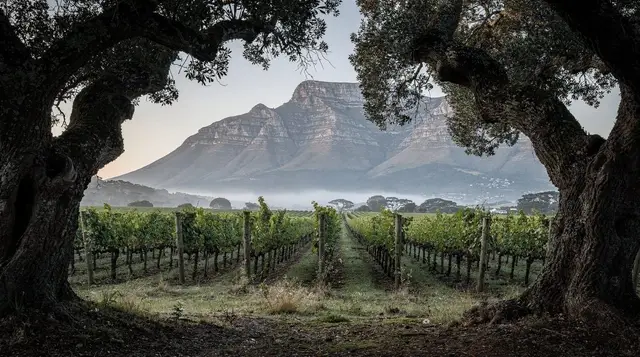
Constantia sits inside Cape Town itself, in the leafy southern suburbs, and is the pick if you’d rather not commit to a full excursion out of the city — see the Constantia wine route guide for why a vineyard here dates all the way back to the 1680s, among the oldest in the New World.
Paarl, the fourth name on the list, is the valley first-timers most often skip, and that is part of its appeal: it tends to feel quieter and less choreographed than its neighbours. If you come back for a second visit, or you simply want a calmer day, the Paarl and Wellington wine guide shows what the area does well, and the Paarl destination page gives the wider picture of the town itself.
If you’re still torn between the two big names, Stellenbosch versus Franschhoek puts them side by side, and the Stellenbosch wine guide goes deeper on the valley most first-timers end up choosing. The towns themselves also have their own pages: Stellenbosch and Franschhoek.
This full-day wine tasting tour is a sensible way to sample more than one valley on a first visit without having to choose in advance — most itineraries combine Stellenbosch with either Franschhoek or Paarl.
How wine tasting actually works here
Almost every estate charges a tasting fee, and almost every estate deducts that fee, in whole or in part, from any bottles you buy afterwards. The exact amount varies enormously between a modest family cellar and a flagship producer with a dedicated tasting room, so don’t expect a fixed price across the region — budget loosely and check when you arrive rather than assuming a figure in advance. Most tastings run through four to six wines, guided by a member of staff who talks you through each pour, and take somewhere between twenty minutes and the better part of an hour depending on how many questions you ask.
Many estates now pair tastings with food — a cheese board, chocolate, or biltong flight alongside the wine — which costs more but turns a simple tasting into something closer to a light meal. It’s worth deciding in advance whether you want the straightforward version or the paired experience, since the latter takes considerably longer per stop.
Tasting manners and how to get the most from a pour
You don’t need to know anything about wine to enjoy a tasting, and nobody behind the counter expects you to. The staff are there to talk, so ask them what they like, what the estate is proudest of, and what is unusual about the vintage in your glass. Those questions usually lead to a better pour than any prepared script. Swirl, sniff, sip, and then decide for yourself; there is no wrong answer about what you like.
Spitting is normal and nobody will think twice if you use the spittoon, especially when you have several stops ahead of you. Pouring out what you don’t finish is equally acceptable. If you plan to taste at more than one estate, this is the habit that keeps the afternoon enjoyable rather than blurry. Water and a few plain biscuits or bread between wines help reset your palate, and most tasting rooms will offer both if you ask.
For a fuller breakdown of how fees, etiquette and tipping work, the wine tasting etiquette and costs guide covers the practical details, and it pairs well with this page if you want to arrive feeling confident rather than guessing.
Sparkling wine and the Cape’s other specialities
Wine here is not only red and white still wine. The Cape makes a traditional-method sparkling wine known as Méthode Cap Classique, and many first-timers are surprised by how good it is. If a tasting list includes it, take the chance to try it. The guide to Cape Town and Cap Classique sparkling wine explains what makes it distinctive and why it deserves a place on your list.
Beyond the glass, the region is also a food destination in its own right. Many estates run excellent restaurants, and the surrounding towns are full of cafés, bakeries and farm stalls. If you want to eat well on the day, the Cape Town food guide and the restaurants guide help you plan the meals around the wine rather than leaving lunch to chance.
Drinking and driving: the one rule that matters most
South Africa enforces drink-driving law strictly, and the honest advice for a Winelands day is simple: if you’re tasting at more than one estate, don’t be the one driving between them. This isn’t an exaggerated caution — it’s the single most common way a good Winelands day goes wrong, and it’s entirely avoidable. A guided tour, a hired driver, or the Franschhoek Wine Tram all solve the problem without asking anyone in your group to sit out the tasting. The full guide to doing the Winelands without driving covers every option in detail.
A half-day Winelands tour with a local guide is a good middle ground if a full day feels like too much for a first visit — it covers two or three estates with a knowledgeable driver doing the navigating.
What to actually expect at an estate
Beyond the tasting room itself, most established estates offer some combination of a cellar tour, gardens or picnic grounds, a restaurant, and increasingly a small shop selling wine alongside olive oil, preserves, or local crafts. The grander Cape Dutch manor houses — white gables, thatched roofs, deep verandas — are worth pausing for even if you’re not buying, since the architecture itself is part of what the region is known for. Smaller, less polished cellars can be just as rewarding, often with more time from the person actually pouring, and sometimes better prices.
A private full-day city and Winelands tour works well if you want to combine a morning of Cape Town sightseeing with an afternoon in the vineyards, rather than dedicating the whole day to wine alone.
Picking your grapes before you go
South Africa grows a wide range of varieties, but two are worth knowing by name before you arrive: pinotage, a uniquely South African cross of pinot noir and cinsaut bred in 1925, and chenin blanc — locally called steen — the country’s most widely planted white grape and often its best value. The full guide to South African wine varieties goes deeper if you want to taste with more intent rather than just working through whatever’s poured.
The Franschhoek Wine Tram hop-on hop-off experience is worth building into a Franschhoek day specifically — it removes the driving question entirely while still letting you set your own pace between estates.
Combining the Winelands with the rest of a Cape Town trip
Most visitors treat the Winelands as a single day within a longer Cape Town stay, often paired with Table Mountain, the Cape Peninsula, or a Robben Island visit on adjacent days. If time is genuinely tight, Constantia’s proximity to the city makes it the easiest single-valley option to slot into an otherwise packed itinerary without dedicating a whole day to travel.
Planning the day around the wine
A good Winelands day has a rhythm. Start with the most serious tasting while your palate is fresh, leave a proper lunch in the middle so you are not tasting on an empty stomach, and keep the final stop relaxed, ideally somewhere with a garden or a view where you can sit with a glass rather than stand at a counter. Treat the schedule as a sketch rather than a timetable; the best moments in the vineyards tend to come when you stay somewhere a little longer than planned.
Pace matters more than the number of stops. If a cellar tour or a guide at a particular estate grabs your attention, give it time and drop a later stop without regret. A relaxed day with a few memorable visits is a better first impression of the region than a checklist completed in a hurry.
Remember too that the weather and light change the experience. A warm, clear day suits outdoor tables and garden tastings, while a cooler or wetter one makes a cosy tasting room and a long lunch the better plan. The best time to visit Cape Town helps you decide when to build the Winelands into your trip, and the month-by-month weather guide shows what to expect.
Choosing between a tour, a driver and a self-drive day
Each way of getting around the vineyards suits a different kind of traveller. A guided tour takes care of everything and is the simplest choice if you want to turn up and enjoy yourself. A private driver gives you more say over where you stop and how long you stay. Self-driving gives the most freedom but demands the most discipline, because the person behind the wheel cannot taste freely.
If you are weighing the practicalities of the road itself, the car hire guide and the guide to driving in South Africa cover what to know before you collect the keys. If you would rather stay car-free for the whole trip, the itinerary for Cape Town without a car shows how the Winelands fit into that approach.
Stretching the Winelands into a longer stay
If your schedule allows, a weekend devoted to the vineyards gives you the chance to see more than one valley without rushing. The Cape Town wine weekend itinerary lays out how to do that sensibly, and the blog comparison of Cape Town and the Cape Winelands is useful if you are still deciding how to divide your time between the city and the countryside.
A longer stay also lets you pick up a few bottles without worrying about the day’s logistics. If you want to take wine home, the guide to South African wine to bring home covers what is worth packing, and it is better read before you start buying than after.
tours.wine-tasting
Verified deep-linked GetYourGuide tours. Book through these links and we earn a small commission at no cost to you.
Photos show the destination, not the operator's own images.