Paarl and Wellington wine route
Why visit Paarl and Wellington instead of Stellenbosch or Franschhoek?
Fewer crowds and, often, more relaxed tasting rooms — Paarl and Wellington see considerably less tour traffic than Stellenbosch or Franschhoek, despite being similarly close to Cape Town and home to genuinely well-regarded estates. They suit visitors who've already done the more famous valleys, or anyone who'd rather taste without queuing behind several coach tours.
Paarl and Wellington sit just beyond Stellenbosch on the map, and get a fraction of the visitors — which is precisely their appeal. Both are genuine wine-producing areas with long-established estates, but neither carries Stellenbosch’s or Franschhoek’s tourist-trail reputation, which in practice means quieter tasting rooms, easier parking, and a noticeably more relaxed pace. If you’ve already covered the more famous valleys, or you’d simply rather avoid the coach-tour crowds, this is where to go instead.
| Where | Paarl, roughly 50-60 minutes from Cape Town; Wellington a further 10-15 minutes |
| Time needed | A full day for both, or a half-day for Paarl alone |
| Getting there | Self-drive or guided tour; less well served by hop-on hop-off transport than Franschhoek |
| Cost | Tasting fees per estate, typically deducted against a purchase |
| Best for | Repeat Winelands visitors, or anyone wanting to avoid the busiest routes |
Who this route suits
Paarl and Wellington reward a particular kind of visitor. If your first Winelands day was spent in Stellenbosch or Franschhoek, you already know the shape of a busy valley: full car parks, a queue at the tasting counter, a schedule that moves you along. Here the rhythm is different, and the contrast is the reason to come. First-timers who are still deciding where to base a Winelands day will find the comparison in Stellenbosch vs Franschhoek and in the broader first-timer’s guide to the Cape Winelands a useful starting point, with Paarl as the natural second step.
It also suits people who care more about conversation than spectacle. A quieter room means more time with whoever is pouring, more chance to ask why a wine tastes the way it does, and less pressure to buy a case to justify your visit.
What sets Paarl apart
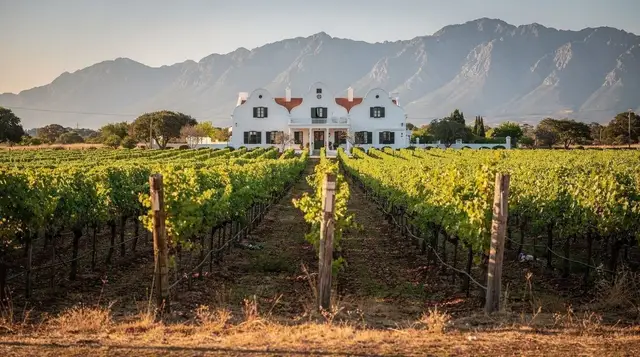
Paarl is South Africa’s third-oldest town and sits in a broad, warm valley beneath the Paarl Mountain granite outcrops that give the area its name (from the Dutch for “pearl”, after the way the rock glistens when wet). Its wine estates range from major, long-established producers to small family cellars, and its growing conditions — generally warmer and drier than Stellenbosch’s — have historically suited fuller reds and fortified wines, though the modern range made here spans far more than that reputation suggests.
The town itself is more spread out and workaday than Stellenbosch’s compact historic centre, without the same concentration of cafés and museums, but that’s part of what keeps it off the main tourist circuit — and part of why tasting rooms here tend to be less rushed.
This private wine country tour with tastings covers the Paarl area at a relaxed pace, well suited to visitors who’ve already done a busier Stellenbosch or Franschhoek day and want something quieter.
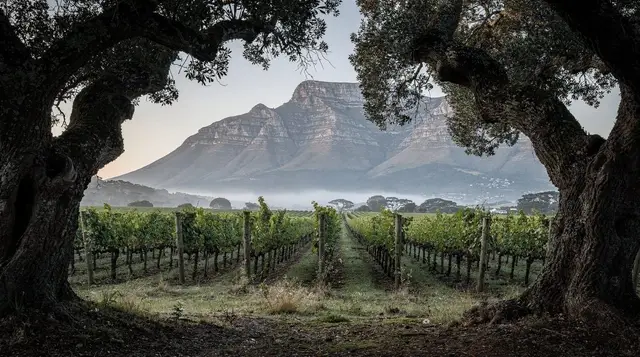
The landscape is part of the draw. Paarl Mountain looms over the valley floor, and the vineyards run up against fynbos-covered slopes. If the plants of the Cape interest you, the background in the Cape Floral Kingdom guide will change how you see the roadside scenery between estates. And because the wine here is part of a wider story, it helps to read a short introduction to South African wine varieties before you go, so the names on the tasting list mean something.
How Paarl fits the wider Winelands
Think of the Cape Winelands as a set of valleys with different personalities rather than one uniform region. Stellenbosch is the compact, historic, café-rich one. Franschhoek is the polished one, with its tram and restaurants. Paarl is the broad, working one, and Wellington is the rural one tucked beyond it. Seeing them as different moods rather than rival destinations makes it easier to decide which one matches the day you want.
For a look at the town and its surroundings beyond the glass, the Paarl destination page gives the wider picture.
Meeting the people behind the wine
One advantage of Paarl’s lower visitor numbers is more direct access to the people actually making the wine — smaller estates here are often happy to talk at length rather than moving quickly on to the next group.
This Paarl wine experience with a local cellar representative leans into exactly that — a more conversational tasting than the standard pour-and-move-on format at busier valleys.
A tasting at Dekkersvlei in Paarl is a good example of the smaller, family-run cellars that make up much of the area’s character, distinct from the grander manor-house estates elsewhere in the Winelands.
What to expect in a tasting room
Tasting etiquette is the same here as elsewhere in the Winelands, and the guide to wine tasting etiquette and costs covers the basics: how to pace yourself, what it is fine to leave in the glass, and how tasting fees usually work. Spit buckets are normal and nobody will think less of you for using one, especially if you have several stops planned. Drinking water between pours helps, and so does eating something before you begin.
Because staff here are rarely rushed, you can ask about the vineyard, the vintage or the winemaker’s approach and expect a real answer. Say what you like and what you do not, and let them steer you to something you would not have chosen. That is the point of a quieter tasting room.
Lunch, pacing and a realistic plan
A tasting day goes better with a long lunch in the middle than with a long list of stops. Choose a small number of estates, leave time between them, and build a proper meal into the day rather than snacking on cheese plates. If food is a large part of why you travel, the Cape Town food guide and the piece on Cape Town’s braai culture give a sense of how local eating and local wine go together, and the food markets guide is useful if you would like to pair a Paarl day with a market morning elsewhere.
Getting around without driving
Paarl’s estates are, like every other Winelands valley, spread across roads that aren’t practical to walk between, and the same drink-driving rules apply here as anywhere else in the Cape. Unlike Franschhoek, there’s no dedicated hop-on hop-off tram service, so a guided tour or hired driver is the standard solution.
This half-day wine tasting tour covering white and pinotage styles is a practical option that takes the transport question off your hands while focusing on two of the region’s more distinctive styles.
If you want to avoid driving altogether, the guide to the Winelands without driving lays out the options in more detail, and the Franschhoek wine tram guide explains what that service offers, which helps when comparing it with the guided-tour approach used here. If you would rather drive yourself for the day, read about car hire in Cape Town and driving in South Africa first, and plan a designated driver or a hired one. Visitors without a car at all should look at Cape Town without a car for how a Winelands day can be slotted in around public transport and tours, and Uber in Cape Town for how ride-hailing works if you are staying nearby and want to avoid a long trip home after dinner.
Wellington: the quieter neighbour
Wellington sits just beyond Paarl, in a smaller, more rural valley with fewer large-scale wine tourism operations. It’s genuinely worth the extra time if you’re already in the Paarl area and want a slower, more agricultural contrast — orchards and vineyards rather than grand tasting rooms — but it isn’t well set up as a standalone destination for casual drop-in visitors the way Paarl or Stellenbosch are. Treat it as an addition to a Paarl day rather than a separate excursion.
Wellington rewards slowing down. The point of coming is not to tick off a list of cellars but to enjoy a smaller, less performative corner of wine country: a drive through orchards, a conversation at a cellar door, and a late lunch with no one watching the clock. If you only have energy for one stop after Paarl, make it a single unhurried visit rather than several short ones.
Covering Paarl alongside the bigger valleys
For visitors who want Paarl included without dedicating a separate day to it, several tours combine it with Stellenbosch and Franschhoek in a single, longer outing.
This combined Paarl, Stellenbosch, and Franschhoek wine tour spreads a day across all three, trading depth at any single valley for broader coverage — a sensible choice if this is a one-time Winelands visit rather than a repeat trip.
Fitting Paarl into a longer trip
Paarl works best as a deliberate choice rather than an afterthought. If wine is the theme of your stay, a Cape Town wine weekend shows how several valleys can be sequenced, and Paarl slots in neatly as the quieter day. For visitors with a little more time, Constantia offers a very different, closer-to-the-city wine experience, and Cape Town’s MCC sparkling wine guide is worth reading if you enjoy bubbles. If wine is only part of the picture, the best day trips from Cape Town will help you weigh Paarl against other outings, and how many days to spend in Cape Town will help you decide whether a full Winelands day fits at all. For a wider plan, Cape Town in five days and Cape Town in seven days both leave room for a day in the Winelands. The contrast between Cape Town and the countryside is also discussed in Cape Town versus the Cape Winelands.
When to go
Paarl’s warmer, drier climate makes it a comfortable Winelands stop even in the shoulder seasons when Stellenbosch or Franschhoek can feel cooler. Its lower visitor numbers mean weekends are less of a concern here than elsewhere in the region, though booking ahead at any specific estate you have in mind is still sensible.
To match your dates to the season, Cape Town weather month by month and the best time to visit Cape Town set out what each part of the year feels like. Cape Town in summer and Cape Town in winter describe the two extremes, and travelling in the shoulder season is a good read if you prefer calmer roads and gentler weather. Wind can affect a day outdoors, so the Cape Doctor wind guide is worth a look before you fix a date.
Taking something home
Buying a bottle or two is a natural end to a tasting day, but think about luggage and what you will actually drink. Which South African wine to bring home gives practical direction on choosing, and a bottle from a small cellar you enjoyed meeting is often a better souvenir than something you could find at the airport. Tipping and general manners in restaurants and tasting rooms are covered in Cape Town tipping and etiquette.
tours.wine-tasting
Verified deep-linked GetYourGuide tours. Book through these links and we earn a small commission at no cost to you.
Photos show the destination, not the operator's own images.