Constantia: wine twenty minutes from town
Is Constantia worth visiting instead of Stellenbosch or Franschhoek?
It depends on your time. Constantia sits inside Cape Town's own southern suburbs, roughly 20 minutes from the City Bowl, so it's the easiest wine valley to fit into a shorter trip or a half-day gap in an itinerary. Stellenbosch and Franschhoek offer greater choice and a more dedicated Winelands atmosphere, but they need a proper day trip out of the city — Constantia is what you visit when a full excursion isn't realistic.
Constantia is the wine valley most visitors don’t realise sits inside Cape Town itself — not a day trip out to the Winelands proper, but a genuine wine-producing area in the city’s leafy southern suburbs, roughly twenty minutes from the City Bowl. It’s also, by a comfortable margin, the oldest wine-growing area in the country, with roots back to the 1680s. For anyone short on time, or simply not wanting to commit a full day to Stellenbosch or Franschhoek, it’s the obvious substitute.
| Where | Constantia, southern suburbs of Cape Town |
| Getting there | 20-25 minutes by taxi, rideshare, or tour from the City Bowl |
| Time needed | Half a day for two or three estates; a full day combined with Kirstenbosch |
| Cost | Tasting fees per estate, often reduced against a purchase |
| Best for | Visitors without a full day to spare for the Winelands proper |
A valley older than the country’s other wine regions
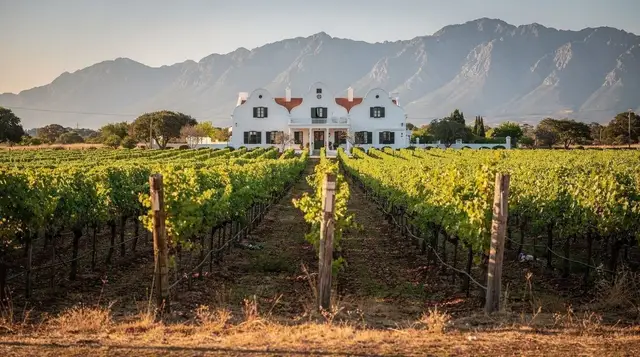
Constantia’s wine history predates Stellenbosch’s own founding as a town: the original Constantia estate was granted in the 1680s, and its sweet wines went on to earn a genuinely international reputation in the 18th and 19th centuries, reportedly favoured by European royalty and mentioned in period literature. That history is still visible in the valley’s grand, whitewashed Cape Dutch manor houses, several of which sit on the same land as the original 17th-century grant, even where the current buildings and cellar operations are considerably more recent.
This private Constantia wine valley half-day tour covers the valley’s key estates without requiring a full day out of the city — a practical option if Constantia is a half-day addition to a broader Cape Town itinerary rather than the main event.
What makes the history tangible here is that you can taste it. The valley’s reputation was built on sweet wines, and while the styles on offer today are far broader, the sense of continuity is part of the appeal: you are drinking in a place where wine has been made for a very long time, not in a showpiece created for visitors. If the grape varieties on a tasting list are unfamiliar, the guide to South African wine varieties explains what you will be pouring, and it is worth a quick read before you go.
For the wider context of how this valley fits into the region’s story, the Constantia destination page covers the suburb itself, while the Cape Winelands first-timer guide shows where Constantia sits relative to the inland valleys.
Why it suits a shorter trip
Every other Cape wine valley worth visiting — Stellenbosch, Franschhoek, Paarl — sits at least 45 minutes from central Cape Town, which effectively demands a dedicated day if you want to taste properly and not spend it mostly in transit. Constantia removes that constraint. At twenty minutes from the city, it’s realistic to fit in an afternoon here after a morning of city sightseeing, or to combine it with a nearby attraction rather than sacrificing a full day of your trip to wine alone.
This Constantia half-day wine tasting tour is built around exactly that shorter format, pairing well with a morning at Table Mountain or the City Bowl on the same day.
There is a second advantage that is easy to overlook: flexibility. A trip to Stellenbosch or Franschhoek commits you to the whole day, and a grey morning or a late start can wreck it. With Constantia, you can decide after breakfast. If the weather turns on Table Mountain and the cableway is closed, a tasting afternoon makes a good fallback; the guide to what to do when Table Mountain is closed and the rainy-day activities guide both suggest ways to rearrange a day, and Constantia fits neatly into either.
If you are weighing the valley against the inland alternatives, the comparison of Stellenbosch and Franschhoek and the Stellenbosch wine guide set out what a full Winelands day offers. The Cape Town versus Cape Winelands article is a good place to start if you are still deciding how to split your time between the city and the countryside.
Pairing Constantia with Kirstenbosch
Constantia’s proximity to Kirstenbosch National Botanical Garden, on Table Mountain’s eastern slopes, makes the two a natural pairing — a morning among the fynbos and canopy walkway, an afternoon of tasting, or the reverse, without the day feeling stretched. See the Kirstenbosch guide for the garden side of that combination.
This combined botanical garden and Groot Constantia wineries private tour packages exactly that pairing into a single guided outing, useful if you’d rather not arrange transport between the two yourself.
The valley’s grandest estate
Groot Constantia, the original farm from which the whole valley takes its name, is the largest and most visited property here, with a working cellar, a museum house, and grounds substantial enough to spend a couple of hours in beyond the tasting room itself. It’s a sensible anchor for a first Constantia visit, even if you add a smaller, quieter estate afterwards for contrast.
This hop-on bus service with tasting at Groot Constantia is a straightforward, no-driving way to reach the estate directly from the City Bowl.
Planning the visit around a single anchor estate keeps the day relaxed. Arrive for your first tasting, take your time with the cellar and the grounds, and only then decide whether a second stop is worth it. A rushed circuit of several estates tends to blur together, whereas two visits with a proper break between them leave you with clearer impressions of what you actually liked. Tasting etiquette is simple, but if you have never done it before, the wine tasting etiquette and costs guide explains how fees, spitting, and buying work so that nothing at the counter catches you out.
Food matters as much as the wine. Pairing a tasting with lunch on an estate turns a short visit into a proper afternoon, and it keeps the wine in good company. For wider ideas on where to eat before or after, see the Cape Town food guide and the restaurants guide.
A slower, more storytelling-led option
For visitors who want the valley’s history told alongside the wine, rather than just a straightforward tasting circuit, a walking format covers the same ground at a gentler pace with more context along the way.
This Constantia wine walk with lunch and local stories suits a slower afternoon better than a multi-estate circuit — fewer stops, but more depth at each.
Getting there and getting back
Because the valley is so close to town, transport is a matter of preference rather than necessity. A rideshare or taxi works well for a single estate, and the guide to Uber in Cape Town explains how that works in practice. If you plan to visit several estates, arranging a driver or a guided tour for the whole outing is simpler than ordering a car at each stop, particularly where mobile signal or availability is patchy. The getting around Cape Town guide gives the broader picture, and the guide to Cape Town without a car shows how to build whole days around tours and rideshares.
If you have hired a car for the rest of your trip, the sensible approach is still to leave it parked for the tasting itself. The car hire guide covers the rental side, and the driving guide for South Africa explains the rules you need to know, including the strict attitude to drinking and driving. Nominating a sober driver, or simply hiring one for the afternoon, removes the problem entirely. The guide to winelands without driving lists the main ways of doing so.
Fitting it into a longer stay
Constantia rarely needs a day of its own, which makes it easy to slot into almost any plan. It works as a gentle half-day after a long-haul arrival, once you have slept and want something undemanding; the first-day jet lag guide has more on pacing those first hours. It also suits a mid-trip rest day between more energetic outings such as hikes or boat trips.
For a wine-focused break, the Cape Town wine weekend itinerary puts Constantia alongside the inland valleys, and the three-day itinerary shows how a short stay can absorb a half-day of tasting without losing the major sights. Couples may also like the honeymoon itinerary, where an unhurried afternoon among the vines fits the mood. If sparkling wine interests you more than still, the guide to Cape Town’s MCC sparkling wine is worth reading alongside this one.
Choosing between the tour formats
The options above differ mostly in pace and in who handles the logistics. A private half-day tour gives you the most control: you set the rhythm, and the guide adapts to what you enjoy. A shared tasting tour is usually the simpler and more social choice. The hop-on bus is the lowest-effort way to reach a single estate, and the walking format trades the number of stops for depth and conversation. None of these is the single right answer; the best one is the one that matches how much you want to organise and how much you want to learn.
Whichever you choose, tell the guide or the tasting host what you like. Preferences for dry whites, lighter reds, or something sweeter all shape which wines are poured, and a short conversation early on makes the tasting more useful than simply working down the list.
When to visit
Constantia works comfortably year-round given its short distance from the city, but the valley’s own microclimate — cooler and more maritime-influenced than Stellenbosch or Paarl further inland — tends to favour crisp whites and elegant reds over the bigger, riper styles some other valleys produce. Weekday visits are generally quieter than weekends, and the valley sees less of the peak-season crush that affects Stellenbosch and Franschhoek in December and January.
Timing the season is partly a question of what else you want to do. In the warmer months, outdoor terraces and lawns at the estates are at their best, and the guide to Cape Town in summer explains what else to expect. In the cooler months a cellar visit is a comfortable indoor-outdoor mix, and the winter guide covers how to enjoy the city then. For the full year-round picture, see the month-by-month weather guide and the best time to visit Cape Town.
Wind can affect a day outdoors, so it helps to check the guide to the Cape Doctor wind if you hope to taste on an open terrace.
A full day, if you want it
For visitors who’d rather treat Constantia as the main event of a day rather than a half-day add-on, a longer format covers more estates and more of the valley’s history in one outing. It is the right choice if wine is the main reason you came, or if you would like to pair the tasting with the botanical garden and still have time to sit down properly for lunch.
If your interest in the region grows after a day here, the other valleys are the natural next step: the Paarl and Wellington wine guide and the Franschhoek wine tram guide both offer a different character from Constantia’s suburban setting. And if you want to take bottles home, the guide to South African wine to bring home helps you choose and pack them sensibly.
Making the most of a tasting
A few habits make any tasting better. Eat something beforehand, drink water between pours, and treat the spittoon as a tool rather than an insult to the winemaker. Ask what the estate is proudest of, and ask to try it. Notes on a phone or a photo of the label help you remember a favourite later, when the details have faded. If you are travelling with someone who does not drink, most estates are happy to have them join for the setting, the views, and the food, so a mixed group should not rule the valley out. Families can also look at the guide to Cape Town with kids for how to balance an adult-focused outing with the rest of the trip.
Finally, leave room in the plan. The pleasure of Constantia is that it does not demand a schedule: a long lunch, a second glass on a shaded lawn, and an unhurried drive back to the city make as good a half-day as any checklist of cellars.
tours.wine-tasting
Verified deep-linked GetYourGuide tours. Book through these links and we earn a small commission at no cost to you.
Photos show the destination, not the operator's own images.