The Franschhoek Wine Tram, explained
How does the Franschhoek Wine Tram work?
It's a hop-on hop-off route through the Franschhoek valley, divided into colour-coded lines that each stop at a handful of wine estates. Part of each line runs on an open-topped vintage-style tram, and part runs by road coach where the terrain or estate spacing doesn't suit rail track, but the ticket covers the whole route as one continuous hop-on hop-off experience. You choose a line in the morning, get off at whichever estates interest you, taste at your own pace, and catch a later tram or bus onward.
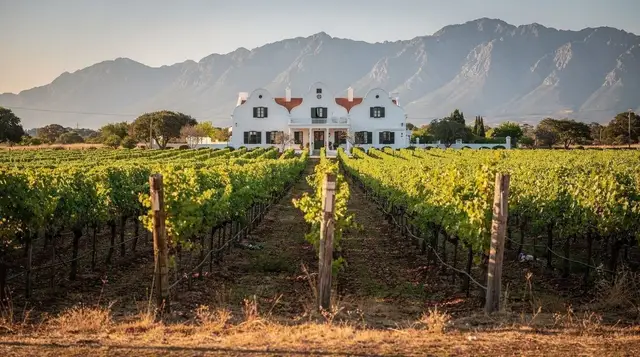
The Franschhoek Wine Tram is the single most useful piece of tasting infrastructure in the Cape Winelands: a hop-on hop-off route through the valley that solves the region’s biggest logistical problem — getting between estates without anyone needing to drive — while still letting you set your own pace. It’s also, on the days it uses its open-topped tram carriages, one of the more scenic ways to move through vineyard country anywhere in the Cape. Here’s how it actually works.
| Where | Franschhoek valley, roughly 75-90 minutes from central Cape Town |
| Format | Hop-on hop-off, colour-coded lines, part tram and part road coach |
| Time needed | A full day to make the most of a line’s stops |
| Getting there | Self-drive to Franschhoek, or a combined transport-and-tram tour from Cape Town |
| Best time | Year-round; book ahead, especially weekends and peak season |
How the line system works
The tram operates several colour-coded lines, each threading through a different cluster of Franschhoek estates. You buy a ticket for one line, board at the departure point in the morning, and then hop off at any stop on that line to taste, wander, or eat, before catching a later tram or connecting coach to continue. Not every stretch of every line runs on the vintage tram itself — some sections switch to a road coach where the terrain or estate spacing doesn’t suit rail track — but the ticket treats the whole thing as a single, continuous hop-on hop-off day, and the switch between tram and bus is built into the route rather than something you need to arrange yourself.
Because the specific estates on each line, and the schedule between them, can change, it’s worth checking the current line map and timetable when you book rather than assuming last year’s route.
This Franschhoek Wine Tram hop-on hop-off experience is the standard way to do it — pick it up directly in Franschhoek if you’re already there, or combine it with return transport from Cape Town.
If this is your first time in the valley and you are still deciding where to base a tasting day, the overview in Cape Winelands for first-timers puts Franschhoek next to its neighbours, and Stellenbosch vs Franschhoek explains why many people pick the smaller, more walkable valley for a tram day. The wider picture of the village itself lives on the Franschhoek destination page.
What a typical tram day feels like
A good way to picture the day is as a slow loop with long pauses. You arrive in the morning, find the departure point, and board with the rest of your line. The open-topped carriages are the part most people photograph, and the pace is gentle enough that you can look at the vines rather than the road. At each stop you step off, walk to the tasting room or terrace, and decide on the spot whether this estate deserves an hour or only a glass before you move on.
Because the ticket is hop-on hop-off, there is no pressure to follow anyone else’s rhythm. One person in your group may want a long lunch under the trees; another may prefer a short tasting and a walk through the grounds. Both can happen on the same day, as long as you agree on a meeting stop and keep an eye on the last departure.
It helps to treat the first stop as a warm-up. Tasting rooms are quieter early, staff have time to talk, and you can ask what the estate is known for before you commit to a flight. If you are new to tasting, wine tasting etiquette and costs covers how to taste, when to spit, and what is normal to ask, and South African wine varieties gives you a few grape names to look for on the list.
Eating and drinking well on the tram
A day of hopping between estates goes better with real food in the middle of it. Several estates and the village have restaurants, and a long lunch is a perfectly sensible use of one of your stops rather than a waste of tasting time. Eat before the afternoon stops, drink water between tastings, and do not treat the day as a race to taste everything. If you enjoy sparkling wine, Cape Town MCC sparkling wine explains the local method-traditionelle style that the valley is proud of, which makes a good theme for a stop or two.
For ideas on what to eat beyond the estates, the Cape Town food guide and the restaurants guide give a feel for local flavours, and braai culture is a useful read if you want to understand the relaxed outdoor eating you will often see at the end of a Winelands day.
Getting to Franschhoek for the tram
If you’re not driving yourself, several tours bundle the return trip from Cape Town with the tram ticket, which removes the need to arrange separate transport to the valley and back.
This full-day Cape Town to Franschhoek wine tram tour covers the return journey alongside the hop-on hop-off ticket, useful if you don’t have a car or would rather not deal with the drive after a day of tasting.
If you would rather drive yourself and park for the day, car hire in Cape Town and driving in South Africa cover the practical side, including the habits that matter on unfamiliar roads. If you prefer to avoid the wheel altogether, winelands without driving compares the other options, and Cape Town without a car shows how a whole trip can work that way. From the airport, getting from Cape Town airport to the city is the first step before any valley transfer.
Why the tram matters more than it might sound
South Africa’s drink-driving enforcement is strict, and Franschhoek’s estates, like Stellenbosch’s, sit on farm roads spread across the valley — not realistically walkable between tastings. Most visitors solve this with a tour or a private driver, but the tram is the valley’s own purpose-built answer, and it has the advantage of letting everyone in your group taste freely, since nobody needs to stay sober to drive the next leg. It’s genuinely one of the simplest ways to have a proper Winelands day without a single logistics headache.
A Franschhoek Wine Tram hop-on hop-off day booked directly in the valley works well if you’re already staying overnight in Franschhoek and don’t need the Cape Town transfer built in.
Pacing a tram day
The temptation on a hop-on hop-off ticket is to try to hit every stop on the line, but that usually means rushed, shallow visits rather than proper tastings. Three or four stops, with real time at each, tends to work better than trying to cram in every estate the line passes — the same logic that applies to a self-driven Winelands day applies here too. Check the last tram or bus departure time before you plan your final stop, since missing the last connection back to the start point complicates the end of the day.
This scheduled tram experience, ticketed by group size is worth checking if you’re travelling as a larger party and want a more predictable departure slot rather than a general shared service.
Choosing your stops without over-planning
You do not need a spreadsheet, but a little thinking before you board pays off. Decide what you want from the day: a classic cellar visit, a view, a long lunch, a small family-run tasting room, or simply a relaxed afternoon in the sun. Then look at the estates on your line and pick the ones that match. If two stops look similar, choose the one with the better food or the better setting and skip the other.
Keep a loose plan for the group. Agree beforehand who is happy to taste a lot and who would rather sip slowly, and make sure everyone knows the plan for the last stretch. Since nobody is driving, it is easy to drift into one more tasting than you intended; a firm rule about the last departure keeps the day pleasant. Pacing tips and manners are covered again in wine tasting etiquette and costs, and the broader approach to budgeting a tasting day is in the Cape Town budget guide.
Weather, season and what to bring
Much of the experience is outdoors, so the weather matters more than on a bus tour. The open carriages and estate terraces reward sunscreen, a hat, and a light layer for cooler hours. On windy days or in the cooler months the valley can feel quite different from the coast, so it is worth reading Cape Town in summer, Cape Town in winter and the best time to visit Cape Town before you pick a date. If the day turns wet, rainy-day activities in Cape Town offers alternatives for the rest of your trip.
Bring comfortable shoes for walking between the tram stop and the tasting rooms, a bottle of water, and a bag that does not mind a bottle or two on the return. If you plan to buy wine to take home, the guide to South African wine to bring home explains how to think about it before you start filling your bags.
Who the tram suits, and who it doesn’t
The tram suits visitors who want structure without a fixed itinerary — you’re guided by the line’s stops, but free to choose how long you spend at each. It’s a poor fit if you have one or two very specific estates in mind that aren’t on the same line, since jumping between lines mid-day isn’t generally how the system works; a private tour or self-drive with a designated driver suits that kind of targeted visit better.
Combining the tram with the rest of Franschhoek
The tram covers tasting logistics, but Franschhoek’s own village centre — its French Huguenot heritage, restaurants, and small galleries — deserves time on foot separately. Many visitors treat the tram as the daytime activity and reserve an hour or two in the village itself either before the first tram or after the last one returns.
Where the tram fits in a wider Winelands trip
The tram makes the most sense as one anchor in a longer plan. A two-day wine weekend can pair a tram day here with a different style of day elsewhere; the Cape Town wine weekend itinerary shows how that can look. Nearby valleys offer a contrast: the Stellenbosch wine guide, Paarl and Wellington wine and the Constantia wine route each have a different character, and Cape Town vs the Cape Winelands helps you decide how to split your time between the city and the valleys.
If you want a day out that is not only about wine, best day trips from Cape Town and family-friendly day trips give other ideas, and Cape Town with kids is worth a look if younger travellers are coming, since a wine day needs some thought for them. For planning the whole stay, Cape Town trip planning and where to stay in Cape Town tie the pieces together, and Cape Town safety covers the sensible precautions for any day away from your base.
After the last stop
The end of a tram day is often the best part. You return to the departure point with a slightly slower step, a few bottles perhaps, and the sense that the valley has been properly seen rather than glimpsed through a car window. Whether you head back to Cape Town on an arranged transfer or spend the night in the valley, give yourself a quiet evening. A light dinner and an early night make the next day easier, and the notes you took on which wines you liked will be useful when you choose what to buy.
tours.wine-tasting
Verified deep-linked GetYourGuide tours. Book through these links and we earn a small commission at no cost to you.
Photos show the destination, not the operator's own images.