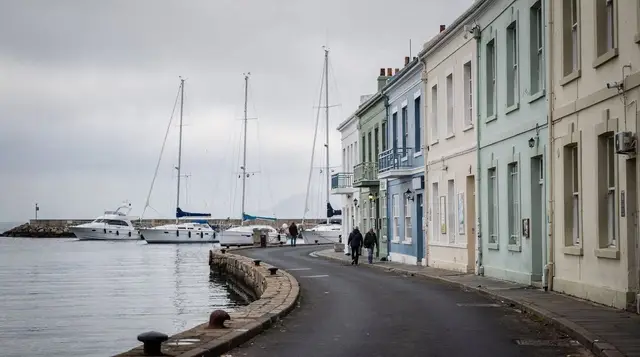
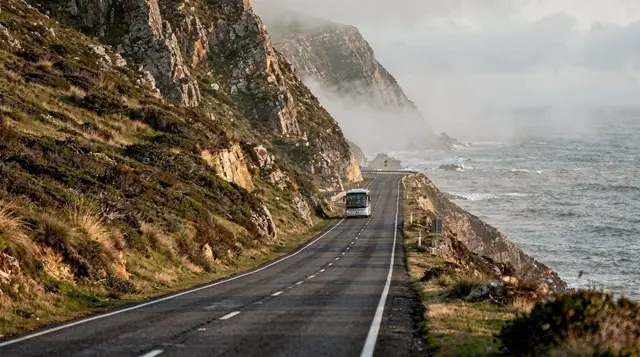
Hout Bay is a working fishing harbour and residential valley about 20km south of central Cape Town, wedged between the Sentinel peak and the start of Chapman’s Peak Drive. It’s Dutch for “wood bay” — early settlers logged the valley’s forests for timber — and today the harbour is still a genuine fishing base, not a reconstruction of one, alongside a well-known weekend craft market and the departure point for boat trips out to the peninsula’s most reliable seal colony. Most visitors pass through on the way to or from Chapman’s Peak; the harbour and market are worth building in an hour or two for on their own.
| Where | About 20km south of the city centre, Atlantic side of the peninsula |
| Main draws | Seal cruises, the fishing harbour, and the Bay Harbour Market |
| Time needed | Half a day, including a seal cruise and a stop at the market |
| Getting there | Self-drive, rideshare, or as part of a peninsula tour |
| Best time | Morning for calmer water on the boat trips; weekends for the market |
The seal cruise to Duiker Island
The single most popular thing to do in Hout Bay is the short boat trip out to Duiker Island, a rocky outcrop just offshore that’s home to a large, permanent Cape fur seal colony — commonly called Seal Island locally, not to be confused with the larger, more distant seal colony in False Bay. Boats leave regularly from the harbour and the round trip typically runs under an hour, making it one of the easiest wildlife encounters on the peninsula without committing to a full day trip. The smell reaches you before the island does; a genuinely large, noisy colony rather than a handful of animals.
Hout Bay cruise and sunset tourFor a quieter, self-powered alternative to the motorboat cruises, guided kayaking out into the bay puts you closer to the water and, often, closer to the seals and the occasional passing dolphin pod, without the engine noise.
Guided kayaking in Hout BayAn ocean safari-style speedboat trip covers similar ground to the standard cruise but faster and further, and is a reasonable option if you’re short on time or want to see more of the coastline beyond the immediate harbour.
Ocean safari in Hout BayThe harbour and the market
Hout Bay’s harbour is a working one — trawlers, crayfish boats, and the daily catch coming in — which gives it a rougher, more authentic feel than some of the peninsula’s more polished coastal stops. Mariner’s Wharf, a long-standing harbourside seafood market and restaurant, is the obvious lunch stop, known for fish and chips eaten looking out over the boats. On weekends, the Bay Harbour Market fills a converted warehouse with local food stalls, crafts, and live music — a genuinely local crowd rather than a purely tourist-facing setup, and one of the better weekend markets on the peninsula if the timing works with your visit.
Hangberg and the fishing community
Above the main harbour, Hangberg is a smaller, tightly packed fishing community with its own harbour and a very different character from the more affluent parts of Hout Bay valley — it’s not typically a tourist stop, but it’s part of what makes Hout Bay a real, working town rather than a scenic set piece, and it’s worth being aware of as you pass through rather than treating the valley as a single homogenous place.
The Sentinel and getting active
For hikers, the Sentinel — the peak on the southern side of the bay — offers a demanding but rewarding trail with views back down over the harbour and out towards Chapman’s Peak; it’s steeper and less crowded than the more famous Table Mountain routes. Less strenuously, an e-bike ride from the city out to Hout Bay, finishing with fish and chips at the harbour, is a popular half-day option that takes the effort out of the distance while still covering genuinely scenic coastal road.
E-bike ride to Hout Bay with fish and chipsWorld of Birds
On the road into Hout Bay from the city side sits World of Birds, a large walk-through aviary sanctuary and one of the biggest bird parks in Africa, home to several hundred species alongside a monkey jungle enclosure. It’s a well-established, if slightly old-fashioned, family attraction that predates most of the peninsula’s newer wildlife experiences, and it’s a reasonable option on a day when younger children need a break from beaches and boat trips. It sits slightly apart from the harbour itself, so it’s worth treating as a separate stop rather than assuming it’s walkable from the market.
Chapman’s Peak starts here
Hout Bay is the northern end of Chapman’s Peak Drive, the toll road that hugs the cliffs on the way to Noordhoek — most visitors combine the two, either driving it themselves or as part of a guided Cape Point day. The road is sometimes closed for high wind, heavy rain, or rockfall risk, so it’s worth checking conditions before you plan a Hout Bay visit around driving it in either direction; see the separate Chapman’s Peak Drive guide for what to expect on the road itself.
Practical notes
Parking near the harbour and market fills up quickly on weekends, particularly when the Bay Harbour Market is running, so arriving earlier in the day makes both parking and the seal cruise queues easier to manage. Cash and card are both generally accepted at the market stalls and harbour restaurants, though smaller vendors sometimes prefer cash. If you’re combining Hout Bay with Chapman’s Peak, check the road’s status before you leave the harbour rather than after — turning back from a closed toll gate wastes time you could have used elsewhere.