Cape Point and the Cape of Good Hope
Is Cape Point the southernmost tip of Africa?
No — that's Cape Agulhas, roughly 150 kilometres to the south-east, and it's also the point where the Atlantic and Indian oceans officially meet, not Cape Point. Cape Point and the neighbouring Cape of Good Hope are the dramatic, cliff-lined south-western tip of the Cape Peninsula, and a genuinely spectacular place to visit — the confusion is common and worth clearing up before you go, but it doesn't make the visit any less worthwhile.
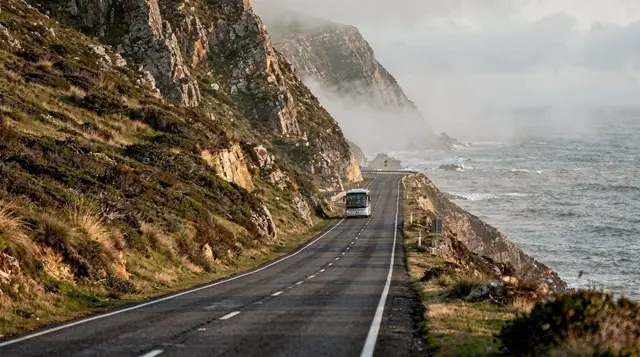
Cape Point sits at the dramatic southern tip of the Cape Peninsula, cliffs dropping into the Atlantic below a historic lighthouse, and it’s one of the most photographed places in South Africa. It’s also one of the most mythologised — much of what visitors think they know about it is quietly wrong. Here’s what’s actually there, and the correction worth knowing before you go.
| Where | Southern tip of the Cape Peninsula, within the Cape of Good Hope section of Table Mountain National Park |
| Getting there | Roughly an hour’s drive from central Cape Town, via the peninsula’s western or eastern routes |
| Time needed | A few hours for both Cape Point and the Cape of Good Hope headland |
| Wildlife | Chacma baboons throughout the reserve, plus antelope and coastal birdlife |
| Best time | Morning, before wind picks up and before tour buses arrive in numbers |
Clearing up the two-oceans myth
Cape Point is very often described as the place where the Atlantic and Indian Oceans meet, and as Africa’s southernmost point. Neither is accurate. The Atlantic and Indian Oceans are officially recognised as meeting at Cape Agulhas, roughly 150 kilometres to the south-east, which is also the actual southernmost tip of the African continent — not Cape Point. The confusion is old and widespread enough that it’s practically part of local folklore, and it doesn’t take anything away from Cape Point’s genuine drama as a headland; it’s simply worth knowing the real geography before someone repeats the myth to you as fact on the day.
Cape Point tour from Cape Town covers the headland itself along with the wider reserve, giving proper context for what you’re actually looking at rather than the popular misconception.
Cape Point versus the Cape of Good Hope
Within the same reserve, two distinct headlands draw visitors: Cape Point, the higher, more dramatic promontory topped by a historic lighthouse and reached via a funicular railway nicknamed the Flying Dutchman, and the Cape of Good Hope, a separate, lower headland nearby with its own cliffs and a well-known signboard that’s become one of the most photographed spots in the reserve. Most visits cover both in a single stop, since they sit close together within the same protected area, but it’s worth knowing they’re two different places rather than two names for the same spot.
Cape of Good Hope and Cape Point half-day tour is a practical way to see both headlands without needing to plan the internal logistics of the reserve yourself.
The funicular, and walking the old lighthouse
The original Cape Point lighthouse sits near the top of the headland, and rather than face the steep climb on foot, most visitors take the funicular railway up, saving time and effort for what’s otherwise a genuinely demanding walk in full sun. Walking is entirely possible too, and rewards those who do it with a slower approach to the view opening up gradually. Either way, the summit delivers sweeping views back along the peninsula’s cliffs and out over the open Atlantic — on a clear day, one of the best coastal panoramas anywhere near Cape Town.
Full-day tour to Cape of Good Hope and Cape Point pairs the headland visit with wider peninsula sightseeing, useful if you want to make a full day of the drive out rather than a quick stop.
Baboons: a genuine, manageable risk
Chacma baboons live throughout the Cape of Good Hope reserve and along much of the peninsula, and they’re one of the more consequential wildlife encounters visitors have here — not because they’re inherently dangerous, but because years of contact with food from cars and visitors have taught some troops to actively associate people with an easy meal. The rule is simple and non-negotiable: never feed baboons, and never leave food visible in a car, backpack or hand. A habituated baboon that’s learned to expect food can become genuinely aggressive trying to get it, and vehicles have been broken into by baboons who’ve spotted food inside. Keep windows closed and food out of sight, and treat any close baboon encounter as a reason to move calmly away rather than to interact.
Cape Point and Boulders Beach full-day tour combines the headland with the peninsula’s other major wildlife stop — see the Boulders Beach penguins guide for what to expect there, including its own set of animal-safety notes.
Wildlife beyond the baboons
Beyond the baboons, the reserve supports antelope species including eland and bontebok, ostriches that wander close enough to roads to surprise drivers, and a wide range of coastal and fynbos birdlife. It’s a genuine nature reserve as much as a scenic viewpoint, and visitors with time to explore some of its walking trails beyond the two headland car parks are rewarded with a quieter, wilder side of the peninsula.
Getting there: the loop versus a direct drive
Most visitors reach Cape Point as part of a wider loop around the peninsula, often combining the drive out along Chapman’s Peak with a return via the eastern side through Simon’s Town or vice versa — see the Cape Peninsula day tour guide for how that full loop typically fits together. A direct drive from the City Bowl takes roughly an hour each way, making Cape Point comfortably doable as a half-day trip if the wider loop isn’t what you’re after.
Cape Point helicopter tour offers a genuinely different perspective on the same headland for visitors wanting an aerial view of the cliffs and coastline rather than the standard road approach.
What to bring for a Cape Point visit
The reserve’s exposure to wind and sun makes basic preparation worthwhile even for what looks like a short stop. A hat and sunscreen matter given how little shade the headland offers, and a windproof layer is worth carrying regardless of how warm the City Bowl felt that morning — the peninsula’s southern tip catches wind more consistently than most other stops on a typical Cape Town itinerary. Sturdy, closed shoes make the walk to the lighthouse considerably more comfortable than sandals, particularly on the older, uneven sections of path. If you’re planning to explore beyond the two main car parks into the reserve’s quieter walking trails, treat it as you would any hike elsewhere on the peninsula: carry water, tell someone your rough plan, and don’t assume mobile signal will be reliable throughout the reserve.
tours.cape-peninsula
Verified deep-linked GetYourGuide tours. Book through these links and we earn a small commission at no cost to you.
Photos show the destination, not the operator's own images.