Seal colonies and Duiker Island
Are the animals at Duiker Island seals or sea lions?
Neither, strictly speaking — they're Cape fur seals, which despite the common name are actually classified as eared seals, a family that also includes sea lions, and are biologically distinct from true (earless) seals like the harbour or elephant seal. In everyday use most visitors and operators simply call them seals, which is accurate enough for a boat trip, but worth knowing if the biology interests you.
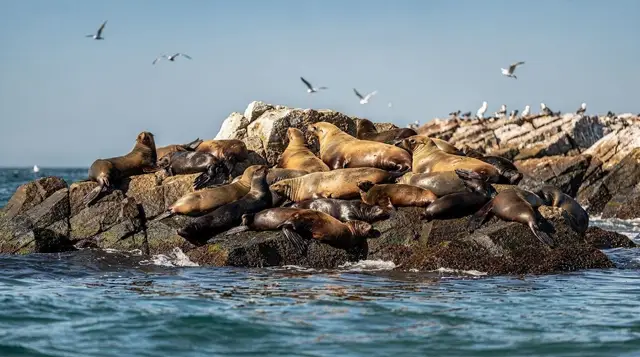
Duiker Island, a small rocky outcrop just off Hout Bay on the Atlantic side of the Cape Peninsula, holds one of the most accessible wildlife sightings near central Cape Town: a large resident colony of Cape fur seals, visible on a short boat trip that fits easily around a Cape Point or Chapman’s Peak day rather than requiring its own dedicated outing.
| Where | Duiker Island, just off Hout Bay harbour |
| Time needed | Under an hour on the water for most standard trips |
| Getting there | Boat departs from Hout Bay harbour, roughly 20-30 minutes from central Cape Town |
| What you’ll see | A large resident Cape fur seal colony |
| Best combined with | A Cape Peninsula day including Chapman’s Peak Drive and Cape Point |
Seals, not sea lions — and not quite “true seals” either
The animals at Duiker Island are Cape fur seals, and the terminology is worth a moment’s clarification. Despite the everyday name “seal,” they belong to the eared seal family alongside sea lions, distinguished from true, earless seals — the kind more familiar from cold-water documentaries — by visible external ears and the ability to rotate their rear flippers underneath their bodies to walk on land, something true seals can’t do. For a casual visitor, calling them seals is entirely standard and accurate enough; the eared-versus-true-seal distinction is more a point of biological interest than something that changes what you’ll see on the trip.
Cape fur seals are the largest of the fur seal species, and Duiker Island’s colony is a genuinely substantial one — expect to see seals hauled out on the rocks in large numbers, as well as active in the water around the boat.
What a typical trip involves
Most Duiker Island trips are short, focused boat rides: departure from Hout Bay harbour, a run out to the island, time circling it for viewing, and the return — often under an hour door to door on the water. This 30-minute seal watching harbour cruise is representative of the format, brief enough to slot into a busy sightseeing day without eating into the rest of your schedule.
This harbour boat cruise with seal watching follows a similar structure, departing from the same harbour and covering broadly the same viewing area.
Combining seals with other coastal wildlife
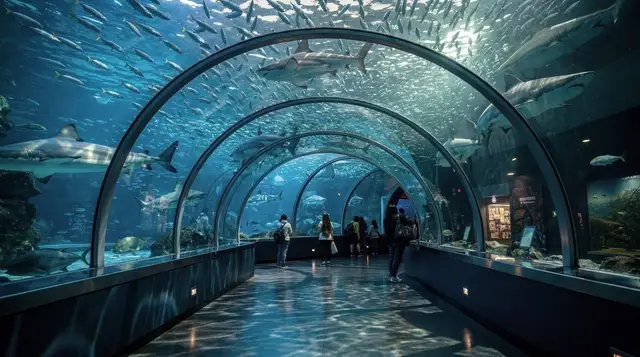
Some boat trips extend beyond seal watching alone to include broader marine wildlife viewing along the coast, occasionally with underwater viewing options built into the boat itself. This seal watching and scenic tour with underwater viewing is worth considering if you’d like a longer trip that covers more of the coastline rather than a quick there-and-back to the island alone.
Seals as part of a bigger Cape Point day
Duiker Island isn’t the only place along the Peninsula to see seals — some Cape Point and Cape of Good Hope tours build in a seal sighting alongside penguins and other Peninsula wildlife as part of a longer day. This Cape of Good Hope tour with Chapman’s Drive, penguins and seal island combines several of the Peninsula’s wildlife stops into one itinerary, useful if you’d rather not book Duiker Island as a completely separate trip.
This private Seal Island and Cape of Good Hope penguins tour follows a similar combined format for visitors who prefer a private vehicle over a shared boat-and-coach itinerary.
How it fits into a wider trip
Given how brief and centrally located it is, Duiker Island rarely needs to be the anchor of a day the way Hermanus whale watching or a Gansbaai shark trip does. It slots naturally into a Hout Bay stop on a broader Cape Peninsula route, particularly for visitors already planning to pass through Hout Bay en route to or from Chapman’s Peak Drive and Cape Point.
For visitors who’ve already seen the larger, more famous colonies elsewhere along the coast, Duiker Island is still worth the short detour — the sheer number of seals visible in one place is a genuinely striking sight, regardless of what else is on the day’s itinerary.
What to expect on the water
Hout Bay harbour itself is worth a few minutes before or after the boat trip — it’s a working fishing harbour as much as a tourist departure point, with fish markets and stalls that give a different flavour from the more polished V&A Waterfront. Boats to Duiker Island are generally small to mid-sized passenger vessels rather than large cruise-style craft, which keeps the trip feeling close to the water and the seals rather than distant and removed.
Weather affects the trip more than some visitors expect for something this short — Hout Bay can be noticeably windier or choppier than the more sheltered parts of central Cape Town, and a rough day can mean the boat stays closer to the harbour or the trip is shortened. Operators generally make this call for safety and comfort reasons rather than as a shortcut, so a shorter-than-usual trip on a blustery day isn’t a sign of a bad operator.
Smell and noise, honestly
Worth mentioning plainly: a large seal colony is neither quiet nor odourless, and boats do get reasonably close to the rocks where seals haul out in large numbers. This is a genuine part of the experience rather than a flaw — the noise and smell are exactly what you’d expect from a wild colony of this size living in close quarters, and most visitors find it adds to the sense of encountering something real rather than a sanitised wildlife exhibit. It’s worth setting that expectation for anyone travelling with people who might be squeamish about it.
Photography tips
Seals are most active, and often most entertaining to watch, when moving through the water around the boat rather than hauled out motionless on the rocks — a longer lens or simply patience for a seal to slip into the water near the boat tends to produce better photos than shots of the resting colony alone. Bright, overcast days generally give more even lighting for photography than harsh midday sun, though the trip runs regardless of conditions within reason.
Frequently asked questions about Seal colonies and Duiker Island
What is Duiker Island, and where is it?
A small rocky island just off Hout Bay, on the Atlantic side of the Cape Peninsula, home to a large resident colony of Cape fur seals. It’s one of the most accessible wildlife-viewing boat trips near central Cape Town, requiring no long drive out of the city.
How long does a Duiker Island boat trip take?
Most trips run under an hour on the water, making it one of the shortest wildlife boat trips available near Cape Town — easy to fit alongside other Cape Peninsula sightseeing on the same day.
Can you get in the water with the seals at Duiker Island?
Standard Duiker Island cruises are viewing trips from the boat rather than in-water encounters. Separate seal-snorkelling experiences exist at other locations along the coast for visitors specifically wanting to get in the water with them.
Is a seal boat trip worth doing alongside a Cape Peninsula day?
Generally yes, given how short and centrally located it is compared with Hermanus or Gansbaai — it fits naturally into a Hout Bay stop on a Cape Point or Chapman’s Peak day rather than requiring a dedicated outing.
tours.whales-marine
Verified deep-linked GetYourGuide tours. Book through these links and we earn a small commission at no cost to you.
Photos show the destination, not the operator's own images.