Table Mountain hiking routes compared
Which Table Mountain hiking route should a first-timer choose?
Platteklip Gorge, from the City Bowl side, is the standard first choice — it's the most direct route to the plateau and the easiest to navigate, though it's also steep and fully exposed to the sun with no shade cover. Skeleton Gorge, starting from Kirstenbosch, is a gentler, greener alternative for hikers who'd rather trade a longer walk for more shade and less relentless gradient.
Table Mountain has more than one way up, and they’re genuinely different days out, not just variations on the same walk. Pick the wrong one for your fitness or tolerance for exposure and you’ll either be miserable halfway up or disappointed by how tame it felt. Here’s how the main routes actually compare, so you can match one to the day you actually want.
| Where | Multiple trailheads around the mountain’s base — City Bowl, Kirstenbosch, Camps Bay side |
| Difficulty range | Steep and direct (Platteklip) to gentle and forested (Skeleton) to scrambling (India Venster) |
| Time needed | Several hours round trip on any route, depending on fitness and pace |
| Getting down | Most hikers combine an ascent on foot with a cableway descent, or vice versa |
| Best time | Early morning start, avoiding the hottest and windiest part of the day |
Platteklip Gorge: the direct route
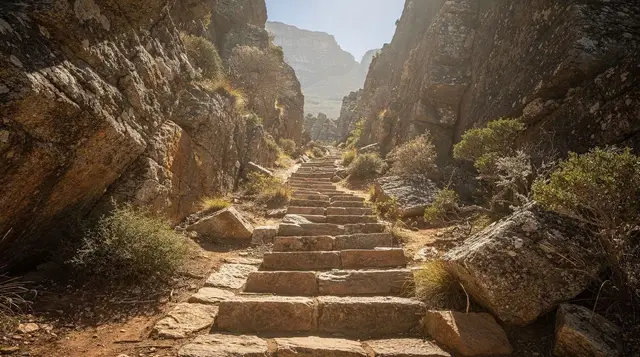
Platteklip Gorge climbs straight up the mountain’s City Bowl-facing side, following a single, unmistakable gorge from the base to the plateau. It’s the route most first-time hikers default to, partly because it’s the closest trailhead to central Cape Town and partly because there’s no navigation to think about — it’s one path, up. That simplicity comes at a cost: the gorge is steep throughout, entirely exposed to the sun with no tree cover, and demands sustained effort rather than any easy stretches. See the full Platteklip Gorge guide for what the climb actually involves.
Table Mountain Platteklip Gorge hike is worth booking as a guided option if you’d rather not tackle the exposure and pacing alone on a first attempt.
Skeleton Gorge: the gentler, greener option
Starting from Kirstenbosch Botanical Garden on the mountain’s eastern flank, Skeleton Gorge climbs through indigenous forest with several stream crossings before emerging near Maclear’s Beacon, the mountain’s actual highest point on the Back Table. It’s longer than Platteklip in distance, but the shade and more forgiving gradient make it feel less punishing overall, and it’s the route most often recommended to hikers who found Platteklip’s exposure off-putting on a previous visit or who are hiking in hotter conditions.
Table Mountain Skeleton Gorge hike covers this route with a guide, useful given the path-finding through forest and across streams is less obvious than Platteklip’s single straight gorge.
India Venster: scrambling, not just walking
India Venster is the route hikers mean when they talk about Table Mountain being a genuine mountain experience rather than a steep walk. It threads along the mountain’s face beneath the cableway line, involving real scrambling over rock, chains and ladders in places, and stretches of exposure that put it a clear step up from Platteklip or Skeleton Gorge in difficulty. It rewards hikers with scrambling confidence and a head for heights with a far more varied, engaging climb than a straight gorge trudge, but it’s not the route to attempt as a first Table Mountain hike if you’re uncertain about your comfort with exposed rock.
Table Mountain hike via India Venster is best done with a guide who knows the scramble sections, given the route-finding and exposure involved are meaningfully harder to judge solo than on the more straightforward gorges.
Kasteelspoort and the Camps Bay side
On the mountain’s Atlantic side, routes like Kasteelspoort climb from around Camps Bay and Kloof Corner up onto the plateau, offering ocean views over the Atlantic seaboard rather than the City Bowl outlook Platteklip provides. These routes are less crowded than the City Bowl trails and appeal to repeat visitors looking for a different approach, though they’re generally less well-marked for a first-timer than Platteklip’s obvious single gorge.
Table Mountain half- and full-day hikes covers a range of these lesser-used approaches with guided support, a sensible way to explore beyond the two or three best-known routes.
How the routes feel on the ground
Descriptions of gradient and distance only go so far; what separates these routes in practice is how each one asks you to spend your energy. Platteklip Gorge is a rhythm climb: the same worn stone steps repeat for the whole ascent, so the challenge is mental as much as physical, and a steady pace you could hold for a long time beats any early burst. Skeleton Gorge is more varied, with roots, rocks, damp ground and stream crossings that keep your attention on your feet rather than on the slope. India Venster asks for the opposite of rhythm, because you are constantly stopping to choose a hold, check a foothold or wait for the person ahead on a ladder.
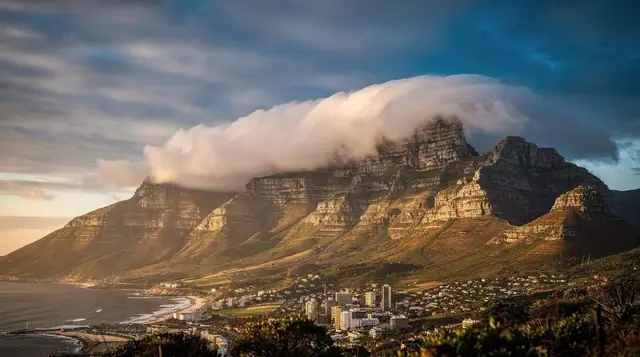
That difference matters when you are planning a group outing. A mixed-fitness group usually copes better on a route where everyone can climb at their own speed and regroup at the top than on a scramble where the slowest person sets the pace for everyone and where waiting around on exposed rock is its own kind of tiring. If your party includes someone nervous about heights, steer them towards the gorges and keep the scramble for another day. For a wider look at the mountain itself, the Table Mountain destination page sets out how the different sides of the massif fit together.
Which trailhead suits your base in Cape Town
Where you sleep changes which route is easiest to reach before the day warms up. Staying in the City Bowl or around the central neighbourhoods makes Platteklip Gorge the natural pick, since the trailhead sits on the edge of that part of town and an early start needs little logistics. Our City Bowl destination page covers that part of town if you are still choosing where to stay.
Skeleton Gorge starts inside Kirstenbosch, so it pairs naturally with a visit to the garden itself; the Kirstenbosch guide explains what to see before or after the hike. The Atlantic-side approaches begin closer to Camps Bay, which suits travellers staying along that coast, and the Camps Bay and Clifton guide helps you plan around it. If you have no car, the getting around Cape Town guide and the guide to Uber in Cape Town are worth reading before you decide, because reaching a trailhead at dawn is often the real logistical hurdle.
Choosing between hiking, the cableway and a different peak
Not everyone who wants a mountain day needs to climb Table Mountain on foot. If the weather looks uncertain, or you are travelling with people who would rather not hike, the Table Mountain cableway versus hiking comparison weighs the two approaches honestly. If you want a shorter outing with a big reward, the Lion’s Head hike guide describes a very different and more sociable climb, and Lion’s Head and Signal Hill shows how that corner of the city fits together.
Weather deserves its own mention because it decides whether any of these routes is a good idea on a given morning. The famous cloud that spills over the plateau can arrive quickly, so read the Table Mountain weather and tablecloth guide before you commit, and keep the what to do when Table Mountain is closed article in mind as your fallback plan.
Matching a route to your fitness and time
| Route | Character | Best for |
|---|---|---|
| Platteklip Gorge | Steep, direct, no shade | First-timers wanting the most straightforward climb |
| Skeleton Gorge | Longer, forested, gentler gradient | Hikers who want shade and a less punishing incline |
| India Venster | Scrambling, exposed, technical | Confident hikers wanting a genuine mountain challenge |
| Kasteelspoort | Ocean-facing, quieter | Repeat visitors wanting a different view and fewer crowds |
Combining a hike with the cableway
Whichever route you pick, most hikers don’t walk both ways. Climbing up and taking the cableway down is the most popular combination, sparing your knees the steep descent while still earning the summit on foot — see the Table Mountain cableway guide for how that connection actually works, including the weather dependency that can affect your descent plan.
Table Mountain National Park guided hike is a solid all-round option if you’re still undecided between routes and would rather have a guide match the day’s conditions and your fitness to the right trail on arrival.
Fitting a hike into the rest of your trip
A Table Mountain hike is best treated as the anchor of a day, not a box to tick in the middle of a packed schedule. Tired legs the next morning are normal, so avoid scheduling a long drive or another demanding outing straight after. The how many days in Cape Town guide and the Cape Town outdoors itinerary show how active days can be spaced out, while the first-timer four-day itinerary suggests where a mountain day sits in a shorter stay. If you only have a single day in the city, the Cape Town in one day guide will help you decide whether a hike is realistic at all.
After the descent, the easiest reward is somewhere to sit down. The Cape Town food guide and the coffee and craft beer guide are good places to look for a post-hike meal in the city.
Preparation that applies to every route
Regardless of which gorge or trail you choose, the same basics apply: start early, before the heat and wind build through the day; carry more water than feels necessary, since none of these routes has reliable resupply once you’re climbing; wear proper hiking shoes with real grip rather than trainers, particularly on Platteklip’s loose, worn stone steps; and check the day’s weather and cableway status before committing, in case a planned cable descent isn’t running. See the Table Mountain safety guide for the fuller picture on hiking safely here.
What to carry regardless of route
Some preparation applies across every route on this mountain, not just the one you eventually pick. A map or downloaded offline trail reference is worth having even on well-marked paths like Platteklip Gorge, since cloud or fog can reduce visibility with little warning and make an otherwise obvious path harder to follow. Layers matter more than a single warm jacket — temperature and wind both shift noticeably between the base and the plateau, and what feels comfortable at the trailhead can feel genuinely cold at the top, especially waiting for a cableway descent. A basic first aid kit, while rarely needed, is sensible given how far some sections sit from quick assistance, and letting someone know your intended route and rough return time costs nothing and matters considerably if plans change unexpectedly partway up.
Respecting the mountain and other hikers
Table Mountain sits inside a national park and shelters fynbos found almost nowhere else, so staying on the path is both a safety habit and a courtesy to the plants. The fynbos and Cape Floral Kingdom guide explains why the vegetation underfoot is worth noticing on the way up. Carry out everything you carry in, keep to the marked line on the busier gorges, and give way to people coming down on narrow sections.
It is also sensible to read up on personal security before you set off. The Cape Town safety guide covers the wider picture, including what to leave in your accommodation and how to travel to and from a trailhead. Travelling alone or in a pair deserves extra thought on the quieter routes, and the solo travel article has more on that. If you finish the hike with energy to spare, the Cape Town viewpoints article and the sunset spots article suggest other places to enjoy the city from above.
tours.table-mountain
Verified deep-linked GetYourGuide tours. Book through these links and we earn a small commission at no cost to you.
Photos show the destination, not the operator's own images.