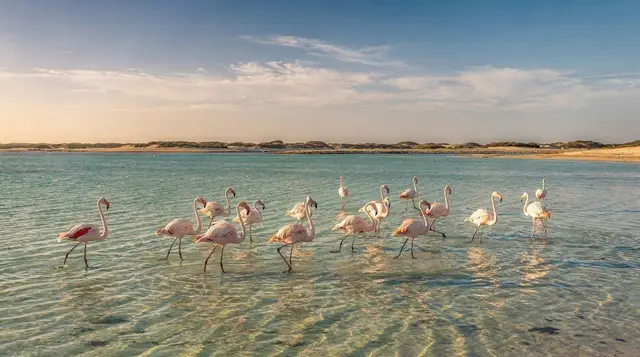
Langebaan anchors the West Coast for most Cape Town-based visitors — a genuinely striking turquoise lagoon that looks more Caribbean than South African Atlantic, steady wind that’s made it one of the country’s best kitesurfing and windsurfing spots, and the neighbouring West Coast National Park, home to the region’s famous spring wildflower displays when the season delivers.
| Where | West Coast, roughly 1.5 hours’ drive from Cape Town CBD |
| Time needed | A full day trip covers the lagoon and a portion of the national park; a weekend allows time for watersports plus a proper park visit |
| Getting there | Self-drive via the R27 coastal route is straightforward; guided day tours run from Cape Town, especially during wildflower season |
| Cost | West Coast National Park charges a conservation entry fee — check current rates directly; watersports rentals and lessons vary by operator |
| Best time | Roughly August-September for wildflowers, rainfall dependent; the lagoon and watersports are viable year-round, most comfortable in the warmer months |
The lagoon: what makes Langebaan itself distinctive
Langebaan Lagoon, a large, shallow tidal lagoon protected from the open Atlantic’s rougher swell, is unusually clear and turquoise for this stretch of coast — a genuine visual surprise for visitors expecting the colder, more muted tones typical of the Cape’s Atlantic seaboard. The sheltered, consistently windy conditions have made it one of South Africa’s most established kitesurfing and windsurfing destinations, with a season that runs through the warmer months and a well-developed local instruction and rental scene.
Atlantic beach quad biking at Langebaan is a land-based alternative for visitors who want an active outing along the coast without getting in the water — a reasonable option on a day when the wind is too strong for comfortable watersports but still perfectly good for exploring the dunes and beach on wheels instead.
West Coast National Park: more than just flowers
The West Coast National Park wraps around much of Langebaan Lagoon and protects a genuinely varied landscape beyond its wildflower reputation: coastal fynbos, wetlands supporting significant numbers of migratory wading birds, and offshore islands with breeding seabird colonies. Birdwatchers visiting outside wildflower season still find plenty here, since the park’s ecological value doesn’t depend on any single seasonal display.
A one-day guided tour of the West Coast National Park covers the park’s broader ecology for visitors who want more than a drive-through of the flower routes.
The wildflower season: honest expectations
The West Coast’s spring wildflower displays — vast stretches of daisies and other annuals carpeting the veld in orange, white and purple — are a genuine natural spectacle when conditions align, typically in a window around August to September. The critical caveat: the display’s intensity is directly tied to the preceding winter’s rainfall, and a dry winter can produce a markedly thinner bloom, delay it, or in poor years reduce it substantially compared with the postcard photos most visitors have seen. This isn’t a fixed calendar event like a festival; it’s a weather-dependent natural phenomenon that varies genuinely year to year.
A West Coast National Park flower tour with tasting is worth booking closer to your actual travel dates, once current flower reports are available, rather than committing months in advance on an assumed peak.
For a more active, hiking-focused way to see the flowers where conditions allow, a wildflower trails hiking tour covers ground the drive-through flower routes miss.
Whale watching from Langebaan
Less widely known than the Whale Coast’s Hermanus, Langebaan’s Atlantic-facing waters also see whale activity during the season, including species that migrate along this coastline. It’s a genuinely different, less crowded whale-watching option than the Hermanus routes for visitors already based on the West Coast.
An Atlantic Ocean whale watching expedition from Langebaan covers this less-visited alternative directly.
The town itself
Langebaan town has grown considerably as a weekend and holiday destination for Capetonians, with a reasonable spread of restaurants and accommodation along the lagoon front, more developed than most other West Coast towns covered on this site. It leans toward a relaxed, beach-holiday atmosphere rather than a heritage or wine-focused one, which suits travellers looking for a genuine change of pace from the Winelands or the Cape Peninsula.
The lagoon’s ecological importance is a large part of why so much of it falls within the national park’s boundaries rather than being left open to unrestricted development: it’s an internationally recognised wetland, supporting large numbers of migratory wading birds that pass through on routes stretching as far as the Arctic, alongside resident species that breed on the lagoon’s islands. That status is worth keeping in mind on the water — certain zones within the lagoon carry restrictions on watersports specifically to protect these bird populations, so check current zoning before assuming the whole lagoon is open to kitesurfing or boating.
What isn’t worth the detour
Visiting purely for wildflowers without checking a current flower report first is a real risk of disappointment, particularly in drier years — the West Coast’s rainfall has been variable enough in recent years that assuming a reliable annual bloom is not a safe bet. If flowers are the sole reason for the trip, build in flexibility on dates, or have the lagoon and national park’s other attractions as a genuine backup plan rather than an afterthought.
Getting there and around
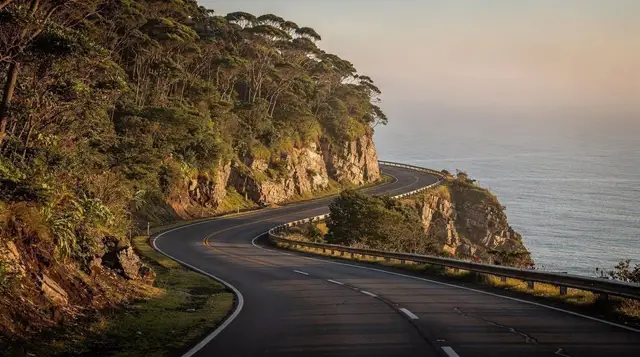
Self-driving from Cape Town takes roughly 1.5 hours via the R27 coastal route, a straightforward and largely flat drive compared with the mountain passes required to reach the Winelands or Whale Coast. A car is genuinely useful for reaching different parts of the national park and the wider West Coast, since public transport options here are limited compared with routes closer to Cape Town.
How this fits into a longer trip
Langebaan and the West Coast National Park work as a standalone day trip or weekend from Cape Town, distinct from the Winelands and Whale Coast routes most itineraries default to. Travellers continuing further north sometimes extend toward the Cederberg, though that’s a considerably longer drive better treated as a separate leg of the trip rather than a same-day extension.