Four days in Cape Town's whale season
This itinerary only makes sense within a specific window. Southern right whales move along the Cape’s coastline roughly from June to November, and Hermanus’s cliffs are one of the best land-based whale watching spots in the world during that stretch — visible without a boat, often close enough to shore to see clearly with the naked eye. Outside that window, the whales largely aren’t there, and a trip built around them won’t deliver what it promises. If you’re planning this for December through May, pick a different itinerary and save this one for the right season.
| Best for | Travellers visiting roughly June-November who want whale watching as the trip’s centrepiece |
| Pace | Four days, one dedicated whale day, the rest spread across the coast |
| Getting around | A rental car — Hermanus is around ninety minutes from Cape Town |
| Season | Roughly June to November for southern right whales; outside this window, skip the trip |
| Weather note | Boat trips can be cancelled for rough seas; land-based viewing at Hermanus doesn’t depend on a boat |
Day 1 — Cape Town orientation, mountain if the weather allows
Start in the city before heading out to the coast. If conditions are calm, use today for Table Mountain — but hold it loosely rather than fixing it here; the cableway closes for wind, low cloud or maintenance without much warning, so check the forecast and be ready to move this to another day in the trip if it doesn’t cooperate. If the mountain’s out for the day, a slower walk through the City Bowl works just as well as a first-day warm-up before the drive to Hermanus.
Day 2 — Hermanus, land-based whale watching
Drive out to Hermanus, roughly an hour and a half from Cape Town — one of the few places in the world where you can reliably watch whales from the cliffs without getting on a boat at all. Southern right whales come close to shore here to calve and nurse, and the cliff path along the town gives long stretches of viewing with no ticket required. For a guided version that adds context and knows where the whales have been sighted recently, the Hermanus best whale watching boat trip from Cape Town or the Hermanus whale watching day trip from Cape Town both combine the transfer with a boat-based viewing option, useful if you’d rather not drive yourself or want a closer-water encounter than the cliffs give.
Boat trips can be called off for rough seas at short notice — a real possibility during the winter months when the whales are most reliably present. If that happens, the cliff path is the fallback, not a downgrade: land-based viewing here is genuinely excellent and doesn’t depend on sea conditions the way a boat trip does.
Day 3 — Gansbaai
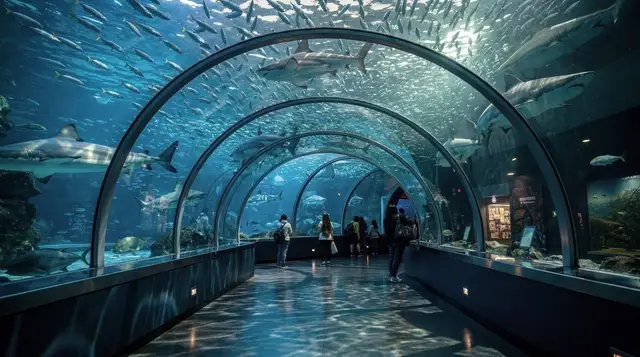
Continue along the coast to Gansbaai, known for great white shark activity in its waters — a different kind of marine wildlife day from Hermanus’s whales. The Gansbaai eco-friendly shark cage diving cruise is the main draw here, and it runs as a full-day outing once transfer time is factored in from either Cape Town or Hermanus. Be realistic about seasickness on the crossing if you’re prone to it, and know that sightings aren’t guaranteed on any single trip — a genuine wildlife encounter, not a scripted show. If the sea’s too rough to run the day you’d planned, most operators offer a rebooking rather than a refund-only cancellation, worth confirming when you book.
Day 4 — Cape Point and Boulders Beach on the way back
Loop back towards Cape Town via the peninsula rather than driving straight back the way you came. The Cape of Good Hope and penguins full-day tour covers Cape Point and Boulders Beach’s African penguin colony near Simon’s Town, giving the trip a second kind of wildlife day to close on — penguins rather than whales or sharks, and a reliable sight regardless of season or sea state, which makes it a good note to end a weather-dependent trip on.
Getting the timing right within the season
Not every month inside the window behaves the same way. Whales arrive along the coast from around June, but numbers off Hermanus generally build through the season and tend to peak later on, into September and October, before starting to thin out by November as the whales move on. If your travel dates are flexible within the broader season, aim for the middle-to-later stretch rather than the very start of June for the best odds of a strong sighting day. That said, even the quieter edges of the season still produce sightings often enough that a well-timed trip in June or November isn’t a gamble — just don’t expect the numbers of a peak-season October visit.
What if the whales don’t show
Even within the right season, sightings from the cliffs can vary day to day — more whales are typically present later in the season (closer to September-October) than at the very start of the window in June. If a particular day at Hermanus is quiet, the town itself is worth the time regardless: whale-watching lookout points are marked along several kilometres of cliff path, so a slow walk covers more ground than standing in one spot waiting. Gansbaai’s shark cage diving day doesn’t depend on the same sightings, so a slow whale day doesn’t sink the whole trip.
Day-by-day summary
| Day | Focus | Don’t miss |
|---|---|---|
| 1 | Cape Town, Table Mountain (flexible) | Move the mountain day if weather doesn’t cooperate |
| 2 | Hermanus | Land-based cliff-path whale watching, no boat needed |
| 3 | Gansbaai | Shark cage diving, full-day with transfer |
| 4 | Cape Point, Boulders Beach | African penguins as a season-proof closing day |
tours.whales-marine
Verified deep-linked GetYourGuide tours. Book through these links and we earn a small commission at no cost to you.
Photos show the destination, not the operator's own images.