Cape Town's beaches, compared
Which Cape Town beach should I actually go to?
It depends what you want. For the postcard photo and a sundowner, Camps Bay or Clifton on the Atlantic side. For an actual swim, Muizenberg or Fish Hoek on the False Bay side, where the water is noticeably milder. Most visitors do both — they're a world apart in character despite being twenty-odd minutes from each other.
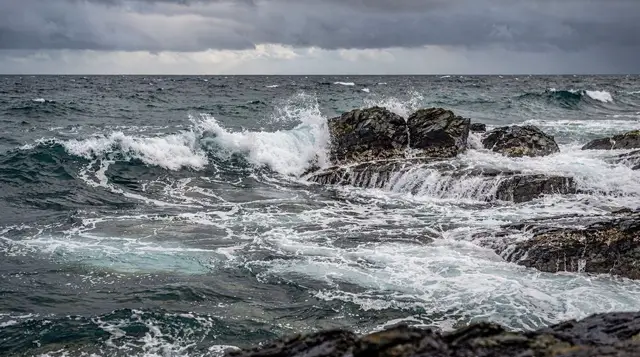
Cape Town sits at the point where two oceans meet, and its beaches split cleanly along that line. On one side, the Atlantic seaboard gives you the beaches everyone’s seen in photos — Camps Bay’s palm-lined strip, Clifton’s four coves tucked below Lion’s Head, Llandudno’s boulders — all backed by mountains and all, without exception, cold. On the other side, around False Bay, the water warms up noticeably and the beaches get quieter, less photographed, and considerably easier to actually swim in. Knowing which side you’re on, and why, changes how you plan a beach day here.
| Where | Atlantic seaboard (Camps Bay, Clifton, Llandudno, Sea Point, Hout Bay) and False Bay (Muizenberg, Fish Hoek, Simon’s Town, St James) |
| Time needed | Half a day per beach is plenty; a full day if you’re combining two on opposite coasts |
| Getting there | Self-drive, MyCiTi bus on some routes, or a guided tour that strings a few together |
| Cost | Free to access; parking, umbrella hire, and any water activities cost extra |
| Best time | Summer (December-February) for warmth and long evenings; mornings are calmer than afternoons year-round |
The Atlantic side: the famous ones
Camps Bay is the beach most people picture when they think of Cape Town — a wide stretch of white sand facing straight into the Atlantic, backed by the jagged line of the Twelve Apostles, with a strip of restaurants and bars across the road that gets properly lively at sunset. Clifton, a short drive north, trades the restaurant strip for four numbered coves separated by granite boulders, each with a slightly different crowd and a bit more shelter from the wind than the open beaches nearby. Both are genuinely beautiful. Both are also cold, in the bracing, not-warming-up-after-a-minute sense, because they sit in the path of the same current that keeps the whole Atlantic seaboard chilly year-round — Llandudno and Hout Bay further along the coast are no different.
A kayak trip from Clifton is a good way to see the coves from the water without needing to linger in the sea itself, and it gets you views of the boulders and the mountain backdrop that you don’t get from the sand.
The False Bay side: the swimmable ones
Round the peninsula, on the False Bay coast, the character changes completely. Muizenberg, with its row of brightly painted Victorian bathing huts, is the classic learn-to-surf beach precisely because the water here is milder and the waves are gentler than anything on the Atlantic side — it’s where most first-time surfers in Cape Town start. Fish Hoek and St James continue the pattern: family-friendly, tidal-pool-dotted, and genuinely comfortable to swim in rather than something you brace for. Simon’s Town, further south, adds the added novelty of a resident penguin colony at nearby Boulders Beach. The full explanation of why this side is so different — and how to choose between the two coasts on any given day — gets its own dedicated guide on swimming in Cape Town’s two oceans.
A stand-up paddleboard rental with basic training works well on the calmer water here for anyone who wants to get out on the sea rather than just swim in it.
Sea Point, Mouille Point, and the walk between them
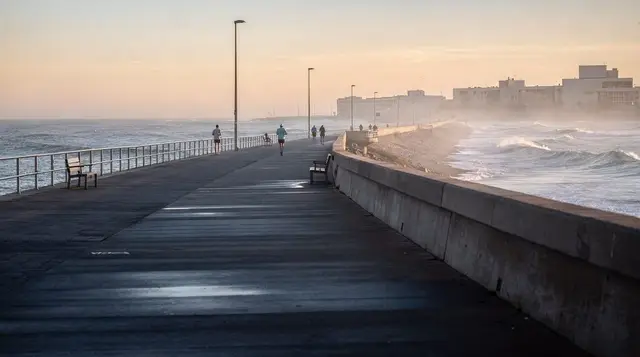
Between the Atlantic beaches proper and the V&A Waterfront runs the Sea Point promenade — a long, flat, paved seafront walk that’s less about swimming and more about the view, the walkers and joggers, and the outdoor pools dotted along it. It’s not technically a beach day out, but it’s worth knowing about if you want the coastal scenery without committing to sand or cold water, and the full guide to the promenade covers it in detail.
The wind, and when to actually go
The south-easterly wind Capetonians call the Cape Doctor is a real factor in picking a beach, not just a curiosity. It’s strongest in summer, tends to pick up through the afternoon, and can make the more exposed Atlantic beaches genuinely unpleasant to sit on by mid-afternoon — sand in the air, umbrellas fighting to stay upright. Mornings are consistently calmer. If a specific afternoon looks windy, the sheltered coves at Clifton or a False Bay beach tend to hold up better than the open sweep of Camps Bay.
A golden-hour photo shoot at Noordhoek beach is worth considering if you want the wide, empty-sand look Noordhoek is known for, away from the busier central beaches, timed for calmer evening light.
Making the most of a beach day without swimming
Plenty of visitors come away from Cape Town’s beaches without getting properly wet, and that’s a legitimate way to enjoy them — the views, the walks, the restaurants across the road at Camps Bay, and the photography are reasons enough on their own.
A professional beach photography session is a popular way to come away with something more considered than a phone snap, using the mountain-and-ocean backdrop that makes these beaches distinctive in the first place. And for a first-timer trying to see several beaches without committing to a full self-drive itinerary, this full-day private beaches tour strings together a sensible route across both coasts with a driver who knows which beach suits which mood on a given day.
Getting between the two coasts
The Atlantic and False Bay beaches aren’t next door to each other — driving from Camps Bay to Muizenberg, for instance, takes you most of the way around the peninsula or back through the city, depending on the route. That’s worth factoring into any plan to “do both” on the same day: it’s entirely doable, but it’s a proper drive between them, not a quick hop, so build in the travel time rather than treating the two coasts as adjacent stops. Self-driving gives the most flexibility, and South Africa drives on the left, which is worth a moment’s adjustment if you’re not used to it. A guided tour removes that consideration entirely and tends to know which beach suits the day’s wind and crowd levels better than a first-time visitor would guess alone.
Families and beaches without a strong current
Not every visitor wants big waves or a boat trip — plenty just want a safe, easy stretch of sand for kids to potter about on. St James and Fish Hoek, on the False Bay side, tend to be the better picks for that specifically: shallower, calmer, and closer to cafés and facilities than some of the more remote spots along the coast. The Atlantic beaches can work too for a supervised paddle at the water’s edge, but given the cold and, at Clifton, the walk down and back up, they generally suit older kids and adults better than a family with very young children in tow.
Picking based on what you actually want
If the goal is the photo, the sundowner, and the mountain backdrop, the Atlantic side wins outright — just don’t plan on a long swim. If the goal is an actual swim, especially with kids or anyone who isn’t keen on cold water, head to the False Bay side and treat the Atlantic beaches as a separate, scenery-focused outing. Trying to force both purposes onto a single beach is the most common way visitors end up disappointed.
tours.beaches-coast
Verified deep-linked GetYourGuide tours. Book through these links and we earn a small commission at no cost to you.
Photos show the destination, not the operator's own images.