Elgin Valley and the neighbouring town of Grabouw are South Africa’s most productive apple and pear-growing region, a fact most Cape Town visitors drive straight past on the N2 without realising — the same valley that supplies a significant share of the country’s fresh and export fruit has, in the past couple of decades, also developed a genuine reputation for cool-climate wines and cider, alongside a growing spread of outdoor activities that make it more than a fruit-farming footnote.
| Where | Overberg, roughly 1 hour’s drive from Cape Town CBD |
| Time needed | Half a day for a quad biking outing or tasting stop; a full day if combining several activities |
| Getting there | Self-drive via the N2 over Sir Lowry’s Pass, or as a stop on a guided Whale Coast day tour |
| Cost | Activity and tasting costs vary by operator — check current rates directly |
| Best time | Year-round; autumn (roughly March-May) coincides with apple harvest, spring brings orchard blossom |
Why apples, specifically, here
Elgin Valley’s particular combination of altitude, cooler temperatures than the surrounding lowlands, and reliable winter chill hours — the cold period fruit trees need to properly set flower buds — makes it unusually well suited to apple and pear cultivation compared with most of South Africa’s warmer growing regions. The valley supplies a substantial share of the country’s fresh and export apple crop, and the same cool-climate conditions that suit apples have, more recently, proven well suited to certain wine grape varieties too, particularly those that struggle in the Cape’s warmer inland valleys.
An emerging wine and cider region
Elgin’s wine industry is considerably younger and smaller than Stellenbosch’s or Franschhoek’s, built largely around the same cool-climate advantage that favours the apples — producers here have leaned into varieties like Chardonnay, Pinot Noir and Sauvignon Blanc that benefit from the valley’s lower average temperatures. Cider production has grown alongside this, drawing directly on the valley’s apple-growing heritage in a way that gives Elgin a genuinely distinct identity from the grape-focused Winelands further inland — a rare place in the Western Cape where cider tasting is as legitimate a reason to stop as wine.
Hiking and the Houwhoek mountains
Beyond the orchards and vineyards themselves, the mountains ringing Elgin Valley — including the Houwhoek and Groenland ranges — offer hiking trails through fynbos-covered slopes with views back down over the valley’s patchwork of orchards, a genuinely different landscape from the more manicured wine-country views further inland. Several wine and cider farms in the valley maintain their own short walking trails through working orchard and vineyard land, a low-key way to see the agricultural landscape up close without committing to a full mountain hike.
Quad biking through orchards and fynbos
Elgin and Grabouw have developed into one of the more established quad biking destinations within reach of Cape Town, with routes running through working orchard land, fynbos-covered hills, and in some cases down to waterfalls within the wider valley. It’s a genuinely active, hands-on way to see the landscape that a wine or cider tasting alone doesn’t offer.
An Elgin Valley quad bike tour including a waterfall combines the ride with a specific destination rather than a loop through farmland alone.
For a version that includes a meal alongside the ride, an Elgin Valley quad biking tour with lunch covers the full outing in one booking — a practical choice for a half-day visit that doesn’t want to add a separate stop for food afterwards.
Grabouw: the practical base
Grabouw, the valley’s main town, functions primarily as a working agricultural service centre rather than a tourist destination in its own right — it has less in the way of curated visitor infrastructure than Hermanus or the Winelands towns, but it’s the practical base for reaching the surrounding orchards, farms and activity operators. Its supermarkets and fuel stations also make it a sensible last stop for supplies before continuing on toward Hermanus or the wider Whale Coast, particularly if the onward plan involves self-catering rather than relying on restaurants further along the route.
A Grabouw quad bike tour with lunch from Cape Town and a Grabouw quad biking and dune buggy adventure are both based around the town as the activity hub, with slightly different vehicle and route options worth comparing before booking.
The Elgin Railway Market
A converted historic railway station in the valley now houses a well-regarded weekend food and craft market, drawing visitors from Cape Town specifically for it rather than only as a stop en route elsewhere. It showcases much of the valley’s own produce alongside a wider spread of Western Cape food and drink vendors, and it’s worth timing a visit around its open days rather than assuming it runs daily.
A vintage train ticket from Cape Town to the Elgin Railway Market turns the trip itself into part of the outing, a novel alternative to driving for visitors who’d rather not self-drive this particular leg.
What isn’t worth the detour
Visiting purely for the wine or cider scene expecting Stellenbosch-level density and infrastructure will disappoint — Elgin’s wine and cider industry, while genuinely good, is considerably smaller and less set up for casual drop-in tastings than the main Winelands towns. Calling ahead to confirm a specific producer is open for tastings is more necessary here than in Stellenbosch or Franschhoek, where drop-ins are the norm.
Getting there and around
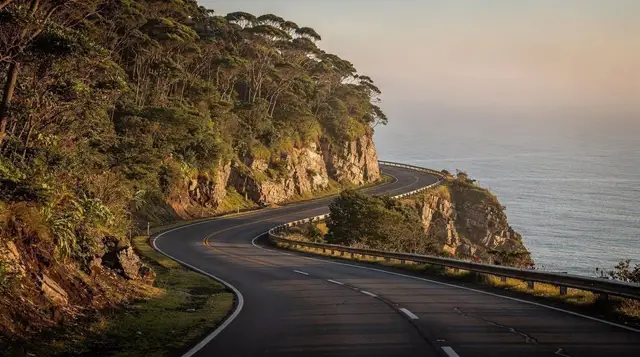
Self-driving from Cape Town takes roughly an hour via the N2 over Sir Lowry’s Pass, a scenic climb in its own right with views back over False Bay before descending into the valley. A car is necessary to reach most of the valley’s farms and activity operators, since they’re spread across working agricultural land rather than concentrated in a walkable centre.
How this fits into a longer trip
Elgin Valley and Grabouw sit directly along the route most Cape Town-based visitors already take toward Hermanus and the wider Whale Coast, making a stop here a natural addition to that drive rather than a separate trip. It also connects reasonably toward Swellendam and Route 62 for travellers continuing further into the Overberg.