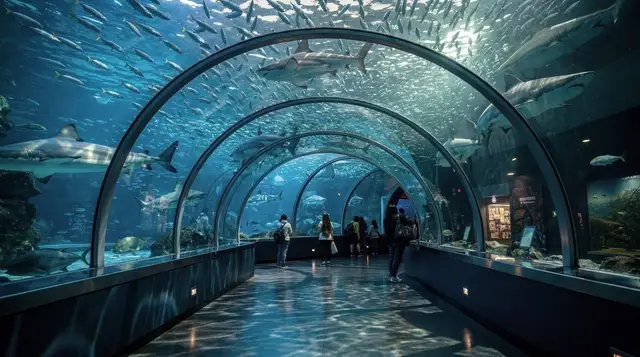
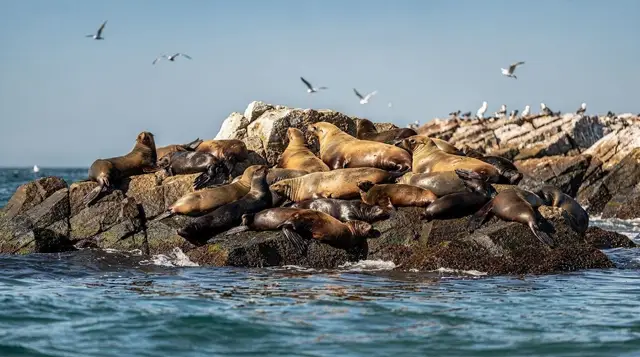
Gansbaai built its entire tourism identity around great white shark cage diving, earning a reputation for years as one of the most reliable places on Earth to see one. That reputation needs an honest update: sightings in the bay have varied considerably in recent years, for reasons researchers are still studying — orca predation on sharks in the area is one commonly discussed factor, among others — and travellers booking a trip today should go in with realistic expectations rather than the older marketing.
| Where | Whale Coast, roughly 2-2.5 hours’ drive from Cape Town CBD |
| Time needed | A full day when travelling from Cape Town, including transport and the boat trip itself |
| Getting there | Self-drive via the N2 then R43/R44, or a guided day tour that includes return transport |
| Cost | Cage diving trip prices vary by operator and package — check current rates directly; most include gear, though some prefer you bring your own wetsuit undergarments |
| Best time | Operators run year-round, weather permitting; species presence shifts seasonally and year to year, so ask current conditions before booking rather than assuming |
What’s actually changed here
For much of Gansbaai’s tourism history, “shark cage diving” and “great white shark” were treated as near-synonyms — the bay’s combination of seal colonies (a primary food source) and favourable water conditions made it one of the world’s most consistent great white locations. In more recent years, researchers and operators alike have documented shifts in great white presence in these specific waters, with periods of markedly reduced sightings compared with historical norms. The causes are still debated in the scientific literature, and it would be dishonest to state a single confirmed reason here.
The practical upshot: book a Gansbaai cage diving trip today expecting a genuine marine wildlife encounter, not a guaranteed great white. Reputable operators have adapted their marketing and their briefings accordingly — if a company is still promising guaranteed great white sightings without qualification, treat that as a reason for scepticism rather than reassurance.
What you’re actually likely to see
Cage diving trips out of Gansbaai now often encounter other shark species instead of, or alongside, great whites — bronze whaler sharks and sevengill sharks among them, both genuinely impressive animals in their own right for anyone not fixated specifically on the great white. Seals, various seabirds, and depending on the season, whales or dolphins passing through the area round out what a typical trip might show, regardless of which shark species turns up.
An eco-focused Gansbaai shark cage diving cruise is a reasonable way to approach the experience with a marine-wildlife-first mindset rather than a single-species expectation.
Choosing an operator honestly
Given the variability, it’s worth asking a shortlist of practical questions before booking rather than after: what species have recent trips actually encountered, what happens if no sharks of any species appear (some operators offer a return trip or partial refund, others don’t), and what safety and environmental practices the boat follows around chumming and cage time. A transparent answer to the first question — rather than a vague “sightings are common” — is a reasonable signal of an operator worth booking with.
A standard Gansbaai shark cage diving trip and a separate Cape Town-departure shark cage diving day trip are both established options — read the current operator details on each before booking to compare what’s actually included, including departure point, boat size, and how far out into the bay the trip actually runs.
Not just sharks: whale watching from Gansbaai too
Gansbaai sits within the same broad Whale Coast stretch as Hermanus, and southern right whales pass through these waters during the same roughly June-to-November season. Several operators run dedicated whale watching trips from Gansbaai’s harbour as an alternative, or an addition, to shark cage diving — worth considering if the shark encounter feels like too much of a gamble on species, or simply as a second outing on the same coast.
A Gansbaai whale watching day tour covers that option specifically, separate from the cage diving trips.
Practical realities of the day
Cage diving is a physically demanding day for anyone prone to seasickness — the boats head out into open water, conditions can be choppy regardless of season, and the cage itself involves cold water and genuine physical effort holding position. Operators generally provide wetsuits and safety briefings, but this isn’t a passive wildlife-watching activity in the way a whale-watching boat trip is; go in prepared for a more active, and colder, experience.
A full-day Cape Town to Gansbaai tour combining whale watching is a useful option for travellers who want the coastal drive and a wildlife outing without committing to the cage itself.
What isn’t worth the detour
Booking with the cheapest operator available purely on price, without checking recent reviews for honesty about sightings and safety standards, is a real risk in an industry where marketing has historically outpaced the current reality of great white presence. A slightly higher price for a transparent, well-reviewed operator is generally worth it here more than in most wildlife tourism contexts.
Getting there and around
Self-driving from Cape Town takes roughly 2 to 2.5 hours via the N2 and the R43/R44 coastal roads, passable as a long day trip but tiring if self-driving both ways on the same day. Most visitors either combine Gansbaai with an overnight in Hermanus, or book a guided day tour that includes return transport, removing the fatigue of driving after an early-morning boat trip.
How this fits into a longer trip
Gansbaai is most commonly paired with Hermanus as a single Whale Coast day or overnight, given the short additional drive between the two. Travellers continuing along the coast sometimes extend toward Cape Agulhas, the continent’s actual southernmost point, for a longer Whale Coast loop.