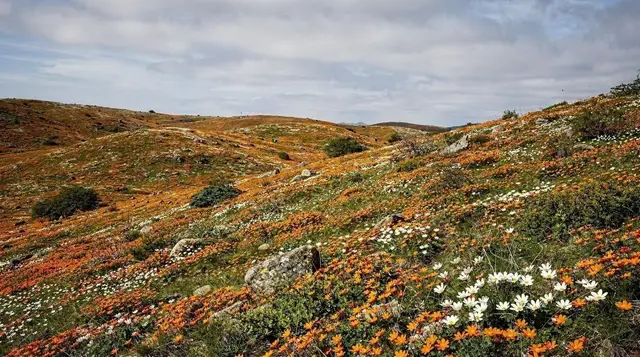
Cape Town in winter
Is winter a good time to visit Cape Town?
Yes, and it's often underrated. June to August is cooler and rainier than the rest of the year, with a genuinely different rhythm to summer, but it's also whale-watching season along the Whale Coast, meaningfully quieter across the city's attractions, and noticeably better value on accommodation and tours. It suits visitors who prioritise wildlife and lower costs over guaranteed sunshine.
Winter gets dismissed too quickly by visitors defaulting to a “summer is best” assumption, and that’s a mistake — June to August is a genuinely different, in some ways more rewarding, version of Cape Town, not simply the rainy leftover season. Here’s what it actually involves, and why it’s the season serious wildlife-focused visitors specifically choose.
| Months | June, July, August |
| Weather | Cooler, rainier, with clear spells |
| Crowds and prices | Lowest of the year |
| Signature draw | Southern right whale watching |
| Best for | Wildlife, value, a quieter trip |
The weather, honestly
Winter is Cape Town’s wet season, and rain is a genuine, expected part of it — grey, blustery days do come, sometimes in stretches. It’s not constant, though: clear, crisp days punctuate the season regularly, often with striking light over the mountain and the Atlantic. Temperatures are cooler than summer but rarely severe, and layering — rather than a full winter wardrobe — is generally the right approach for most visitors.
Whale watching: winter’s headline reason to visit
The single strongest reason to actively choose winter over summer is whale watching. Southern right whales migrate along the Cape’s coast and are typically visible from the cliffs at Hermanus roughly from June through November, no boat required — one of the more remarkable pieces of free, land-based wildlife viewing anywhere in the world.
A Hermanus whale-watching day trip from Cape Town covers the full experience in a day, and a Gansbaai whale-watching tour covers a nearby stretch of the same coast. See Stellenbosch or Franschhoek and the dedicated comparison at whale watching: from the cliff or by boat for how to choose between land-based and boat-based viewing.
Noticeably quieter, noticeably cheaper
Winter is Cape Town’s low season in every practical sense: attractions, restaurants and popular tours all see fewer visitors, and accommodation and activity prices generally drop meaningfully from the summer peak. Booking ahead is less critical than in December-February, though it’s still worth reserving anything you specifically don’t want to miss, particularly Table Mountain given its weather dependency. See what a Cape Town trip costs for how much this seasonal swing typically affects a trip’s overall budget.
Table Mountain in winter
The cableway operates year-round, and clear winter days offer views every bit as spectacular as summer ones, with the added benefit of thinner crowds. The trade-off is that closures for weather — wind, rain or low cloud — are somewhat more frequent in winter than in the driest summer months, simply given the season’s conditions. A cableway ticket booked for a specific time slot is still worth arranging ahead, and it’s sensible to check conditions on the day and keep a backup plan for a rescheduled visit if needed.
The Winelands in winter
Winter in the Winelands has its own particular charm — bare vines, working cellars, and a cosier, indoor-tasting atmosphere quite different from summer’s outdoor terraces, alongside noticeably thinner crowds at the estates themselves. A full-day wine-tasting tour runs comfortably across the season and remains the sensible choice over self-driving, given South Africa’s strict drink-driving enforcement, whatever the weather.
What to pack and expect day to day
Layers matter more than heavy winter clothing — a warm jacket, something waterproof, and comfortable layers underneath cover most winter days. Indoor spaces, museums, wine cellars and covered markets make good rainy-day fallbacks, and it’s worth building flexibility into any day plan rather than fixing everything to outdoor activities that depend on clear weather.
A typical winter week
A well-paced winter itinerary tends to mix flexible, weather-dependent days with fixed, indoor-friendly bookings — a whale-watching day at Hermanus timed loosely around a forecast window, a Winelands day built around cellar visits and tastings that work just as well in the rain as in sunshine, and city days that lean on museums, markets and dining rather than beach time. Table Mountain remains worth attempting on any clear-looking day, given how much thinner the crowds are compared with summer, but it’s worth staying flexible about exactly which day that happens rather than fixing it rigidly in advance.
Driving conditions in winter
Rain affects road conditions meaningfully more in winter than in the dry summer months, and it’s worth driving with a bit more caution on wet roads, particularly on routes like Chapman’s Peak Drive, which can also close periodically during severe weather. See driving in South Africa for the general picture on road conditions, and check current conditions for any specific coastal route before setting out on a particularly wet or windy winter day.
Photography and light in winter
Winter’s changeable weather, with dramatic clouds, occasional storm light and clearer air between rain showers, is genuinely popular among photographers for exactly the qualities that put off sun-seeking visitors — moody skies over Table Mountain and the coastline can produce striking images that a flat, cloudless summer sky rarely matches. If photography is a priority for your trip, don’t assume winter is simply the season to avoid; it offers a different, arguably more dramatic visual character worth embracing rather than working around.
Who winter suits, and who it doesn’t
Winter is the clear choice for anyone prioritising whale watching, lower costs, or a quieter, less crowded version of the city. It suits less well anyone set on guaranteed beach weather or long, reliably sunny days — that’s summer’s territory, covered in Cape Town in summer. If you’re undecided, spring often threads the needle between the two, discussed in the best time to visit.
Festivals and events that suit the season
Cape Town’s calendar doesn’t stop for winter, and some events specifically make the most of the season’s quieter, cosier character — food and wine-focused gatherings in particular suit the Winelands’ indoor cellar atmosphere well, and it’s worth checking what’s on during your specific travel dates, since a winter visit timed around a good local event can add a genuinely memorable layer to an already worthwhile trip. Museums and indoor cultural attractions across the city also make more sense to prioritise on a rainy winter day than they might in a sun-drenched summer itinerary, giving winter travellers a slightly different, more indoor-weighted version of the city’s cultural offering to explore.
Seasonal experiences on GetYourGuide
Verified deep-linked GetYourGuide tours. Book through these links and we earn a small commission at no cost to you.
Photos show the destination, not the operator's own images.