Safety in Cape Town, honestly
Is Cape Town safe for tourists?
Cape Town's main tourist areas — the City Bowl, V&A Waterfront, Camps Bay and the established Winelands and Peninsula routes — see heavy visitor traffic and a visible security presence, and most visits pass without incident when ordinary precautions are followed. Crime in Cape Town is real and unevenly distributed across the city, so the practical approach is being specifically careful about a handful of concrete things — night walking, car break-ins, isolated hiking, ATM use — rather than either dismissing the risk or being paralysed by it.
Safety is the question almost every first-time visitor to Cape Town has, and it deserves a straight answer rather than either reassurance that skips the real issues or vague, unspecific worry. Crime in Cape Town is real, and it’s genuinely uneven across the city — concentrated far more heavily in some areas than others. The tourist-focused parts of the city are comparatively well policed and heavily visited, and the vast majority of visits pass without incident. This guide covers the concrete, practical precautions that actually matter, rather than either panic or denial.
| Tourist areas | City Bowl, V&A Waterfront, Camps Bay — comparatively well monitored |
| Biggest concrete risks | Car break-ins, night walking alone, isolated hiking |
| After dark | Use ride-hailing rather than walking |
| In the car | Never leave anything visible, even briefly |
| General approach | Ordinary caution, not paranoia |
The honest starting point
Crime is a genuine feature of life in South Africa, including Cape Town, and it isn’t distributed evenly — some areas see considerably more of it than others, and the neighbourhoods most visitors spend their time in are not the same neighbourhoods that account for the bulk of it. This guide won’t cite specific crime statistics, because numbers shift, sources disagree, and a guide should point you to concrete, actionable behaviour rather than a figure that might already be out of date by the time you read it. What follows are the practical precautions that consistently come up as genuinely worth taking, rather than a blanket warning or a false sense that nothing can go wrong.
Walking at night
The single most consistent piece of local advice is not to walk alone at night, particularly between neighbourhoods, through quieter streets, or anywhere without other people and good lighting around. This isn’t specific to any one part of the city — it’s general advice that applies broadly. The fix is simple and cheap: use Uber or Bolt after dark instead of walking, even for a distance that would feel entirely walkable in daylight. It removes the risk almost entirely for negligible cost or inconvenience.
Cars: what to leave visible, and where to park
Break-ins to parked cars are a well-known, genuine risk, and the rule is straightforward: never leave anything visible on the seats or dashboard, even for a five-minute stop — bags, phones, sunglasses, shopping, all of it. Use secure, staffed or monitored parking wherever it’s available, particularly overnight, rather than an empty, unmonitored street. This applies everywhere, including outside restaurants and at scenic viewpoints, not just in areas that might feel obviously risky.
Hiking: stick to popular routes, go with others
Table Mountain and the surrounding trails are genuinely well used and, on the popular routes, reasonably safe in daylight with other hikers around. Isolated trails and hiking alone are a different matter — incidents on quieter routes do happen, and the sensible approach is sticking to busy, well-established paths, going with a companion or a group, and letting someone know your planned route and expected return. A guided hike removes this consideration entirely if you’d rather not think about it. A private walking tour with a local guide is a good option for anyone wanting expert company on the ground.
ATMs and cash
Card fraud and, less commonly, direct incidents at ATMs are worth a small amount of caution: use machines inside banks, shopping centres or hotel lobbies rather than isolated street-facing ones, stay alert to your surroundings while withdrawing, and shield the keypad when entering your PIN. This is standard advice worth following in most cities, not something unique to Cape Town, but it’s worth repeating given how routine ATM use is on any trip.
Load-shedding and safety after dark
Cape Town’s periodic power outages, covered in full in load-shedding and water, explained, have a knock-on safety implication worth flagging: street lighting and traffic signals can go dark during an outage, which makes night walking even less advisable during those windows and worth extra caution if you’re driving, since intersections without working lights need to be treated as four-way stops.
Tourist-oriented areas and guided options
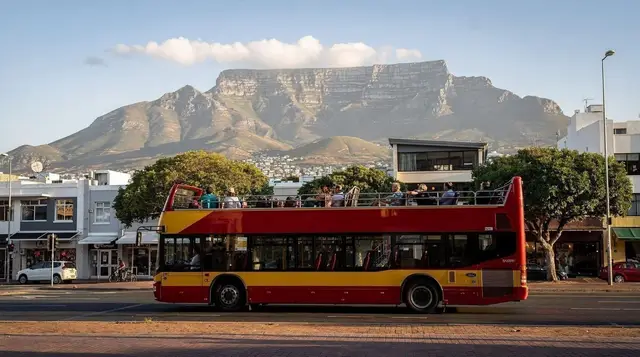
The City Bowl, V&A Waterfront and established tour and Winelands routes see heavy tourist traffic and a corresponding security presence, and sticking to these well-trodden areas, especially as a first-time visitor, is a genuinely sensible way to reduce risk without limiting what you actually get to see. A private city tour with a local guide is a good option if you’d simply rather not navigate any of this yourself, particularly for a first day or two while you get your bearings.
Practical habits that cover most of the ground
Beyond the specific precautions already covered, a handful of general habits go a long way: keep valuables — passports, large amounts of cash, spare cards — secured in your accommodation rather than carried around unnecessarily, use a money belt or secure bag if you are carrying valuables out for the day, stay aware of your surroundings in busy tourist spots where pickpocketing, as in any major tourist destination worldwide, is a more realistic concern than anything more serious, and trust your own instinct if a situation or a street feels wrong — there’s no downside to turning back or moving to a busier area if something doesn’t sit right. None of this is unique to Cape Town; it’s the same baseline travel sense worth applying in most unfamiliar major cities.
Travel insurance and emergency numbers
As with any international trip, comprehensive travel insurance covering medical treatment, theft and trip disruption is worth arranging before you leave, and it’s sensible to note down local emergency numbers and your accommodation’s address and contact details somewhere accessible offline, in case your phone is lost, damaged or without signal. Cape Town’s tourist areas have reasonably good access to medical facilities, and your accommodation or a tour operator can generally point you to appropriate help quickly if something does go wrong.
A proportionate approach, not a paranoid one
The goal here isn’t to make Cape Town sound frightening — most visits pass entirely without incident, and the city has a mature, extensive tourism industry built around exactly that reality. It’s to be specific about the handful of things that genuinely matter — car security, night walking, isolated hiking, ATM sense — rather than either glossing over them or treating every corner of the city as equally risky, which it isn’t. Ordinary, alert caution, the kind worth applying in any unfamiliar major city, covers the vast majority of the ground here.
Trip-planning essentials on GetYourGuide
Verified deep-linked GetYourGuide tours. Book through these links and we earn a small commission at no cost to you.
Photos show the destination, not the operator's own images.