Table Mountain: cableway or hike
Should I take the Table Mountain cableway or hike up?
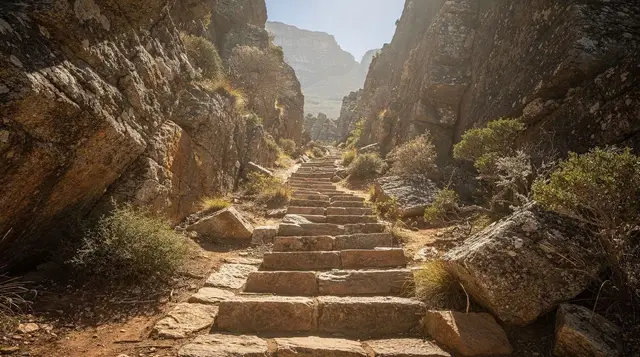
The cableway is the faster, easier option, taking just a few minutes each way and requiring no fitness beyond standing in a rotating cable car, though it's weather-dependent and can queue heavily without a booked slot. Hiking up — Platteklip Gorge is the standard route — takes a few hours of genuine, sustained effort but rewards you with the sense of achievement and the views along the way that the cableway skips entirely. Many visitors do one route up and take the cableway down, combining both experiences in a single visit.
Every visitor to Cape Town faces the same question at some point: cableway or hike. It’s not really a competition — they deliver genuinely different experiences of the same mountain — but most people only have time or energy for one, or need to decide which order to do both in. Here’s an honest comparison to help you choose.
| Cableway | A few minutes each way, weather-dependent, no fitness required |
| Hiking | A few hours of sustained effort, most routes |
| Standard hiking route | Platteklip Gorge |
| Best of both | Hike one way, cableway the other |
| Booking | Cableway: book a time slot ahead. Hiking: no booking needed |
How to think about the choice
The question is rarely “which is better” and almost always “which fits this particular day”. Your energy, the forecast, who you are travelling with and how much else you have planned all matter more than any abstract ranking. A couple travelling with a toddler and a stroller has a very different answer from two friends who came to Cape Town specifically to walk. If you are still shaping your wider plans, the trip planning guide and how many days to spend in Cape Town will help you decide how much room the mountain deserves in your schedule.
It also helps to remember that Table Mountain is not a single-visit target. On a longer stay you can ride the cableway on one day and hike on another, using whichever has the better weather window. Visitors with only a day in town can still fit the mountain in; Cape Town in one day shows how it slots around the other headline sights.
The cableway: fast, easy, weather-dependent
The Table Mountain Aerial Cableway is the obvious choice for anyone short on time, fitness, or simply wanting the view without the climb — a rotating cable car covers the ascent in a matter of minutes, with panoramic views over the city and coastline the whole way up. This Table Mountain cableway ticket is worth booking for a specific time slot rather than turning up and queueing, especially in peak season, when wait times without a booking can eat a significant chunk of your day.
The genuine limitation is weather: the cableway closes in high wind or heavy cloud regardless of how far ahead you’ve booked, so keep flexibility in your plans, particularly during summer’s Cape Doctor wind — see the Cape Doctor: living with the wind for why this matters more than visitors expect.
The cableway is also the most inclusive way up. Families with small children, older travellers, and anyone with limited mobility can reach the summit without a trail underfoot, which is why it suits mixed groups where not everyone wants to walk. For the practical side of tickets, queues and what the ride is like, the dedicated Table Mountain cableway guide goes into far more detail, and Cape Town accessible travel covers what to expect if mobility is a factor.
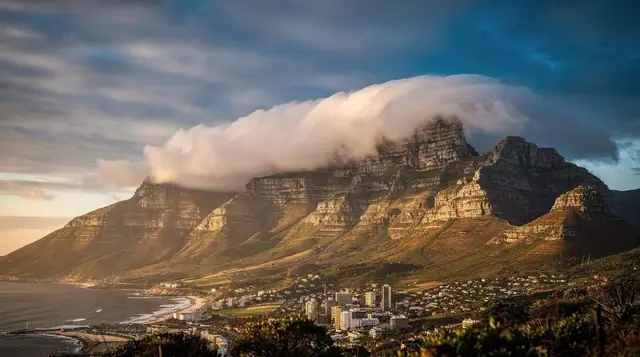
If the wind or cloud has other ideas, the mountain is not the only good thing to do. Table Mountain closed: what to do has fallback ideas, and the weather and the tablecloth explains why the famous cloud forms and how to read it before you commit to a time slot.
Hiking: real effort, real reward
Hiking up Table Mountain is a genuinely serious undertaking, not a casual add-on to a sightseeing day — most standard routes involve a few hours of sustained, steady uphill effort, proper footwear, and enough water and sun protection to handle exposed sections with little shade. The standard route most first-time hikers take is Platteklip Gorge, a direct, well-marked path straight up the mountain’s face, tough but straightforward to navigate.
What the cableway skips entirely is the process itself — the changing views as you climb, the sense of having earned the summit rather than been delivered to it, and a workout that a lot of hikers genuinely value as part of the Cape Town experience. A guided Table Mountain hike is worth considering if you’d rather not navigate the route or manage safety considerations alone.
A hike also changes your relationship with the city. You start at the foot of the mountain among the streets of the City Bowl, and as you climb the roofs, the harbour and the bay slowly open out below you. Many walkers say the sense of scale only makes sense because they watched it unfold step by step. If you want the full route-by-route picture, Platteklip Gorge and Table Mountain hiking routes cover the trails in depth, while the Table Mountain destination page places the mountain in the context of the surrounding neighbourhoods.
Start early if you hike. Beyond the simple matter of beating the heat on an exposed face, an early start leaves you margin if you want to rest at the top, wait for cloud to clear, or ride the cableway down at a relaxed pace. Pack more water than seems necessary, wear a hat, bring a windproof layer for the summit, and tell someone where you are going. The Table Mountain safety guide lays out the sensible precautions without turning the walk into an expedition.
Other hiking routes worth knowing
Platteklip Gorge isn’t the only way up. Kasteelspoort, on the mountain’s Twelve Apostles side, offers a more scenic, gradual alternative route often paired with a cableway descent. This Kasteelspoort scenic route hike and a guided Kasteelspoort hike finishing at the cable car both showcase this option well.
Skeleton Gorge, approached via Kirstenbosch Botanical Garden, is another popular route, notable for its forested, shaded lower sections — a genuinely different hiking experience from Platteklip’s more exposed, direct climb. A Skeleton Gorge hike to the summit is worth considering specifically for that shaded, garden-adjacent start.
Each route suits a different mood. Platteklip is the direct, no-nonsense option for people who want to get it done. Kasteelspoort suits walkers who prefer a gentler line and a view that keeps the sea in sight. Skeleton Gorge suits those who like shade, greenery and a walk that feels like part of a garden day; pairing it with the Kirstenbosch guide makes a full outing out of it. Another peak, Lion’s Head, is a shorter and more social alternative if what you really want is a sunrise or sunset walk rather than the table-top itself.
Combining both: up one way, down the other
A genuinely popular approach, and arguably the best of both worlds, is hiking up one route and taking the cableway down — you get the effort, views and sense of achievement of the climb without the additional strain that descending a steep trail puts on your knees. The reverse — cableway up, hike down — works too, though descending is its own kind of demanding and shouldn’t be assumed to be the “easy” half simply because it isn’t uphill.
Practically, the combination works best when you decide at the top rather than the bottom. Start your hike with the cableway as a safety net: if your legs are tired, the weather turns or the group is slower than planned, you can ride down and nothing is lost. Remember that the cableway can stop running in wind, so keep enough energy and daylight in reserve to walk down if you have to. Leave a little slack in the afternoon rather than packing a dinner reservation tightly behind your descent.
Fitness and preparation, honestly
The cableway requires no fitness beyond standing in a cable car for a few minutes. Hiking requires genuine, reasonable fitness — comfortable with a few hours of sustained uphill walking, proper hiking shoes rather than casual trainers, and enough water and sun protection for an exposed climb. Neither option should be attempted casually if it’s outside your comfort zone: don’t push a hike you’re not prepared for just to save the cableway fee, and don’t feel any obligation to hike if the cableway genuinely suits your trip better.
Hiking alone: not recommended
Whichever route you choose, hiking Table Mountain alone isn’t recommended — stick to popular, well-used trails, go with a companion or group, and let someone know your planned route and expected return time. Incidents on quieter, more isolated routes do happen, and a busy, well-trodden path in daylight with other hikers around is a meaningfully safer choice. See the safety guide for the fuller picture on staying sensible without overthinking it.
Choosing by season and weather
Cape Town’s weather shapes this decision as much as your legs do. Clear, calm mornings are the best window for both options, while windy afternoons are when the cableway is most likely to pause and when exposed trails feel least pleasant. The best time to visit Cape Town and the month-by-month weather guide help you match your dates to the conditions you want. In winter the mountain can be wet and cold at the top, so layers matter whichever way you go; in summer the issue is sun and heat on the climb. Whatever the season, check conditions on the morning itself and be ready to swap days.
Pairing the mountain with the rest of your trip
Table Mountain is easier to enjoy when it is not squeezed in. Many visitors do the mountain in the morning and spend the afternoon somewhere flat and slow, such as the V&A Waterfront, a long lunch, or a stroll along the Sea Point promenade. If you are building a longer plan, the three-day itinerary and the outdoors itinerary show where the mountain fits for different kinds of traveller, and the Cape Town with kids itinerary is the one to read if little ones are coming along.
Getting to the lower station or a trailhead is simple enough, whether by taxi, ride-hailing or bus. Getting around Cape Town and Uber in Cape Town cover the options, which is worth knowing if you plan to hike up from one side and come down at another and cannot simply return to a parked car.
What you’ll find at the top, either way
However you arrive, the summit plateau itself rewards the effort or expense equally — walking trails across the flat top lead to various viewpoints over the City Bowl, the Atlantic seaboard and, on a clear day, out towards the wider Cape Peninsula, along with a restaurant and shop at the upper cableway station. Hikers and cableway visitors mix freely once at the top, so neither route locks you out of any part of the summit experience once you’ve made the climb, one way or another — the difference is entirely in how you got there, not in what’s waiting for you once you have.
Cost as a factor in the decision
Cost is a genuine, if secondary, factor in choosing between the two: the cableway carries a ticket price each way, while hiking any of the standard routes costs nothing beyond your own time and effort, a meaningful consideration on a longer trip with a tighter daily budget. Booking a cableway ticket in advance is still worth the cost for most visitors given the time saved and the near-guaranteed spectacular views on a clear, calm day, but it’s a reasonable, and increasingly popular, choice among budget-conscious and fitness-minded visitors alike to hike at least one direction and treat the cableway as an optional add-on rather than a default.
Which to choose for your trip
If time is tight, mobility is a concern, or you simply want the view without the effort, the cableway delivers a genuinely spectacular experience in a fraction of the time. If you have a few free hours, reasonable fitness, and want a more immersive, earned experience of the mountain, hiking — Platteklip Gorge for directness, Kasteelspoort or Skeleton Gorge for more scenic alternatives — is well worth it. And if your schedule allows, combining both, hiking one direction and riding the other, is genuinely the richest way to experience Table Mountain.
tours.table-mountain
Verified deep-linked GetYourGuide tours. Book through these links and we earn a small commission at no cost to you.
Photos show the destination, not the operator's own images.