The Sea Point promenade
What is the Sea Point promenade?
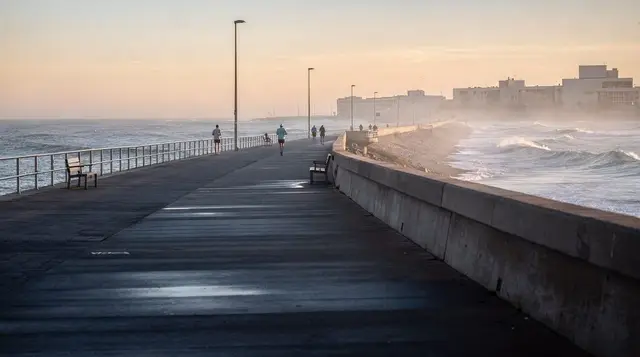
A long, flat, paved seafront walkway running roughly from the V&A Waterfront area through Mouille Point and Sea Point, with the Atlantic on one side and the city and mountains on the other. It's flat throughout with no steps, which makes it one of the more genuinely accessible outdoor spaces in Cape Town for wheelchairs, pushchairs, or anyone who'd rather avoid hills.
The Sea Point promenade is a long, flat, paved walkway running along the Atlantic coast from around the V&A Waterfront and Mouille Point through Sea Point, with the ocean on one side and a steady backdrop of apartment blocks, Lion’s Head, and Signal Hill on the other. It doesn’t get the same attention as Table Mountain or the beaches further along the coast, but it’s one of the most genuinely useful outdoor spaces in the city — flat throughout, easy to join or leave at any point, and reliably busy with locals rather than built solely for visitors.
| Where | Along the Atlantic coast, roughly between the V&A Waterfront/Mouille Point area and Sea Point |
| Time needed | As little or as long as you like — join and leave at any point along the route |
| Getting there | Walkable from the V&A Waterfront; MyCiTi bus and taxis also serve the Sea Point area |
| Cost | Free |
| Best time | Morning or early evening, before the afternoon wind picks up in summer |
What’s actually along it
Starting near Mouille Point, the promenade passes the lighthouse and a scattering of public art and outdoor gym equipment before running into Sea Point proper, where a public swimming pool complex sits right on the seafront alongside a handful of smaller tidal pools. Further along, the path continues towards Bantry Bay and eventually towards the direction of Clifton and Camps Bay, though most people treat Sea Point itself as the natural stretch to walk rather than pushing the whole distance in one go. It’s genuinely pleasant simply as a walk — wide, well-maintained, and rarely empty, with joggers, dog walkers, and families sharing the space comfortably.
A guided walking tour of the V&A Waterfront is a sensible way to start, since the Waterfront sits right at one end of the promenade and a guide can point you towards the walk itself once the tour wraps up.
If you want the wider picture of the neighbourhood the walk runs through, the Sea Point destination page covers the area itself, while the V&A Waterfront destination page and the V&A Waterfront guide cover the harbour end. Further along the same coastline, Clifton and Camps Bay are the beach towns that most visitors have in mind when they picture the Atlantic seaboard, and the Camps Bay and Clifton guide explains how they differ.
Setting off: a simple way to structure the walk
Because there is no fixed start or finish, it helps to decide on a rough plan before you leave. A common approach is to begin at the Waterfront end, walk until you feel like turning round, and come back the same way — the view changes enough on the return that it never feels like repeating yourself. Others prefer to get dropped at the Sea Point end and walk back towards the harbour, ending somewhere with a table and a cold drink. Either direction works; the point is that nothing forces your hand.
On the way out, look back towards the city now and then. The shape of the mountain behind the buildings, with Table Mountain holding the skyline and Lion’s Head and Signal Hill rising beside it, is one of the best free views the city offers, and it is easy to miss if you only look at the sea. If you want to understand what you are looking at, the Table Mountain cableway guide and the Lion’s Head hike guide explain how people actually get up there.
Why it’s worth knowing about for accessibility
Much of what Cape Town is known for — Table Mountain, the Peninsula’s hiking trails, the steps down into Clifton’s coves — involves gradients, steps, or uneven ground that rule it out for wheelchair users, pushchairs, or anyone who finds hills genuinely difficult. The Sea Point promenade is a real exception: flat and paved for its entire length, with dropped kerbs and no steps to navigate. It’s one of the more reliably accessible ways to get proper coastal scenery, sea air, and a sense of the city’s geography without needing to plan around mobility limitations, and it’s worth flagging specifically for anyone travelling with a wheelchair, a pram, or simply preferring level ground.
For a broader look at planning around mobility, the accessible travel guide for Cape Town collects the places and habits that make the city easier, and the promenade is a natural anchor for that kind of day. It also works well for families: the Cape Town with kids guide is a good companion if you are pushing a pram or keeping an eye on small cyclists and scooters.
What the walk feels like at different times of day
Early in the morning the promenade belongs to runners, dog walkers and people doing their regular loop, and the light on the water is soft and clear. Around midday it is quieter in some stretches and busier in others, depending on the weather and the season. Towards the end of the day the mood shifts again: people gather on benches, the sea turns colour, and the whole route becomes a slow parade facing west. If sunsets are your reason for coming, the Cape Town sunset spots article puts this walk in context with the other places locals choose, and the sunset cruises guide covers the same light from the water.
Weather decides a lot here, because there is nothing between you and the sky. The Cape Doctor guide explains why the wind behaves as it does, and the month-by-month weather guide helps you pick a season that suits your plans. If you are travelling in the warmer months, the Cape Town in summer guide is worth reading alongside this one; in the cooler months, the Cape Town in winter guide will help you judge when a coastal walk makes sense and when to choose something indoors instead.
The wind, again
Like the rest of the Atlantic seaboard, the promenade catches the south-easterly Cape Doctor when it blows through summer afternoons, and an exposed, open walkway right on the coast feels it more than most places. A calm morning walk here is a genuinely different experience from the same stretch at 4pm on a windy December day. If you’re planning to linger — reading a book on a bench, say, rather than just walking through — mornings are the more comfortable choice.
Combining it with the Waterfront
Because one end of the promenade sits so close to the V&A Waterfront, it pairs naturally with a Waterfront visit rather than needing to be its own separate outing. A one-hour scenic cruise from the V&A Waterfront is worth combining with a promenade walk either side of it — see the coast from the water, then walk a stretch of the same shoreline on foot. For something a bit more playful, a pedal boat ride at the V&A Waterfront works well with kids in tow, and this version with hotel pickup and drop-off included removes the need to work out transport to and from the harbour yourself.
An evening option, further along the water
Night kayaking at the Waterfront is a different way to experience the same stretch of coast after dark, once the promenade’s daytime crowd has thinned — a good option for visitors who’ve already walked the route by day and want to see it from a different angle.
If you prefer to see more of the city on foot with someone who knows it, the Cape Town walking tours guide lists the sort of outings that pair well with an easy promenade stroll, and the hop-on hop-off bus guide explains a lazier way to cover the same part of town.
Swimming, pools and the cold Atlantic
The sea along this stretch is part of the cold Atlantic, and the walk is better understood as a place to look at the water than to get into it. The pools and tidal pools give you a more manageable way to cool off if the day is hot. For a fuller picture of where people actually swim around the peninsula, the Cape Town beaches guide compares the options, and the guide to swimming and water temperature across the two oceans explains why the two sides of the peninsula feel so different.
Getting there and moving on
You do not need a car for this walk, and it is easier without one. The MyCiTi bus and trains guide explains how public transport serves the Atlantic seaboard, the getting around Cape Town guide covers the wider set of options, and the Uber in Cape Town article is useful if you would rather be dropped at one end and collected at the other. If you are building a trip without hiring a vehicle at all, the Cape Town without a car itinerary shows how the promenade fits into that way of travelling.
Where it fits in a trip
The promenade is rarely the reason to book flights, but it is often the thing that makes a day feel balanced. It slots easily into a short stay: the one-day Cape Town itinerary and the guide to seeing Cape Town in one day both leave room for a gentle stretch like this, and the two-day itinerary gives it even more breathing space. For a free, low-pressure addition to any plan, the free things to do in Cape Town article places it alongside other no-cost options. And if you are still deciding where to base yourself so that a walk like this is on your doorstep, the where to stay guide is the place to start.
A local, not just a visitor, space
One of the things that sets the promenade apart from a lot of Cape Town’s other attractions is how ordinary it feels to actually use — it’s not built or priced for tourists, and most of the people on it on any given morning are locals out for their regular walk, run, or dog outing rather than visitors ticking off a sight. That gives it a genuinely different character from, say, a cable car queue or a guided tour group: it’s a slice of daily Cape Town life you can simply join for as long as you like, with no ticket, no schedule, and no sense of being funnelled through an attraction. For visitors staying anywhere near the city bowl or the Atlantic seaboard, it’s an easy way to get a feel for the rhythm of the city outside the main sights.
Respect that rhythm. Keep to one side so runners and cyclists can pass, and let dogs and children set the pace in the busier stretches. A little courtesy goes a long way, and the Cape Town tipping and etiquette article offers a useful sense of local manners more generally.
Staying comfortable and sensible
The promenade is well used, which is much of its appeal, but ordinary city habits still apply. Carry only what you need, keep phones and cameras close when you stop to take photos, and treat the walk after dark with the same care you would give any city street. The Cape Town safety guide sets out the general approach in more detail, and the is Cape Town safe article answers the question most first-time visitors are quietly asking. None of this should put you off: the point of the walk is that it feels open, busy and easy.
Practical tips
Bring water and sun protection even on a walk that feels short, since there’s very little shade along most of the route and the coastal sun is stronger than it feels with the sea breeze cooling you down. Benches are dotted along the way if you want to stop and simply look at the water rather than walk the whole thing at pace. If you’re combining the walk with the Waterfront, note that the promenade itself has minimal shops or cafés directly on it in the Mouille Point stretch, so it’s worth eating or picking up a coffee before you set off, or timing your route to end back at the Waterfront where the options are far more plentiful.
Pairing it with food and a slower day
A walk like this works best when it has a reward at the end of it. Many visitors plan the route so that it finishes near somewhere to eat, and the Cape Town food guide and the restaurants guide are good places to look for ideas before you set off. If you would rather start the morning with something small, the coffee and craft beer guide helps you choose. A relaxed pace is the whole idea: stop when you want to, sit on a bench, watch the sea, and do not feel obliged to cover any set distance.
It also suits the first day after a long flight. Gentle movement, fresh air and daylight are exactly what a tired body wants, and the first day and jet lag article explains how to ease into the city without overdoing it. Nothing about the promenade demands energy or planning, which is precisely why it works so well on a day when you have neither.
Who it actually suits
The promenade isn’t a headline attraction in the way Table Mountain or Robben Island are, and it doesn’t need to be — its value is in being easy, free, and reliably pleasant, which not everything in Cape Town can claim. It suits a slow morning before a busier afternoon elsewhere, a way to fill an hour without committing to a full outing, or, for anyone travelling with mobility considerations, one of the few coastal experiences in the city that doesn’t come with a catch.
tours.beaches-coast
Verified deep-linked GetYourGuide tours. Book through these links and we earn a small commission at no cost to you.
Photos show the destination, not the operator's own images.