What Day Zero left behind
“Day Zero” is a phrase that still shows up in searches about visiting Cape Town, usually with an implied question underneath: is the city still short on water? The honest, straightforward answer is that the crisis was real, the threat was genuine, but Day Zero — the point at which Cape Town’s municipal water supply would have been shut off entirely — never actually happened. It’s worth understanding what did happen, because the habits it left behind are still visibly part of the city today.
| What Day Zero was | The projected date municipal water taps would run dry |
| Did it happen? | No — restrictions and returning rains averted it |
| When was the crisis | Roughly 2017-2018 |
| What’s changed since | Reservoir levels have recovered; water-conscious habits largely remain |
| Should visitors worry today? | No, but adopting sensible water habits is still a respectful default |
What Day Zero actually was
Cape Town’s dam and reservoir system, which supplies most of the city’s municipal water, dropped to critically low levels following a multi-year drought that peaked around 2017-2018. City officials projected a specific date — widely referred to as “Day Zero” — at which point reservoir levels would fall so low that municipal taps would be shut off entirely, with residents redirected to collect a rationed daily allowance from designated collection points instead. It was a genuinely serious, closely tracked threat that dominated local news and daily life for months.
Why it never happened
Day Zero was avoided through a combination of aggressive water restrictions on households and businesses, a sustained public campaign that drove genuine, widespread reductions in daily water consumption across the city, and the eventual return of good rains that replenished the dam system. The projected date was pushed back repeatedly as conservation efforts took hold, and ultimately the crisis point passed without the taps ever actually running dry. It’s an important distinction: the threat was real and the response was serious, but the catastrophic outcome itself was avoided, not merely delayed and forgotten.
What the crisis actually looked like day to day
During the height of the restrictions, households faced strict daily water usage limits, enforced through a mix of public pressure, monitoring, and genuine civic cooperation — most residents took the targets seriously, driven by a shared understanding of how close the situation actually was. Visible changes included widespread low-flow fixtures, “if it’s yellow, let it mellow” messaging, shorter showers becoming the social norm, and a broad cultural shift in how residents thought about a resource that had previously been taken for granted.
What visitors today should actually expect
Reservoir levels have recovered substantially since the crisis years, and Cape Town today isn’t operating under emergency water restrictions the way it was in 2017-2018. Visitors won’t encounter rationed taps or collection points, and hotels and guesthouses function entirely normally. That said, many of the habits that took hold during the crisis — low-flow showerheads, water-saving signage in hotel bathrooms, a general local instinct toward not wasting water — have genuinely stuck around as part of the city’s everyday culture, rather than disappearing once the immediate threat passed.
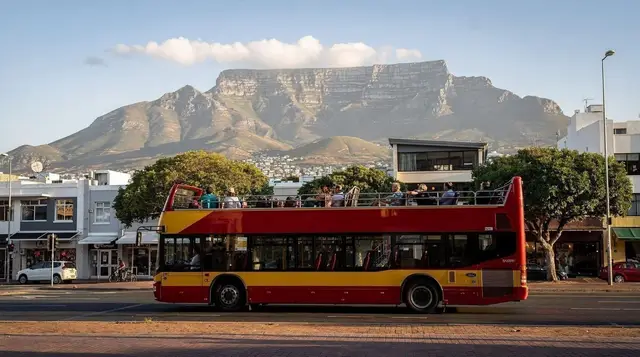
A half-day city tour is a good way to see how the city has moved on and rebuilt since that period, if the crisis is part of what drew your curiosity to Cape Town in the first place.
A respectful visitor habit, not an obligation
Nobody expects a visitor to Cape Town today to ration water the way residents did during the actual crisis — that period has genuinely passed. But practising the same sensible habits that locals largely still hold onto — shorter showers, not letting taps run unnecessarily, being mindful in a region that’s had real, recent scarcity — is a small, easy way to be a considerate guest, and it costs nothing to keep up.
The Winelands and agriculture during the crisis
The Winelands’ vineyards and agriculture more broadly were significantly affected by the same drought that drove the municipal crisis, with many farms adapting through more efficient irrigation and water management practices that, similarly, have largely remained standard even as conditions have improved.
A full-day wine tasting tour is a good opportunity to ask estates directly about how the drought years affected them and what changed as a result — many are candid and genuinely interesting on the subject.
Kirstenbosch and the region’s relationship with water
Kirstenbosch Botanical Garden, showcasing the Cape Floral Kingdom’s remarkably drought-adapted fynbos vegetation, offers an interesting lens on the region’s long relationship with water scarcity — this is a landscape that evolved for a genuinely dry climate long before the 2017-2018 crisis made that fact newly relevant to residents.
A Kirstenbosch Botanical Garden entry ticket is worth the visit for this angle alone, beyond the garden’s more obvious appeal.
What locals will actually tell you if you ask
Most Capetonians who lived through the crisis years are candid about it if you ask — many will describe the specific daily litre targets they tracked, the collection points some households used, and the genuine anxiety of watching dam levels reported on the news each week. It’s recent enough in local memory that it comes up naturally in conversation, not as a difficult subject to avoid.
Frequently asked questions about Cape Town’s water crisis
Did Cape Town actually run out of water?
No — Day Zero, the projected date municipal taps would be shut off, was avoided through restrictions and returning rains. The crisis was real, but the shutoff itself never happened.
Is Cape Town currently facing water restrictions?
No, reservoir levels have recovered substantially since the 2017-2018 crisis, and the city isn’t operating under emergency restrictions today.
Should I worry about water access as a visitor to Cape Town?
No — hotels and guesthouses function entirely normally today. It’s still a considerate habit to be mindful with water, but not a practical concern.
When did Cape Town’s water crisis happen?
Roughly 2017-2018, following a multi-year drought that brought dam and reservoir levels to critically low points.
What lasting changes did the crisis leave behind?
Widespread low-flow fixtures, water-saving habits and signage, and a broader local culture of water-consciousness that has largely persisted even after conditions improved.
Trip-planning essentials on GetYourGuide
Verified deep-linked GetYourGuide tours. Book through these links and we earn a small commission at no cost to you.
Photos show the destination, not the operator's own images.