25 things to know before you go
Cape Town rewards a bit of upfront homework more than most destinations, mostly because it doesn’t behave the way visitors expect on a few specific points — the seasons run backwards from the Northern Hemisphere, the weather changes by neighbourhood in a single afternoon, and driving is on the opposite side of the road from most first-time visitors’ home countries. None of it is complicated once you know it. Here’s the practical rundown.
| Seasons | Reversed — summer is December-February, winter is June-August |
| Driving | Left-hand side of the road |
| Currency | South African rand (ZAR) |
| Time zone | SAST, UTC+2, no daylight saving |
| Plugs | Mostly Type M, 230V |
1. Seasons run opposite to the Northern Hemisphere
Cape Town’s summer is December to February — hot, dry, and windy — and its winter is June to August, cooler and the main rainy season. If you’re used to planning a “European summer” trip, recalibrate: Cape Town’s peak season overlaps with the Northern Hemisphere’s winter holidays.
2. The wind has a name and a purpose
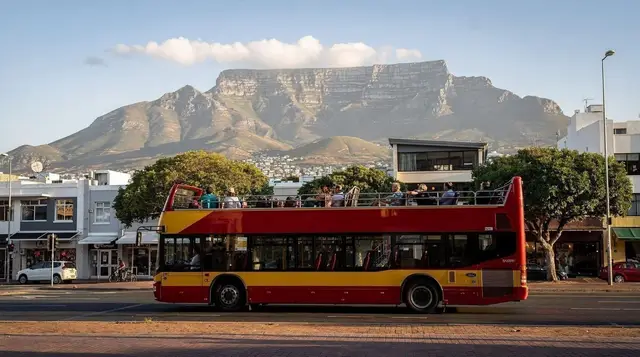
The strong south-easterly wind that blows through summer is locally called the Cape Doctor, and it’s the reason Table Mountain often wears a flat cloud layer known as the “tablecloth” on clear, hot days. It’s not a sign of bad weather — it’s a distinctly Cape Town phenomenon worth knowing about before you’re confused by it.
3. You’ll drive on the left
South Africa drives on the left, with the steering wheel on the right side of the car. If you’re renting and this isn’t your home-country norm, budget a slower first day behind the wheel, particularly around roundabouts.
4. Table Mountain’s cableway can close without warning
Wind, not crowds, is what closes the cableway most often, and it can happen with little notice even on an otherwise clear day. Build a flexible day around a cableway visit rather than a fixed one — see what to do when the cableway is closed.
A Table Mountain cableway ticket with hotel transfer simplifies logistics on a clear-weather day, but check the forecast before committing to a specific time slot.
5. Tipping is expected, and car guards expect a coin too
Restaurant tipping is the norm, and informal parking attendants in reflective vests (car guards) watch over parked cars in exchange for a small tip. Neither is a fixed percentage rule, but both are genuinely expected — see tipping and etiquette.
6. Load-shedding is part of daily life
Scheduled power cuts, known locally as load-shedding, happen periodically, with intensity that varies over time rather than following any fixed pattern. Most hotels and guesthouses have backup power; it’s worth asking when you book, particularly for longer stays or if you’re working remotely.
7. Crime is real but geographically uneven
Cape Town’s standard visitor areas are largely separate, geographically, from the parts of the city that drive national crime statistics. The core habits — nothing visible in a parked car, no solo night walks, no solo isolated hikes — cover most of the practical risk. Full detail in is Cape Town safe?
8. You’ll want cash and card both
Card payments are widely accepted in restaurants, shops, and most tourist services, but small cash amounts are useful for car guards, informal markets, and smaller vendors who may not take card.
9. Sunscreen matters more than you’d think
The southern hemisphere sun at this latitude burns faster than many visitors expect, especially with the added wind chill that can mask how much sun exposure you’re getting. Reapply more often than feels necessary.
10. The Atlantic side of the peninsula is cold to swim in
Camps Bay, Clifton, and the rest of the Atlantic Seaboard have striking beaches with genuinely cold water year-round, driven by the Benguela current. False Bay’s waters, on the other side of the peninsula, run noticeably warmer.
11. Uber and Bolt are the easiest way to get around without a car
Both operate widely and reliably in Cape Town, and most visitors without a rental car use one or the other as their default transport — see using Uber and Bolt in Cape Town.
12. Robben Island tickets sell out
The ferry to Robben Island has limited capacity per crossing and books up, especially in peak season. Book ahead rather than assuming you can turn up.
13. Distances on the map are deceptive
The Cape Peninsula, the Winelands, and the Whale Coast all look close on a map but each is a genuine half- or full-day excursion once you factor in the roads and the stops worth making along the way.
14. Whale season is roughly June to November
Southern right whales pass close to shore along the Cape coast during these months, visible from clifftops at Hermanus without needing a boat. See whale watching without a boat.
15. Two oceans don’t actually meet at Cape Point
The popular idea that the Atlantic and Indian oceans meet at Cape Point is a myth — the officially recognised meeting point is Cape Agulhas, further along the coast. See the two oceans myth explained.
16. Penguins live at more than one colony
Boulders Beach is the famous one, but there’s a second, generally quieter African penguin colony at Stony Point in Betty’s Bay. See where to see penguins besides Boulders.
17. Wine country is close, but plan a full day
Stellenbosch, Franschhoek, and Constantia are all doable as a day trip from the city, but rushing more than two or three estates in a single day tends to undercut the point of a wine visit — see Cape Town vs the Winelands.
A guided city walking tour is worth doing early in your trip — it gives you a working sense of the City Bowl’s layout before you branch out to the peninsula or the Winelands.
18. Day Zero never actually happened
Cape Town came close to running out of municipal water in 2017-2018, but strict restrictions and a return of the rains avoided the crisis. Water-conscious habits from that period have largely stuck. See what Day Zero left behind.
19. English is widely spoken, alongside Afrikaans and isiXhosa
You won’t need another language to get by, though picking up a few words of Afrikaans or isiXhosa is appreciated.
20. The airport code is CPT
Cape Town International Airport uses the code CPT, useful to know when booking domestic connections within South Africa.
21. Public transport is limited outside a few corridors
Cape Town isn’t built around comprehensive public transit the way some cities are; most visitors rely on rideshares, tours, or a rental car rather than buses and trains for day-to-day movement.
22. Hiking solo isn’t the safest choice
Popular routes on Table Mountain and Lion’s Head are generally fine in busy hours with company; quieter trails and solo hiking carry meaningfully more risk. Go with others, and stick to the well-used paths and times.
23. December and January are genuinely busy and pricier
Christmas and New Year fall in the middle of Cape Town’s summer high season — expect a full city, higher accommodation rates, and the need to book well ahead. See Cape Town over Christmas and New Year.
24. Shoulder season has a real case for it
Spring (September-November) and autumn (March-May) trade a little weather unpredictability for thinner crowds and better rates — see the case for shoulder season.
25. A first day spent gently pays off
Jet lag and a long-haul flight hit differently depending on where you’re travelling from; easing into the city with a lighter first day rather than an ambitious hike tends to make the rest of the trip go better. See your first day after a long flight.
Frequently asked questions about visiting Cape Town for the first time
What’s the most important thing to know before visiting Cape Town?
That the seasons run opposite to the Northern Hemisphere and that crime, while real, is geographically concentrated and largely avoidable with sensible habits — those two shape planning and daily behaviour more than anything else on this list.
Do I need to rent a car in Cape Town?
Not necessarily. Rideshares and tours cover the City Bowl and Atlantic Seaboard well; a rental car helps most for the Winelands, the peninsula, and multi-day exploring at your own pace.
Is Cape Town easy for first-time visitors to Africa?
Yes — it’s an internationally connected, well set-up city for tourism, closer in day-to-day logistics to a major world city than many first-time visitors expect.
How many days do I need in Cape Town?
At least four or five for the city and peninsula alone; a week or more allows a comfortable add-on to the Winelands or Whale Coast without rushing.
What surprises visitors most about Cape Town?
How much the weather and mood can shift within a single day and between neighbourhoods just a few kilometres apart — sun in the City Bowl and cloud over the mountain isn’t unusual at all.
Trip-planning essentials on GetYourGuide
Verified deep-linked GetYourGuide tours. Book through these links and we earn a small commission at no cost to you.
Photos show the destination, not the operator's own images.