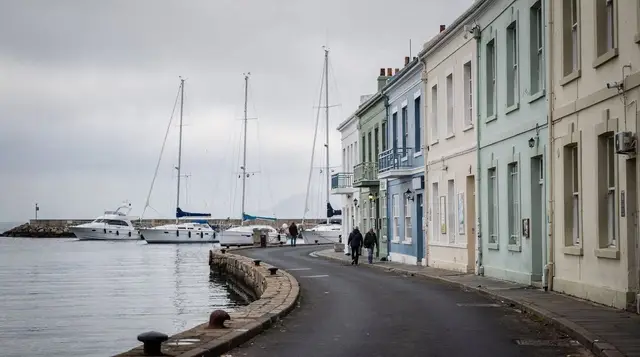
Simon’s Town is a small, well-preserved naval town on the False Bay side of the Cape Peninsula, built up around a natural harbour that’s served as a South African naval base since the early twentieth century and a Royal Navy station before that. Its Victorian-era high street, lined with period buildings now housing cafes and shops, is worth a slow walk on its own. But almost everyone comes for one thing just south of town: Boulders Beach, home to a colony of African penguins that visitors can watch — and in the right spots, swim alongside — at close range, one of the few places in the world where that’s possible.
| Where | False Bay coast, about 40 minutes from the city centre |
| Main draw | The African penguin colony at Boulders Beach |
| Entry | Paid entry to the Boulders section of Table Mountain National Park |
| Time needed | Half a day covering the town and the penguins |
| Best time | Morning, for quieter boardwalks and more active penguins |
The penguins, and why they matter
African penguins are listed as an endangered species, with wild populations having declined sharply over recent decades due to a combination of historical egg collection, commercial fishing pressure on their food supply, oil spills, and habitat disturbance. Boulders Beach is one of only a handful of mainland breeding colonies left — most African penguin colonies are on offshore islands — which makes it both an unusually accessible wildlife encounter and a genuinely important conservation site, not just a photo opportunity. The colony established itself here in the 1980s and has grown into one of the most visited penguin colonies anywhere, precisely because of how close visitors can get via the boardwalks without disturbing the birds.
Boulders penguin colony entry ticketBoardwalks versus the swimming beach
Boulders has two distinct areas worth understanding before you go. The main viewing boardwalks, part of the paid national park section, run above and alongside the breeding colony, letting you watch penguins nesting, preening, and moving between the rocks and the water from a set distance that protects both visitors and birds. Separately, a public beach area nearby allows swimming, and penguins do sometimes swim and forage in that same water — though seeing them in the water isn’t guaranteed on any given visit, since it depends on their feeding patterns that day.
Simon’s Town guided tour with penguin viewingA walking-focused version of the same idea covers Simon’s Town’s historic centre first, then finishes at the colony, which suits visitors who want the town’s history rather than a colony-only stop.
Simon’s Town walking tour with penguin viewingSimon’s Town itself
The town’s naval history runs deep — it’s still home to the South African Navy’s main base, and the high street’s Victorian and Edwardian buildings reflect over a century of continuous use as a strategic harbour town rather than a tourist reconstruction. Just Nuisance, a Great Dane who was formally enlisted in the Royal Navy during the Second World War (reportedly the only dog ever to hold official naval rank), has a statue on the main street and remains a genuinely charming piece of local history worth the five minutes to find. Seaforth Beach, a short walk from the harbour, is a calmer, family-friendly swimming spot if you want sea time without the crowds at Boulders itself.
Combining it with the rest of the peninsula
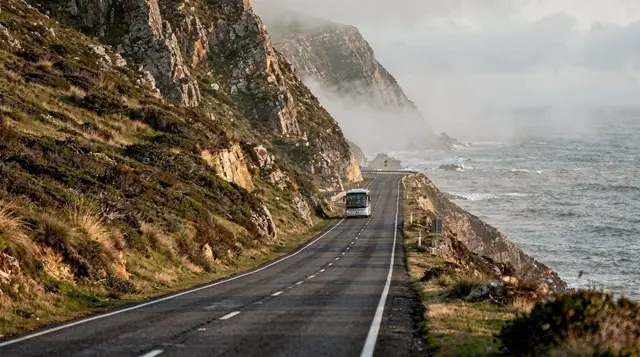
Simon’s Town and Boulders Beach sit on the route most visitors take towards Cape Point and the Cape of Good Hope, making this a natural first or last stop on a full peninsula day. A combined tour covering both saves the logistics of separate trips and typically includes the drive along the scenic coastal road between the two.
Cape Point, Boulders Beach and Simon’s Town tourVisiting the penguins responsibly
Stay on the marked boardwalks and paths at all times — this isn’t only about visitor safety (penguins bite, and their beaks are sharper than they look) but about not disturbing a breeding colony of an endangered species during nesting season. Don’t touch or attempt to feed the penguins, keep noise down near the nesting areas, and give right of way if a penguin is crossing a path, which happens more often than you’d expect since they nest in the dune vegetation above the beach as well as along the shore.
Getting there by train
Simon’s Town sits at the southern end of the Southern Line railway, which runs down the False Bay coast from central Cape Town through Muizenberg, Kalk Bay, and Fish Hoek before terminating here — a genuinely scenic route for most of its length, hugging the coastline for long stretches. It’s a pleasant, low-effort way to arrive if your schedule allows for train timetables and you’re comfortable skipping a car for the day, though check current service and safety advice before relying on it, since reliability on this line has varied over the years. Most visitors doing a full Cape Point day still drive, since the reserve itself isn’t served by rail.
Practicalities
Entry to the Boulders section of the park requires a paid ticket, separate from general Table Mountain National Park access, and rates are reviewed periodically — check the current fee before you go rather than budgeting from an old figure. The boardwalks are wheelchair and pushchair accessible in the main sections, though some of the connecting paths involve steps. Parking at Boulders itself is limited in peak season; arriving early avoids both the crowds and the parking search.
The South African Naval Museum
Housed in a former naval store near the harbour, the South African Naval Museum covers the town’s long military history, from its use as a Royal Navy station through to its current role as the South African Navy’s main base, with exhibits including retired equipment and displays on the country’s naval history more broadly. It’s a modest, unhurried stop rather than a major attraction, but it fills in context for the naval architecture and the harbour’s continued military use that’s otherwise easy to walk past without understanding.