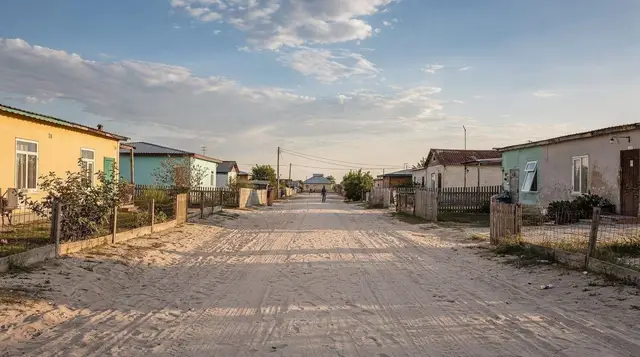
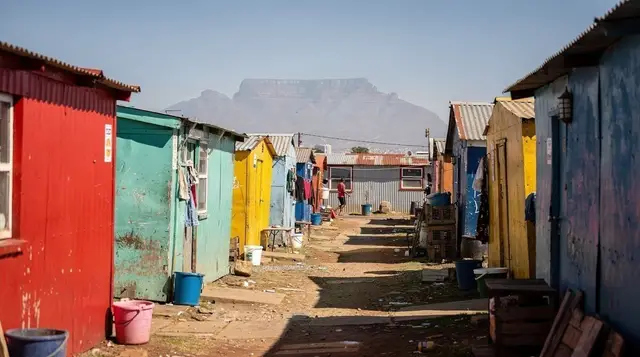
Langa, the oldest township
What makes Langa different from Cape Town's other townships?
Langa, established in the 1920s, is the oldest official township in Cape Town, which gives it a deeper, more layered history than newer townships — including its own long-running cultural institutions, art studios, and a Pass Office building tied directly to apartheid-era movement controls. It's also more compact and central than Khayelitsha, making it a more common first stop for visitors.
Langa was established in the 1920s, making it Cape Town’s oldest official township — its roots go back to segregationist urban planning that predates apartheid’s formal start in 1948 by decades. That long history has given Langa a depth of cultural and community infrastructure that newer townships haven’t had time to build: established art studios, cultural venues, and generations of residents whose family history in the area runs deep. Here’s what makes it distinctive, and how to visit in a way that respects the community you’re walking through.
| Where | Roughly 12 km from Cape Town’s City Bowl |
| Established | 1920s — Cape Town’s oldest official township |
| Getting there | Best reached as part of a guided tour rather than independently |
| Time needed | Half a day for most tours; longer options include workshops or meals |
| Best for | First-time township visitors, art and craft, Xhosa cultural experiences |
Why Langa’s age matters
Being the oldest official township in Cape Town isn’t just a historical footnote — it means Langa’s community institutions, from churches to cultural halls to informal economic networks, have had roughly a century to establish and deepen, well before the mass expansion of townships under later apartheid-era policy. Visitors often notice that Langa feels more settled and established than newer, larger townships further from the city, and that’s a direct product of its longer continuous history rather than a matter of scale alone.
Langa township walking tour is a straightforward way to see this history explained on the ground, street by street, by a guide who lives there.
The Pass Office and apartheid-era control
Langa’s history is directly tied to the machinery of apartheid-era movement control — the Pass Laws, which required Black South Africans to carry documentation authorising their presence in urban areas, and the administrative buildings that enforced them. Walking through Langa with a knowledgeable local guide connects the physical space directly to that history, in a way that a museum exhibit alone can’t quite replicate — this is the actual place those laws were administered and lived under, not a re-creation.
The migrant labour hostel system
Alongside the Pass Laws, Langa also carries the physical legacy of the migrant labour hostel system — barrack-style housing built to accommodate men, overwhelmingly Xhosa-speaking migrants from the rural Eastern Cape, who were permitted to work in the city under influx control but not to bring their families to live with them. These hostels, several of which still stand and remain inhabited today, are a direct, physical record of how apartheid-era policy deliberately separated workers from their families for generations, treating Black labour as a resource to be admitted to the city on strict, temporary terms rather than as full residents. A knowledgeable guide can point out this history on the ground, connecting the buildings themselves to the policy that shaped them.
Xhosa culture in Langa
Langa’s population is substantially Xhosa-speaking, reflecting the migration patterns that built the township from the Eastern Cape outward, and Xhosa cultural traditions — from language and music to specific ceremonial and community practices — remain a living part of daily life here rather than a historical footnote. This is one of the clearer places in Cape Town to encounter isiXhosa language and Xhosa cultural practice directly, through conversation with residents and guides rather than a staged cultural display.
Art, craft and creative Langa
Langa has become a genuine creative hub, with working art studios, craft workshops and galleries run by local artists as an established part of the township’s economy, not a recent addition staged for tourism. Visiting these spaces puts money directly into artists’ hands and offers a very different register from the historical walking tour — contemporary, active, and community-driven rather than purely retrospective.
Langa township art workshop and walking tour combines both halves of that experience — the history and the living creative scene — in a single visit.
Guga S’Thebe, a well-known arts and cultural centre in Langa, is a central hub for this creative activity — a space where local artists, craftspeople and performers work and teach, and where cultural events for the wider community regularly take place. It’s a good example of the kind of institution that Langa’s long history has allowed to take root and mature, in contrast with the newer, still-developing cultural infrastructure of townships established more recently.
Meeting Langa through a local guide
Langa township tour with a local guide is worth prioritising over a generic city-guide-led option specifically because the guide’s own residence in the community changes what the tour can offer — real introductions, genuine context, and a level of trust that an outside guide simply can’t replicate on a single visit. Discover Langa township guided tour is a comparable option built around the same principle of direct, resident-led engagement.
A half-day is enough to start, not to finish
Langa township half-day walking tour covers the essentials — history, key sites, and an introduction to daily life — in a manageable window, and works well as a first township visit if your Cape Town schedule is tight. It’s worth treating as an introduction rather than the full picture: a single half-day visit, however well guided, only scratches the surface of a community with a century of history behind it.
Combining Langa with the wider history
Langa’s Pass Office history and hostel system connect directly to the broader story of apartheid-era movement control and forced removal told elsewhere in Cape Town — see the apartheid history in Cape Town guide for how Langa’s experience fits alongside District Six and Robben Island in the fuller picture. Several operators also combine a Langa visit with Bo-Kaap or a Cape Malay cooking class, useful if you want a single day covering more than one strand of the city’s layered cultural history — see the Cape Malay culture guide for that connection.
Visiting respectfully
The same principles that apply to any township visit apply doubly in a community as established and closely knit as Langa: follow your guide’s lead on photography, ask before photographing individuals or their homes, and treat the visit as an encounter with people’s actual lives rather than a curated attraction. See the township tours ethics guide for the fuller picture on choosing a responsible operator.
tours.township-culture
Verified deep-linked GetYourGuide tours. Book through these links and we earn a small commission at no cost to you.
Photos show the destination, not the operator's own images.