Khayelitsha
What is Khayelitsha, and is it different from Langa?
Khayelitsha is one of South Africa's largest townships, on the Cape Flats well outside the City Bowl, and considerably bigger and further out than Langa. Where Langa's tours often centre on heritage sites and long-established art studios, Khayelitsha visits tend to focus more on the scale of everyday township life today — homes, small businesses, and community projects — with less of a curated historical trail.
Khayelitsha, on the Cape Flats well beyond the City Bowl, is one of South Africa’s largest townships — a scale that changes what a visit is actually like compared with the smaller, more central Langa. This is less a curated historical trail and more a direct encounter with how a large share of Cape Town’s population actually lives today, and it’s worth going in with that framing rather than expecting a compact heritage walk.
| Where | The Cape Flats, well outside the City Bowl |
| Scale | One of South Africa’s largest townships |
| Getting there | A genuine drive; go with an organised tour rather than independently |
| Time needed | Half a day for most tours; full-day and evening options exist |
| Best for | Understanding the scale of everyday township life, community projects, local businesses |
Why Khayelitsha exists
Khayelitsha was established under apartheid-era planning in the 1980s, as the government continued to enforce influx control and racial residential segregation even as resistance to the system was building elsewhere in the country. The area was deliberately sited well outside the city centre, on the sandy, exposed Cape Flats, continuing a decades-long pattern of pushing Black African residents further from the urban core — the same underlying policy logic behind Langa’s earlier establishment in the 1920s, applied on a much larger scale and later in the apartheid era. Understanding that origin matters: Khayelitsha’s location and size aren’t accidents of urban growth, they’re the direct, visible result of a planning system built to control where people were allowed to live.
Formal housing and informal settlements side by side
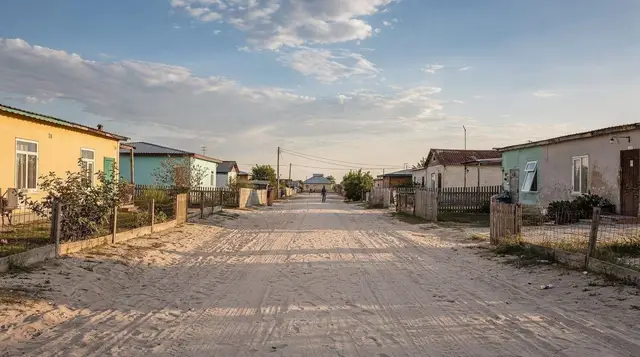
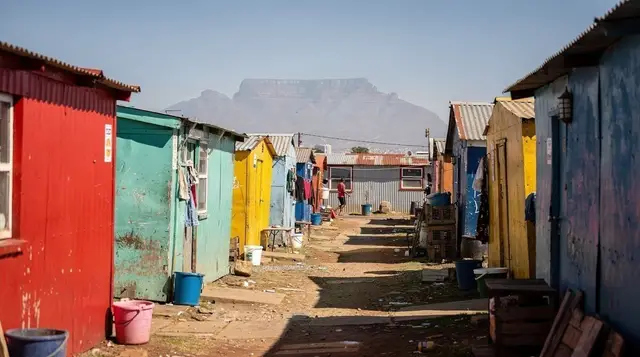
Part of what makes Khayelitsha instructive to visit, rather than simply large, is that it contains a genuine mix of formal housing, government-built developments, and informal settlements existing alongside one another — a visible record of decades of uneven, incremental development rather than a single uniform township. A guided visit typically moves through more than one of these areas, giving a fuller, more honest sense of the area’s range than a stop in any single section would on its own. This variation is worth going in aware of, rather than expecting a single, uniform picture of “a township.”
Why Khayelitsha feels different from Langa
Langa’s compact size and long institutional history give it a curated, walkable feel — art studios, cultural venues, a clear historical narrative. Khayelitsha’s sheer scale changes that entirely: this is a vast, sprawling area, and a visit here tends to emphasise the everyday reality of township life at scale — homes, informal economy, community organisations — over a tidy circuit of heritage sites. Neither approach is more “authentic” than the other; they’re simply different, and worth understanding as such before you choose where to spend your limited time.
Khayelitsha community experience is built specifically around this scale — connecting visitors with community members and local projects rather than a fixed historical route.
Community projects and local businesses
A meaningful share of Khayelitsha tourism connects directly to community-run projects — small businesses, social initiatives, skills programmes — that benefit tangibly from visitor income and attention. This is where the strongest ethical case for visiting Khayelitsha rests: money spent with a local guide, a homestay, or a community business reaches people directly, in an area where that kind of direct economic connection matters. See the township tours ethics guide for the fuller discussion of what separates a genuinely beneficial visit from an extractive one.
Homestays, in particular, are worth considering if your trip allows for it. Spending a night with a local family, rather than just passing through on a day tour, is a considerably deeper way to engage with daily life in Khayelitsha, and the income involved goes about as directly to a household as tourism spending can. It’s a bigger commitment than a half-day tour, and not for every traveller, but it’s worth knowing the option exists for those who want more than a guided walk-through.
Khayelitsha after dark
Unusually among township tour offerings, Khayelitsha has a developed evening and nightlife scene that some tours are specifically built around — shebeens, live music, and social venues that give a very different picture of the area than a daytime walking tour alone.
Khayelitsha township nightlife experience is worth considering if you want to see this side of the community, ideally alongside a daytime visit rather than instead of one, for the fuller picture.
Fitting Khayelitsha into a longer day
Because of the distance from central Cape Town, Khayelitsha visits work best as a dedicated half-day or full-day commitment rather than a quick add-on to a packed schedule.
Full-day township tour experience allows the time this kind of visit genuinely benefits from, while half-day township tour suits a tighter schedule if a full day isn’t practical. Some operators also combine a Khayelitsha visit with other Cape Flats or coastal stops on the way back toward the city.
Township tour with sea life visit is one such combination, pairing a community visit with a stop elsewhere on the return route.
Getting around once you’re there
Khayelitsha’s size means a single tour, even a full-day one, typically covers a specific route through a small portion of the area rather than a general overview of the whole township — there is simply too much ground to cover otherwise. A local guide’s route choices matter a great deal here, since two tours can give genuinely different impressions of the area depending on which sections they pass through. This is worth asking about when comparing operators: a guide who lives locally and can explain why their route covers what it does is a better sign than a fixed, generic itinerary.
Visiting with the right expectations
Khayelitsha is not a heritage site built for visitors, and it shouldn’t be approached as one. Follow your guide’s lead on where to walk and what to photograph, and treat conversations with residents as genuine exchanges rather than material for a highlight reel. The scale of the area means a single visit, however good, only offers a partial view — worth acknowledging rather than treating a short tour as a complete understanding of township life.
tours.township-culture
Verified deep-linked GetYourGuide tours. Book through these links and we earn a small commission at no cost to you.
Photos show the destination, not the operator's own images.