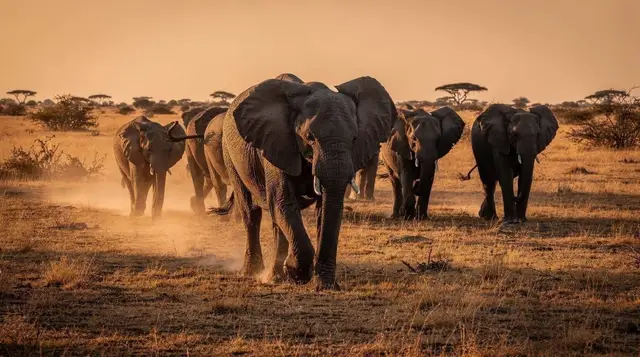
Big Five in a day — an honest assessment
Is a Big Five day trip from Cape Town actually worth doing?
For most travellers who aren't visiting Kruger on the same trip, yes — it delivers real sightings of large game on a private reserve within a manageable day. It's not, however, a genuine bushveld safari: expect four to five hours of driving for around two to three hours of actual game viewing, on a small, fenced property rather than open wilderness.
“Big Five in a day” is one of the more heavily marketed phrases on Cape Town tour listings, and it’s worth taking apart honestly before you book one. It’s a real product — private reserves a few hours from the city genuinely do hold lion, elephant, rhino, buffalo and leopard, and day visitors genuinely do see them. What the phrase glosses over is the maths: how much of that day is actually spent near animals, versus on a bus.
| Where | Private reserves 2-3 hours from Cape Town (most commonly Aquila) |
| Time needed | A full day, typically 10-12 hours door to door |
| Actual game-viewing time | Roughly 2-3 hours across one or two drives |
| Getting there | Coach or minibus transport, usually included in the tour price |
| Best for | Travellers without Kruger on the itinerary who still want a genuine Big Five sighting |
The maths nobody puts in the brochure
A typical day trip runs something like this: an early pickup, roughly two hours’ drive to the reserve, a game drive of an hour or two, a meal, sometimes a second afternoon drive, and the two-hour return. Add it up and the actual time spent looking for animals is a fraction of the total day — often somewhere around two to three hours out of ten or more. That’s not a criticism of any specific operator; it’s simply the geography of doing a safari from a city that isn’t near safari country.
This full-day Cape Town safari follows roughly that shape, and is a reasonable benchmark for what “a day trip” actually means in practice before comparing other listings against it.
What you’re actually paying for
The value in a Big Five day trip isn’t really the volume of time on the reserve — it’s the compression. Getting a genuine Big Five sighting normally means flying to Kruger or another open reserve, which costs real time and money most Cape Town-based travellers don’t have on a single trip. The day trip trades depth for accessibility: less time with the animals, but no flight, no extra nights, and no separate leg of the itinerary.
Whether that trade is worth it depends entirely on what else is on your trip. If a proper safari is realistically happening at some point — this trip or a future one — the day trip adds relatively little on top of it. If it isn’t, the day trip is often the only realistic way most Cape Town visitors will see lion or elephant in the flesh at all.
Two drives beats one
Not all day-trip packages are equal, and the biggest lever for value is drive count rather than price. This full-day Aquila tour pairs the reserve visit with a wine-estate stop, which is a reasonable way to use the return leg of the day productively rather than simply driving back with nothing to show for the afternoon.
A package with a morning and a late-afternoon drive genuinely sees more animal activity than one with a single midday drive, since large game tends to rest through the hottest part of the day and move more at the cooler edges — the same pattern that holds true on any safari, private reserve or otherwise.
When an overnight actually makes more sense
If your schedule allows it, staying over changes the ratio meaningfully. This two-day safari with an overnight lodge stay adds an evening drive and a morning drive around a single night, for roughly double the game-viewing time of a single day trip at the cost of one additional night rather than a second full transfer day.
For travellers going further still, this three-day Big Five safari at Inverdoorn moves closer to what an actual multi-day safari feels like, with the transfer cost amortised across several drives rather than one.
Small-group versus large coach tours
Group size affects the experience more than most day-trip listings let on. A large coach tour keeps costs down but generally means a bigger vehicle on the game drive itself, which can mean less flexibility to linger on a good sighting and a less personal pace overall. This small-group Big Five safari is worth considering if a more intimate vehicle matters more to you than shaving cost off the day.
The honest answer on whether it’s worth it
For a traveller whose Cape Town trip doesn’t include a stop in Kruger or another proper reserve, a Big Five day trip is a genuinely good use of a day — not a wilderness experience, but a real one, with real animals, on a well-run private property. For anyone who is doing a proper safari elsewhere on the same trip, it’s largely redundant, and the day is probably better spent in the Winelands, the Cape Peninsula, or simply resting.
Frequently asked questions about Big Five in a day — an honest assessment
How much of a Big Five day trip is actually spent looking at animals?
On a typical day trip, roughly two to three hours across one or two game drives, against four to five hours of driving to and from the reserve. The ratio improves considerably with an overnight stay.
Is a single day trip enough to see the Big Five?
Often, but not always. Elephant, rhino and buffalo sightings tend to be fairly reliable on managed reserves; lion and especially leopard are less certain on any one drive, single-day or otherwise.
Would an overnight safari be better than a day trip?
For actual wildlife time, yes — an overnight roughly doubles game-drive time for one extra night’s cost, since the long transfer only happens once each way instead of twice in one day.
Who should skip the Big Five day trip entirely?
Anyone with Kruger, another open reserve, or a longer safari already on their itinerary — the day trip adds cost and a long travel day without offering anything the real thing won’t do better.
tours.safari-wildlife
Verified deep-linked GetYourGuide tours. Book through these links and we earn a small commission at no cost to you.
Photos show the destination, not the operator's own images.