Do two oceans really meet at Cape Point?
Standing at Cape Point, looking out over two visibly different bodies of water swirling together below, it’s genuinely tempting to believe you’re watching the Atlantic and Indian oceans meet. It’s one of the most repeated pieces of travel folklore about Cape Town, told by guides and tourists alike for generations — and it isn’t quite true. The officially recognised meeting point of the two oceans is Cape Agulhas, roughly 150 kilometres further along the coast, not Cape Point.
| The myth | The Atlantic and Indian oceans meet at Cape Point |
| The reality | The officially recognised meeting point is Cape Agulhas |
| What you actually see at Cape Point | A visible convergence of currents and swells, not an ocean boundary |
| Africa’s actual southernmost point | Cape Agulhas, not Cape Point |
| Does this make Cape Point less worth visiting? | No — it’s spectacular regardless of the myth |
Where the myth comes from
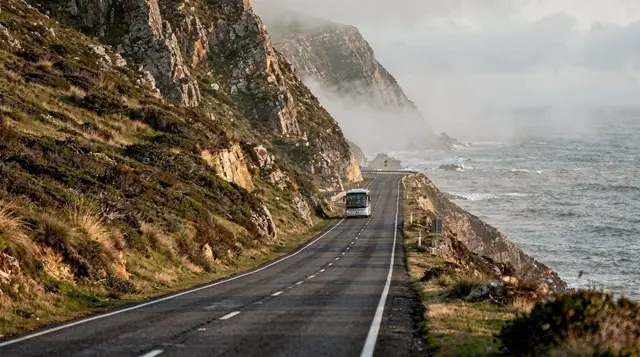
Cape Point is Africa’s most famous headland, dramatic and windswept, jutting out where the cold Atlantic-influenced Benguela current and the warmer waters influenced by the Agulhas current visibly interact — you can genuinely see a colour and texture change in the water from the clifftop viewpoints, which is exactly the kind of striking visual that gives a myth staying power. It’s an understandable belief, reinforced by decades of guidebooks, signage, and tour commentary repeating it as fact, but it doesn’t hold up against the actual geography.
The real meeting point — Cape Agulhas
Cape Agulhas, not Cape Point, is the officially recognised point where the Atlantic and Indian oceans meet, and it’s also the actual southernmost tip of the African continent — a fact that itself surprises many visitors who assume Cape Point holds that title. Cape Agulhas sits further east and south along the coast, roughly a couple of hours’ drive from Cape Town, well beyond the Cape Peninsula itself.
A Cape Agulhas day tour to where the two oceans meet takes you to the actual, officially recognised meeting point, complete with a monument marking the spot — a genuinely worthwhile add-on for visitors who want the real geographic milestone rather than the popular myth.
What you’re actually seeing at Cape Point
The visible convergence at Cape Point is real — it’s just not an ocean boundary. What you’re watching is the interaction of ocean currents and swell patterns from two different directions meeting around the peninsula’s tip, producing the visible line and colour change that fuels the myth. It’s a genuinely striking phenomenon in its own right, worth understanding accurately rather than dismissing just because the popular explanation for it is wrong.
Why Cape Agulhas holds the actual “southernmost” title
Cape Point often gets assumed to be Africa’s southernmost point simply because it’s the more famous, more visited headland — but Cape Agulhas holds that distinction geographically, sitting further south along the coastline. The name itself comes from the Portuguese for “cape of needles,” a reference to early navigators’ observations about compass behaviour in the area.
A Cape Agulhas southernmost tip of the African continent tour is built specifically around this distinction, for visitors who want to stand at Africa’s actual southernmost point rather than the more commonly assumed one.
Does the myth make Cape Point less worth visiting?
Not remotely. Cape Point remains one of the most spectacular headlands on the continent regardless of the ocean-meeting myth — dramatic cliffs, a genuinely striking funicular or walking ascent to the lighthouse viewpoints, and a nature reserve home to real wildlife including baboons, ostriches, and a wide range of coastal birdlife. The myth doesn’t diminish the visit; it’s just worth knowing the accurate version before repeating it to someone who might correct you.
A full-day Cape of Good Hope and penguins tour covers Cape Point properly within the wider peninsula circuit, worth doing on its own merits entirely separate from the two-oceans question.
Can you actually visit both in one trip?
Cape Point and Cape Agulhas are both reachable from Cape Town but sit a genuine distance apart, roughly opposite ends of a wider excursion rather than a single quick add-on to each other. Combining them into one day is possible but makes for a genuinely long day of driving; many visitors treat them as separate excursions instead, prioritising Cape Point on a peninsula day and Cape Agulhas as part of a Whale Coast or Overberg trip if the actual southernmost point specifically interests them.
A Cape Agulhas tour from Cape Town is the straightforward way to visit the genuine meeting point as its own dedicated excursion, without trying to cram it into an already-full Cape Point day.
Why the myth persists despite being widely known to be false
Part of the reason the two-oceans myth at Cape Point has proven so durable is that the visible current convergence really is striking, and travel storytelling has always favoured the more dramatic, tidier version of a fact — “two oceans meet here” is a cleaner story than “two currents produce a visible convergence at one headland while the actual oceanographic boundary sits elsewhere.” Even some official signage and tour commentary over the decades has repeated the myth uncritically, which hasn’t helped it die out.
What Cape Agulhas itself is like to visit
Beyond the myth-correcting appeal, Cape Agulhas is worth visiting on its own terms — a lower, more understated headland than Cape Point’s dramatic cliffs, with a lighthouse, a boardwalk out to the official meeting-point marker, and a genuinely different, quieter coastal atmosphere from the busier peninsula circuit.
Frequently asked questions about the two oceans myth
Do the Atlantic and Indian oceans really meet at Cape Point?
No — that’s a popular myth. The officially recognised meeting point is Cape Agulhas, further along the coast.
What is Africa’s actual southernmost point?
Cape Agulhas, not Cape Point, despite Cape Point’s greater fame and visitor numbers.
What am I actually seeing at Cape Point if it’s not two oceans meeting?
A visible convergence of ocean currents and swells from different directions, producing a genuine colour and texture change in the water — a real phenomenon, just not an ocean boundary.
Is Cape Point still worth visiting given the myth isn’t true?
Absolutely — it remains one of the most spectacular headlands in Africa on its own merits, entirely separate from the two-oceans question.
Can I visit Cape Agulhas and Cape Point in the same day?
They’re a genuine distance apart, making a single combined day a long one. Most visitors treat them as separate excursions instead.
Family-friendly tours
Verified deep-linked GetYourGuide tours. Book through these links and we earn a small commission at no cost to you.
Photos show the destination, not the operator's own images.