Three days of Cape Town history
Cape Town’s landscape is inseparable from its history, and a trip that only takes in the views misses most of what shapes the city today. This itinerary covers three of the sites most central to that history — Robben Island, District Six and the neighbourhoods of Bo-Kaap and Langa — with the respect the subject demands. Some of what these places represent is difficult: forced removals, political imprisonment, decades of segregation whose effects are still visible in the city’s geography. Go in with time to actually listen, not just to tick off a site.
| Best for | Travellers prioritising the city’s history and heritage over its coastline and gardens |
| Pace | Three days, one major site or walking tour a day |
| Getting around | Walking and organised tours cover most of this itinerary without a car |
| Booking lead time | Robben Island ferries need advance booking and sell out, especially in high season |
| Weather note | Robben Island ferries are cancelled in rough seas — always have a backup plan for that day |
Day 1 — Robben Island
Book the Robben Island ferry as early as you can in your planning, not once you’ve arrived — tickets sell out, especially in high season, and the crossing itself is cancelled outright in rough seas with little advance warning. The Robben Island ferry ticket with guided tour covers the crossing and the tour of the former prison, led in part by former political prisoners as guides — one of the more direct ways anywhere in the world to hear this history from people who lived it.
Have a backup plan ready for this specific day, because the possibility of cancellation is real and worth planning around rather than discovering on the morning. If the ferry’s cancelled, the Nelson Mandela Gateway at the V&A Waterfront, where the ferry departs from, has exhibition space covering much of the same history on dry land, and District Six — originally scheduled for Day 2 — can be swapped forward without losing anything from the itinerary’s structure.
Day 2 — District Six and the City Bowl
District Six was a mixed-race inner-city neighbourhood largely demolished under apartheid-era forced removals in the 1970s, its residents relocated to the Cape Flats and the area left largely undeveloped for decades afterward — a deliberate policy, not neglect. The District Six Museum skip-the-line entrance ticket tells this history through testimony and objects from former residents, and is best approached slowly — this isn’t a museum to rush through in twenty minutes.
Pair it with the apartheid history and city walking tour in the afternoon, which threads together sites across the City Bowl connected to this period — a useful way to see how the history of removals and segregation is written into the city’s present street plan, not confined to a single museum building.
Day 3 — Bo-Kaap and Langa
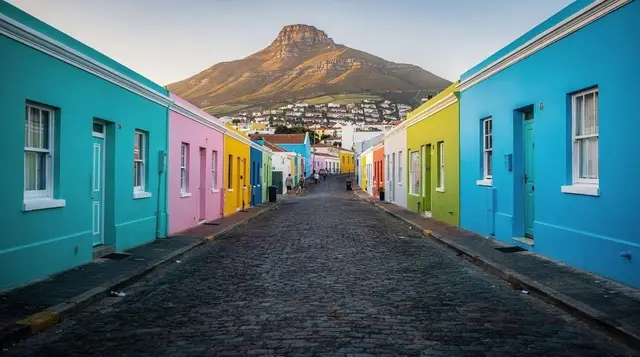
Close the trip with two neighbourhoods that tell different parts of the story. Bo-Kaap’s coloured houses and Cape Malay heritage reflect a community descended largely from enslaved and indentured people brought to the Cape from Southeast Asia — it’s a living residential neighbourhood, not a museum, so keep a respectful pace when walking its streets.
Langa, one of the oldest surviving townships in South Africa, offers a different and equally important perspective — a community built under, and still shaped by, apartheid-era segregation, with a present-day life that a short visit only begins to touch. The Langa township tour and Bo-Kaap cooking class combines both neighbourhoods in a single day, led by local guides — a format that puts the visit in the hands of people from the community rather than an outside narrator, which matters for a place like this.
Reading before you go
A day or two of context before you land makes each of these sites land harder. Nelson Mandela’s own account of his imprisonment, and general histories of the apartheid era and the forced removals under the Group Areas Act, are widely available and worth a chapter or two before Day 1 — the Robben Island guides assume a baseline of context that a completely cold visit doesn’t give you. It isn’t required, but travellers who arrive with some grounding in the period consistently get more out of the guided tours than those hearing the outline for the first time on the ferry over.
Pacing this trip with care
Three consecutive days of heavy historical content can be genuinely tiring in a way that a beach day isn’t, and that’s worth planning for rather than pushing through. If you can, avoid stacking this itinerary directly against another intense day — leave at least a half-day of something lighter, like a walk in the Company’s Garden or an afternoon at the Waterfront, either just before or just after these three days, so the history has room to sit rather than being immediately crowded out by the next thing on the list.
If the Robben Island ferry is cancelled
Because this is worth repeating: build the trip so a cancelled Robben Island crossing doesn’t derail the whole three days. Keep District Six and the Bo-Kaap/Langa day fixed where possible, and treat Robben Island as the flexible slot — move it to whichever day the sea is calm, even if that means finishing the itinerary out of the order laid out here. If no day works within your trip, the Nelson Mandela Gateway exhibition and several of the sites on the apartheid history walking tour cover related ground on dry land, though neither fully substitutes for the island crossing itself.
Day-by-day summary
| Day | Focus | Don’t miss |
|---|---|---|
| 1 | Robben Island | Book the ferry early; have a backup plan for rough seas |
| 2 | District Six, City Bowl | District Six Museum, apartheid history walking tour |
| 3 | Bo-Kaap, Langa | Local-guided township tour and cooking class |
tours.history-heritage
Verified deep-linked GetYourGuide tours. Book through these links and we earn a small commission at no cost to you.
Photos show the destination, not the operator's own images.