The Slave Lodge and Cape slavery
What was the Slave Lodge, and why does it matter?
A building on Adderley Street, constructed by the Dutch East India Company to hold people it had enslaved and forcibly brought to the Cape, largely from East Africa, Madagascar, India and what is now Indonesia. Slavery at the Cape lasted from the mid-1600s until its abolition in the 1830s, and it shaped the colony's economy, its social structure and, later, the racial categorisation apartheid would formalise centuries afterwards. The Slave Lodge today is a museum addressing that history directly.
The Slave Lodge stands on Adderley Street, in the middle of Cape Town’s historic commercial district, and it was built by the Dutch East India Company for one purpose: to hold people the Company had enslaved. Slavery at the Cape lasted close to two centuries, from the mid-1600s until abolition in the 1830s, and it shaped the colony’s economy and social order in ways that outlasted formal emancipation by generations. This isn’t peripheral history — it sits at the physical and economic centre of the city the Dutch built, and the museum that now occupies the building addresses that directly.
| Where | Adderley Street, in the heart of the City Bowl |
| What it was | Built by the Dutch East India Company to hold enslaved people |
| What it is now | A museum addressing the history of slavery at the Cape |
| Getting there | Walkable from the Company’s Garden and the Castle of Good Hope |
| Best for | Understanding the origins of Cape Town’s colonial-era social order |
Slavery at the Cape, briefly and without euphemism
The Dutch East India Company established its Cape settlement as a resupply station for ships travelling between Europe and Asia, and it built that settlement’s economy substantially on enslaved labour from the outset. People were forcibly brought to the Cape from East Africa, Madagascar, India, and parts of what is now Indonesia, and enslaved individuals — not free colonists — did much of the physical work that built and sustained the Company’s Cape settlement, from construction to agriculture to domestic labour. Slavery at the Cape continued for close to two centuries, from the mid-1600s until abolition in the 1830s, and its legacy extended far beyond that formal end date, feeding directly into the racial and social hierarchies that later, more explicit systems — including apartheid — would build on and formalise.
Cape Town heritage tour is a practical way to see the Slave Lodge as part of a wider walk through the Company-era City Bowl, with the historical through-line explained by a guide rather than pieced together stop by stop.
What the building actually was
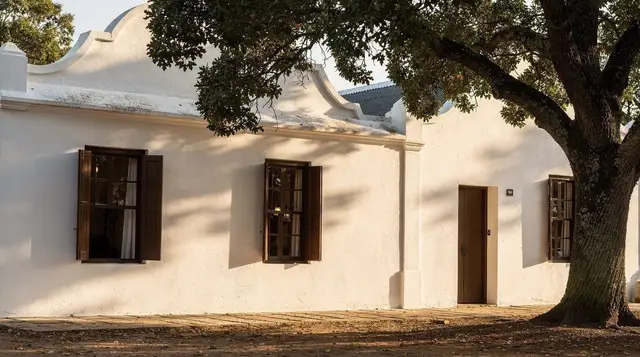
The Slave Lodge was constructed by the Dutch East India Company specifically to hold enslaved people at the Cape, and it functioned as exactly that — a place of confinement, not a residence in any voluntary sense. The Company’s own historical records describe conditions inside as overcrowded and harsh, consistent with an institution built to control and exploit forced labour rather than to house people with any regard for their wellbeing. The building’s continued survival, at the centre of what is now Cape Town’s commercial district, makes that history physically unavoidable rather than something that can be set at a comfortable historical distance.
What the museum addresses today
The Slave Lodge now operates as a museum with exhibitions addressing Cape slavery directly — the people enslaved, the systems that enslaved them, and the long aftermath that followed formal abolition. It doesn’t treat this as a closed, finished chapter; the exhibitions generally connect the history of Cape slavery forward to the racial categorisation and discrimination that continued, in different legal forms, well into the twentieth century. Visitors expecting a brief, softened summary of “early colonial life” should adjust their expectations — the museum engages with this history in the terms it deserves.
Historical and scenic Mother City tour routes past the Slave Lodge as part of a broader look at the city’s colonial-era core, useful context for understanding how central this site was, geographically, to the Company’s operations.
The building’s later lives
After slavery’s abolition, the building went on to serve several other civic and administrative functions over the following decades, before eventually becoming the museum it is today. That progression — from a place of forced confinement to ordinary government use and finally to a museum confronting its own original purpose — is itself part of the site’s story, a physical record of how a city can keep using a building while the history embedded in its walls goes largely unspoken for generations, until an institution finally chooses to address it directly.
The Slave Lodge and the Castle of Good Hope
A short walk away, the Castle of Good Hope served as the Dutch East India Company’s military and administrative headquarters during the same period. The two buildings — one holding the Company’s enslaved people, the other seating its governing authority — belong to the same system and the same decades, and visiting them together gives a clearer picture of how colonial power at the Cape actually operated than either site does alone.
Castle of Good Hope private guided tour is worth combining with a Slave Lodge visit for exactly that reason.
Naming the people, not only the system
Part of what distinguishes a serious engagement with this history from a general summary is the effort to recover and present the identities of specific enslaved individuals, where records allow, rather than speaking only in aggregate terms about “the enslaved population.” The Slave Lodge’s exhibitions make some effort in this direction, treating the people held there as individuals with names and specific circumstances where the historical record permits it, rather than an anonymous mass — a small but meaningful corrective to centuries of records that too often reduced enslaved people to entries in a ledger.
A longer thread, not an isolated chapter
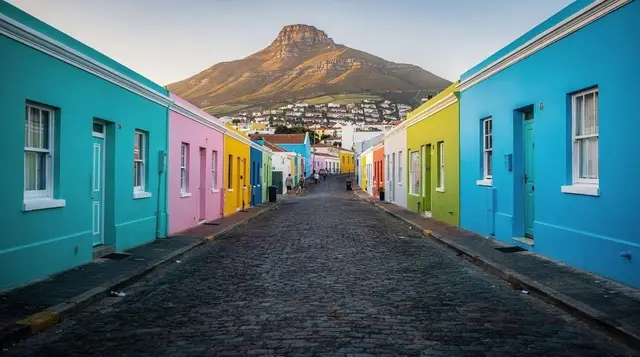
Cape slavery’s legacy runs forward through the city’s later history in ways that are easy to underestimate if the Slave Lodge is treated as a stand-alone stop. Some of the ancestry of the Cape Malay community in Bo-Kaap traces to people enslaved during this period, alongside separate waves of political and religious exiles the Dutch deported from Southeast Asia — see the Bo-Kaap guide. And the racial categorisation that slavery at the Cape helped entrench fed, over subsequent generations, into the legal architecture of segregation and eventually apartheid — see the apartheid history in Cape Town guide for that fuller arc.
Apartheid history and city walking tour is a useful way to trace that thread in person, from the Slave Lodge through to the later apartheid-era sites elsewhere in the City Bowl.
Visiting with the weight this history deserves
This is not a stop to rush. The building’s location, in the middle of what is now a busy commercial street, makes it easy to walk past without registering what it actually was — worth pausing for deliberately rather than treating as one more historic facade among many on Adderley Street.
tours.history-heritage
Verified deep-linked GetYourGuide tours. Book through these links and we earn a small commission at no cost to you.
Photos show the destination, not the operator's own images.