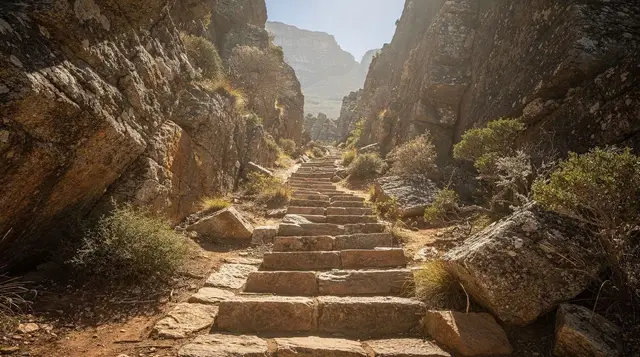
Signal Hill and the Noon Gun
What is the Noon Gun and why does it fire?
A cannon on Signal Hill, above the Bo-Kaap neighbourhood, fired daily as a long-standing Cape Town tradition dating back to the days when ships in Table Bay used it to check their chronometers. It's still fired most days, close enough to midday that generations of Capetonians have joked about setting their watch by it, and it remains one of the city's most distinctive daily rituals.
Signal Hill does double duty in Cape Town’s daily rhythm: it’s the source of the Noon Gun, a genuinely startling daily cannon blast that’s been part of city life for generations, and separately — with no connection between the two beyond geography — it’s one of the easiest, most reliable sunset viewpoints in the city, reachable by road rather than a hike. Here’s how both traditions actually work.
| Where | Above the Bo-Kaap, between the City Bowl and Sea Point |
| Noon Gun | Fires most days, audible across much of the City Bowl |
| Getting there | Road access most of the way to the main viewpoint — no hiking required |
| Best for | Sunset views over the Atlantic and Table Bay, low effort compared with Lion’s Head |
| Combine with | The Bo-Kaap neighbourhood below, and city sightseeing routes |
The Noon Gun, explained
The Noon Gun is exactly what it sounds like — an actual cannon, fired from a battery position on Signal Hill above the Bo-Kaap, as part of a tradition with roots in the era when ships anchored in Table Bay needed a reliable time signal to check their chronometers against. The gun’s report is genuinely loud, carrying across much of the City Bowl and surrounding suburbs, and it catches first-time visitors off guard every single day, whether they’re in the Bo-Kaap’s colourful streets below or elsewhere in the city centre. It fires on most days close enough to midday that generations of Capetonians have joked about setting their watches by it, though like any long-running ceremonial tradition, it’s worth treating the timing as a strong custom rather than an absolutely guaranteed fixture on the calendar.
City tour with Table Mountain, Signal Hill and Bo-Kaap is a practical way to combine the Noon Gun’s neighbourhood with the wider City Bowl sightseeing that naturally sits around it.
Why Signal Hill works so well for sunset
Separately from the Noon Gun tradition, Signal Hill has become one of Cape Town’s most popular sunset spots, and the reason is straightforward: road access runs most of the way to the main viewpoint, meaning visitors can drive or take a short rideshare up rather than committing to a hike the way Lion’s Head or Table Mountain demand. The view itself is genuinely open and unobstructed, looking out over the Atlantic, Sea Point, and Table Bay toward Robben Island, and it fills up with a relaxed, low-key crowd most evenings — locals with picnic blankets and folding chairs as much as visitors with cameras.
Sunset bus tour with picnic on Signal Hill handles the transport and the picnic logistics together, a comfortable option if you’d rather not drive yourself and time the light.
How Signal Hill compares with Lion’s Head for sunset
Both peaks sit close together and both deliver genuinely good sunset views, but they suit different kinds of evenings. Signal Hill’s road access makes it the low-effort choice — no hiking boots, no climb, just a short drive and a walk from the car park to the viewpoint. Lion’s Head demands an actual hike, including the chain-assisted upper section covered in the Lion’s Head hike guide, but rewards that effort with a higher, more panoramic vantage point and, once a month, the added atmosphere of the full-moon hike tradition. Neither is objectively better — it depends whether you want a hike as part of the evening or a simple, comfortable viewpoint.
Table Mountain, Lion’s Head and Signal Hill ride covers both angles in a single outing if you’d rather not choose between them.
The Bo-Kaap below
Signal Hill sits directly above the Bo-Kaap, Cape Town’s historic Cape Malay quarter known for its brightly painted houses lining steep cobbled streets. Many visitors combine a Signal Hill sunset or a Noon Gun visit with time spent walking the Bo-Kaap itself, since the two sit close enough together to make an easy combined outing — a quiet, colourful neighbourhood walk followed by an open-air sunset a short drive up the hill above it.
Guided e-bike tour with Signal Hill and Clifton extends the outing further along the Atlantic seaboard for visitors who’d rather cover more ground than a single viewpoint stop allows.
Practical notes for a Signal Hill visit
Parking at the main viewpoint fills up fast in the hour before sunset, particularly on clear evenings and weekends, so arrive with margin rather than cutting it close. The wind that gives Table Mountain its cloud “tablecloth” is felt here too, sometimes strongly, so a layer against the evening chill is worth carrying even on a warm day. As with any elevated viewpoint car park in Cape Town, don’t leave valuables visible in a parked vehicle — this applies as consistently here as at any other popular trailhead or lookout point around the city.
Signal Hill’s own history
The hill’s name reflects its historical role: long before radio or modern communication, flag and cannon signals from this position were used to relay messages about ships approaching Table Bay to the settlement below, giving merchants and port authorities advance notice of arriving vessels. The Noon Gun tradition grew out of that same practical signalling function, evolving from a genuinely functional maritime tool into the daily ceremonial tradition it is today. Understanding that history adds real context to what might otherwise seem like a purely random loud noise at lunchtime — it’s a living echo of the city’s long relationship with the sea and the ships that shaped its early growth.
Photography and the view itself
Signal Hill’s open aspect makes it a genuinely rewarding spot for photography beyond just sunset — on a clear day, the view extends across Table Bay to Robben Island, along the Atlantic seaboard toward the Twelve Apostles, and down over the Bo-Kaap’s colourful rooftops directly below. Visiting outside the peak sunset hour, whether earlier in the day or the following morning, can reward you with a quieter viewpoint and softer light, without the crowds that build specifically for the sunset show. It’s worth treating as a viewpoint in its own right rather than purely a once-a-day sunset stop.
Fitting the Noon Gun into a city day
The gun suits a morning that is already built around the City Bowl. If you are walking the colourful streets below, a loose plan works better than a rigid one: wander the Bo-Kaap, find a spot with a view of the slope, and let the blast arrive when it arrives. Our Bo-Kaap guide and the Bo-Kaap destination page cover the neighbourhood itself, including the Cape Malay story behind it, which is told in more depth in the Cape Malay culture guide. Together they turn a loud noise at lunchtime into one stop in a thoughtful morning.
If you only have a single day in the city, the gun and the sunset can bookend it. A walk through the old centre, a museum or two, a long lunch, and then a drive up for the light is a rhythm many visitors enjoy. The Cape Town in one day guide and the one-day itinerary show how the pieces can fit, and the museums guide helps if you want something indoors between the morning and the evening.
Choosing your evening: other sunset options
Signal Hill is only one of several ways to watch the sun go down. The Lion’s Head and Signal Hill destination page places the two peaks side by side, while the Cape Town sunset spots article compares the wider choice of viewpoints around the city. If you would rather be on the water, the sunset cruises guide looks at the evening from the sea instead of the hill. For a more social, beachside evening, the Camps Bay and Clifton guide is a natural next step, since the Atlantic seaboard is just below the hill’s western flank.
Which one you pick often comes down to weather and energy. A clear, calm evening rewards almost any viewpoint; a windy one favours somewhere sheltered or a booked, seated experience. Flexibility is the real luxury here, so keep an evening free and decide on the day rather than locking in a plan weeks ahead.
Getting up the hill without a car
Many visitors assume they need to hire a vehicle to reach the viewpoint. You do not have to. Rideshare is an easy way up and back, and the Uber in Cape Town article explains how it works in practice. The getting around Cape Town guide lays out the other transport options, and the Cape Town without a car itinerary shows a whole trip built that way. If you are comfortable behind the wheel and want the freedom to chase the light, the car hire guide covers the practicalities.
Whichever way you go, think about the return as well as the arrival. After dark the viewpoint empties quickly, and it is worth agreeing how you will get back down before you go up, particularly if you are travelling alone. The safety guide sets out sensible habits for the evening hours, and they apply here just as they do anywhere else in the city.
Pairing Signal Hill with other adventures
The hill is a good anchor for a day that mixes the easy and the energetic. If the view makes you want to be higher, the Lion’s Head hike guide and the Table Mountain cableway guide are the obvious next steps. For something airborne, the paragliding from Signal Hill guide covers the other way people use this same slope, and it also gives a feel for how the wind behaves up there. Visitors who prefer to see the city from a seat rather than a trail can look at the hop-on hop-off bus guide.
On a longer stay, the Cape Town in three days itinerary and the first-timer four-day itinerary both leave room for a viewpoint evening, and the trip planning guide helps you decide where it belongs in the week. If a cloudy day spoils your plan, the Table Mountain closed article is a useful companion, and the weather and tablecloth guide explains why the cloud sits where it does.
Reading the weather before you go
Cape Town’s conditions can change quickly, and a hill that is clear in the afternoon may be wrapped in cloud or wind by evening. Check the sky an hour or two before you leave rather than relying on the morning’s forecast. The month-by-month weather guide gives a sense of what each season tends to bring, and the Cape Doctor wind guide explains the strong southeasterly that can make a viewpoint feel very different from the city streets below. Light layers, a windproof top and a flexible attitude go a long way.
Making the most of the evening
Arrive with enough time to settle, find a spot and watch the light change rather than only catching the final moment. Bring something to sit on, a warm layer and a drink, and consider a small snack so the wait feels like part of the evening. Many people stay on after the sun drops, because the colour in the sky often lingers and the city lights come on below. If you enjoy photography, the photography spots article and the viewpoints article offer more places to point a lens, and the free things to do article is a reminder that a sunset like this costs nothing beyond getting there.
tours.table-mountain
Verified deep-linked GetYourGuide tours. Book through these links and we earn a small commission at no cost to you.
Photos show the destination, not the operator's own images.